.png&w=96&q=75)

AI is reshaping customer service by automating up to 90% of support tasks, cutting costs, and improving efficiency. Companies like Airbnb, Amazon, H&M, Sephora, and Spotify use AI tools to handle routine queries, provide instant responses, and manage high volumes of customer interactions.
Key Highlights:
- Chatbots: Provide 24/7 support, multilingual capabilities, and instant answers.
- Sentiment Analysis: Detects customer emotions and escalates issues to human agents when needed.
- Fraud Detection: Identifies suspicious activities in real time.
- Predictive Support: Flags recurring issues based on customer feedback.
AI ensures faster responses, consistent service, and scalability during peak demand, while human agents focus on complex, emotional, or nuanced issues. A hybrid approach combining AI efficiency with human expertise is the way forward.
How AI is reshaping Customer Service Operations
Introduction
Customer service teams are dealing with mounting challenges. Increasing costs are putting pressure on budgets as companies are forced to bring in more agents to handle the growing number of support tickets. At the same time, customers expect faster responses, and delays can lead to frustration. Inconsistent answers from different agents can further erode trust.
These issues are especially tough for businesses that are scaling up, where support costs can quickly spiral, and customer demands keep growing. Traditional support models often struggle to keep up with the rising ticket volumes and the need for continuous training. Smarter, more efficient solutions are needed.
This is where AI steps in. By automating routine tasks and providing round-the-clock responses powered by a company’s knowledge base, AI offers a way to tackle these challenges. Many businesses are already leveraging AI to manage large volumes of interactions, freeing up human agents to focus on more complex, nuanced issues. Real-world examples show how AI is transforming customer service and helping companies navigate these hurdles effectively.
What is AI Customer Service and Why It Matters
AI customer service automates interactions between businesses and their customers, often relying on tools like chatbots to handle common questions quickly and efficiently.
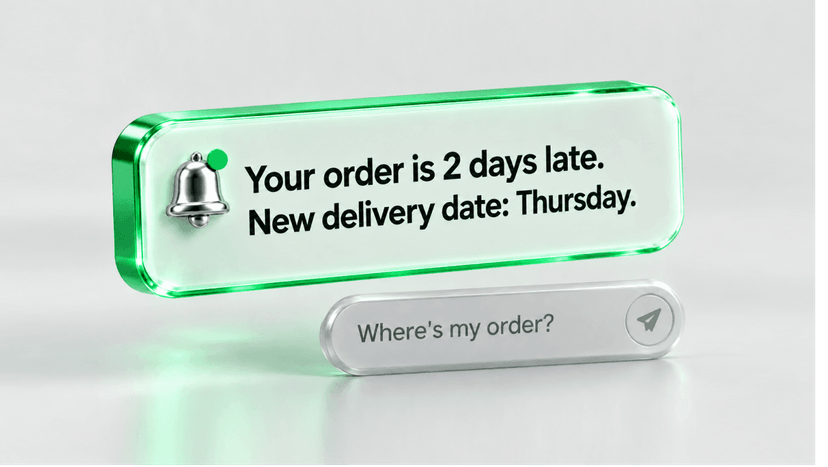
Today’s AI systems go beyond basic automation. They can process natural language, pull data from company databases, and offer tailored responses based on a customer’s history. For example, if a customer asks about their order status, an AI assistant can access real-time data from multiple systems to provide an accurate and timely update.
AI also uses sentiment analysis to assess customer emotions during conversations. If frustration is detected in a message, the system can either adjust its tone or escalate the issue to a human agent. Predictive support is another key feature - by identifying patterns in customer feedback, AI can spot recurring issues. For instance, if multiple customers report the same product problem, the system can flag it for proactive resolution.
These capabilities directly translate into tangible benefits for businesses.
Why AI Customer Service Matters for Business
AI tools don’t just answer questions - they transform how customer support operates. By handling routine inquiries, AI frees up human agents to tackle more complex, nuanced issues that require a personal touch. The 24/7 availability of AI ensures customers get quick responses, which often boosts satisfaction.
Another advantage is consistency. Since AI pulls information from a single source, it ensures customers receive uniform and accurate answers, reducing confusion caused by conflicting messages. AI also shines during high-demand periods, managing surges in customer queries without the need to bring in additional staff.
Beyond immediate support, AI tracks customer interactions and identifies common concerns. These insights help businesses improve their products and allocate resources more effectively to meet actual customer needs.
Companies Using AI for Customer Service: Case Studies
Businesses across various industries are already leveraging AI to enhance their customer service operations. One standout example is CoSupport AI.
CoSupport AI
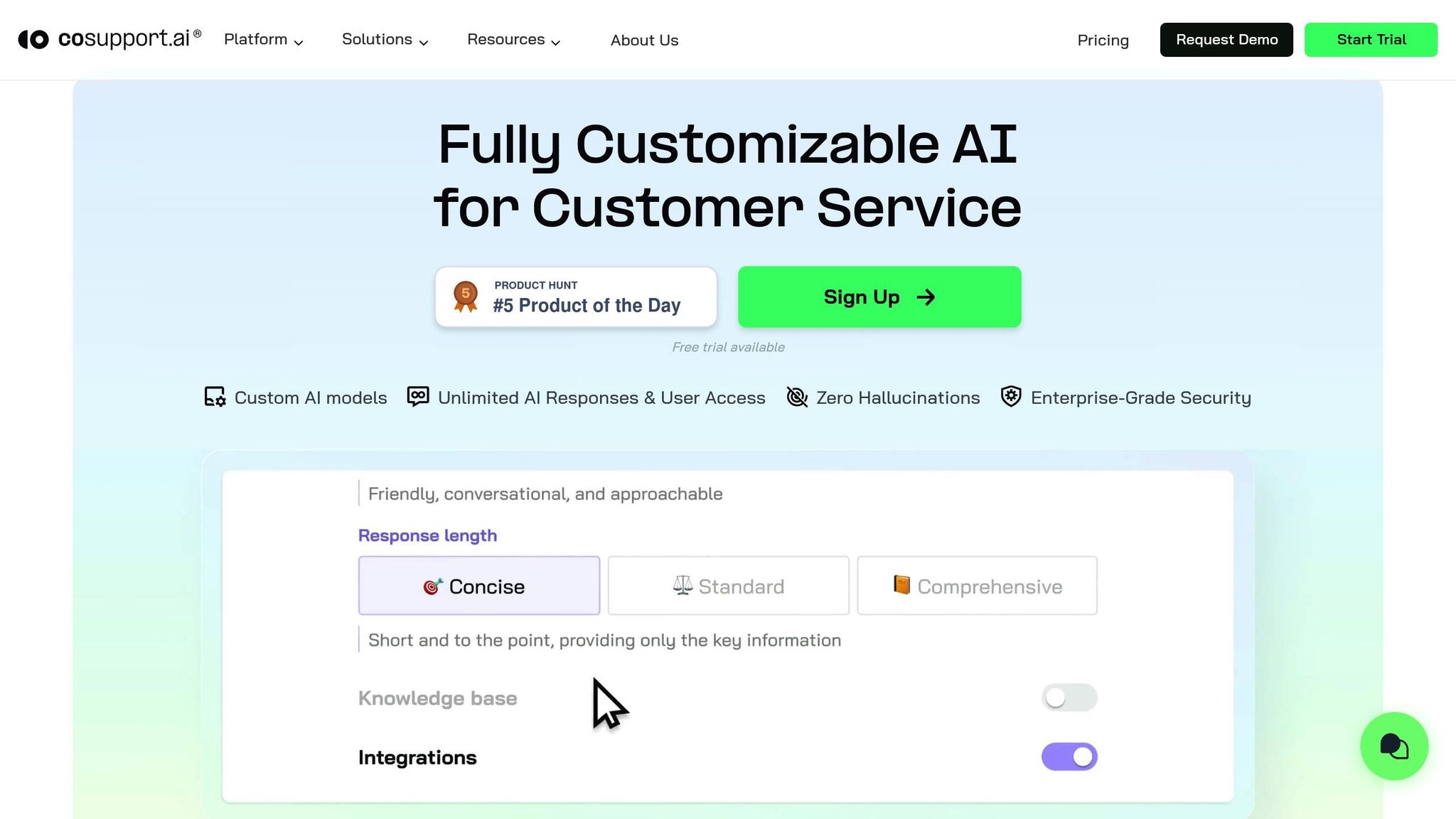
CoSupport AI allows businesses to create AI-driven customer support agents without any coding skills. By uploading resources like documentation, FAQs, helpdesk tickets, or website content, companies can train these agents to understand their products and services.
This approach can drastically cut response times and lower support costs. The platform automates up to 90% of customer support tickets, delivering answers directly from a company’s knowledge base. For questions that fall outside the AI's expertise, it seamlessly redirects the query to a human agent. Impressively, businesses can have the system up and running in under 10 minutes.
The platform also offers flexible pricing and integrates with popular customer support tools, fitting smoothly into existing workflows.
Other companies across industries are applying AI in equally impactful ways to improve their customer service strategies.
Many companies don’t build AI-powered customer service systems entirely from scratch; instead, they rely on established platforms like Zendesk to power their support operations. Zendesk uses AI-driven features such as chatbots, automated ticket routing, and intent detection to streamline workflows and improve response times. For example, its Answer Bot can resolve common queries instantly. At the same time, intelligent triage ensures tickets are routed to the right agents faster, helping businesses deliver more efficient and personalized support at scale.
What makes this approach especially effective is that tools like CoSupport AI can integrate directly with platforms like Zendesk, further enhancing automation. This allows companies to keep their existing support infrastructure while adding advanced AI capabilities such as higher-resolution rates, better accuracy, and fully automated responses.
sbb-itb-97114f1
Main AI Use Cases in Customer Service
AI isn't just for handling common questions - it also plays a critical role in tackling more complex challenges, like fraud detection. How to build an AI-Driven Customer Support Strategy?
Fraud detection stands out as a major application of AI in customer service. By processing massive amounts of data, AI can quickly identify suspicious activities, differentiate between legitimate and fraudulent transactions, and flag potential risks. Its ability to spot patterns that might elude human agents ensures real-time fraud detection and improved accuracy. Plus, AI systems can scale effortlessly, providing around-the-clock monitoring to help safeguard customer transactions.
This type of application not only strengthens security but also enhances the overall reliability of AI-driven customer service efforts.
Pros and Cons of AI Customer Service
AI customer service comes with its share of strengths and weaknesses. While it can deliver impressive results, some tradeoffs highlight where human involvement remains essential.
One of AI's standout benefits is speed. For instance, one implementation slashed first response times by 75%, cutting wait times from a minute to just 15 seconds. That kind of efficiency is hard to ignore.
Then there's the matter of cost savings. Automating 85% of customer service tasks allowed one company to allocate human agents to more complex, high-value interactions. By handling routine inquiries without expanding staff, businesses can significantly cut costs.
Another major advantage is scalability. During peak times, AI can handle thousands of conversations simultaneously, something human teams simply can't match. This makes it especially useful for businesses dealing with fluctuating customer demands.
However, AI isn't without its challenges. It struggles with complex or emotional situations, where understanding nuance or providing empathy is crucial. While AI is great for straightforward tasks, it often stumbles when the context gets tricky.
There's also the issue of the impersonal feel. Despite advancements, AI responses can still come across as robotic, lacking the warmth and authenticity of human interaction. Here's a quick comparison of AI's strengths and limitations:
Comparison Table
| Pros | Cons |
|---|---|
| Fast response times (15 seconds vs. 1+ minutes) | Struggles with complex/emotional issues |
| Significant cost savings from automation | May feel impersonal or robotic |
| 24/7 availability without breaks | Requires careful AI-to-human handoff |
| Scales to handle high volumes | Risk of misunderstanding context |
| Frees human agents for complex work | Can frustrate customers if poorly trained |
| Consistent service quality | Limited empathy and emotional intelligence |
To strike the right balance, many companies opt for a hybrid approach. AI takes care of routine tasks, while human agents step in for more complicated or sensitive issues. This setup combines the efficiency of AI with the personal touch that only humans can provide.
Key Takeaways
AI customer service has become a standard tool for many companies. Businesses like Airbnb, H&M, Sephora, Amazon, and Spotify now use AI for tasks like answering booking questions and offering product recommendations. These examples reflect the broader shift in how support operations are managed today.
By letting AI handle routine inquiries, human agents can dedicate their time to solving more nuanced and complex issues that require personal judgment. This division of responsibilities emphasizes the growing trend of combining AI with human expertise. AI shines in providing quick, 24/7 responses and managing high volumes of requests, while human support is irreplaceable for tackling emotionally charged or intricate situations.
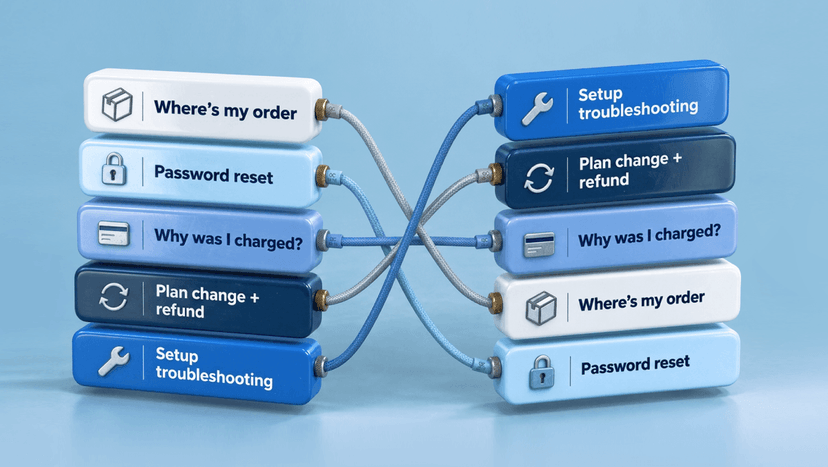
Automating tasks like FAQs, order tracking, and basic troubleshooting not only streamlines support processes but also allows human agents to focus on building stronger customer relationships and resolving complaints effectively. Companies that train their AI using their own resources - such as help articles, past interactions, and FAQs - often see better results and fewer errors. The secret lies in striking the right balance: leveraging AI for efficiency while relying on human input where it matters most.
.png)