
.png&w=1920&q=75)
Sephora’s AI agent for customer service tools shows how personalization transforms customer support. By combining augmented reality, chatbots, and diagnostics, Sephora provides tailored beauty experiences across online and in-store channels. Key takeaways include:
- AI Tools Driving Sales: Tools like Virtual Artist (AR makeup try-ons) and Color IQ (precise shade matching) led to a 20% increase in online sales and reduced product returns.
- Data-Driven Personalization: Chatbots use customer profiles to offer tailored recommendations, manage loyalty rewards, and handle 40% of routine FAQ workflows.
- Omnichannel Integration: AI connects online and in-store experiences, ensuring consistency and saving customers time.
- Skin Diagnostics: Real-time skin analysis powered by AI provides product suggestions based on unique skin concerns, handling 200,000 weekly sessions.
Sephora’s approach highlights how brands can use AI to deliver personalized, efficient, and customer-centric support.
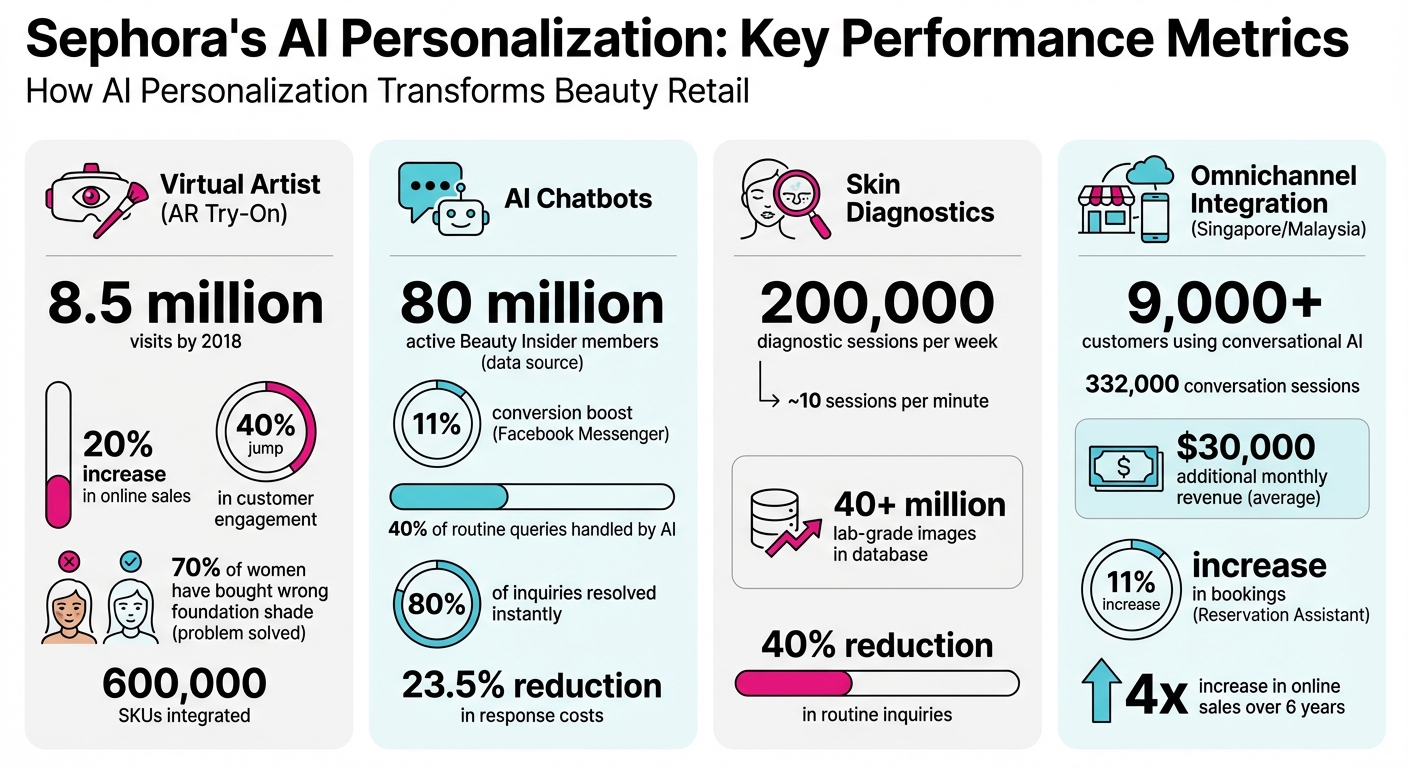
Sephora AI Personalization Results: Key Metrics and Impact
Personalization in Customer Service: AI Strategies for Scale
sbb-itb-97114f1
Virtual Artist: AR and AI for Product Recommendations
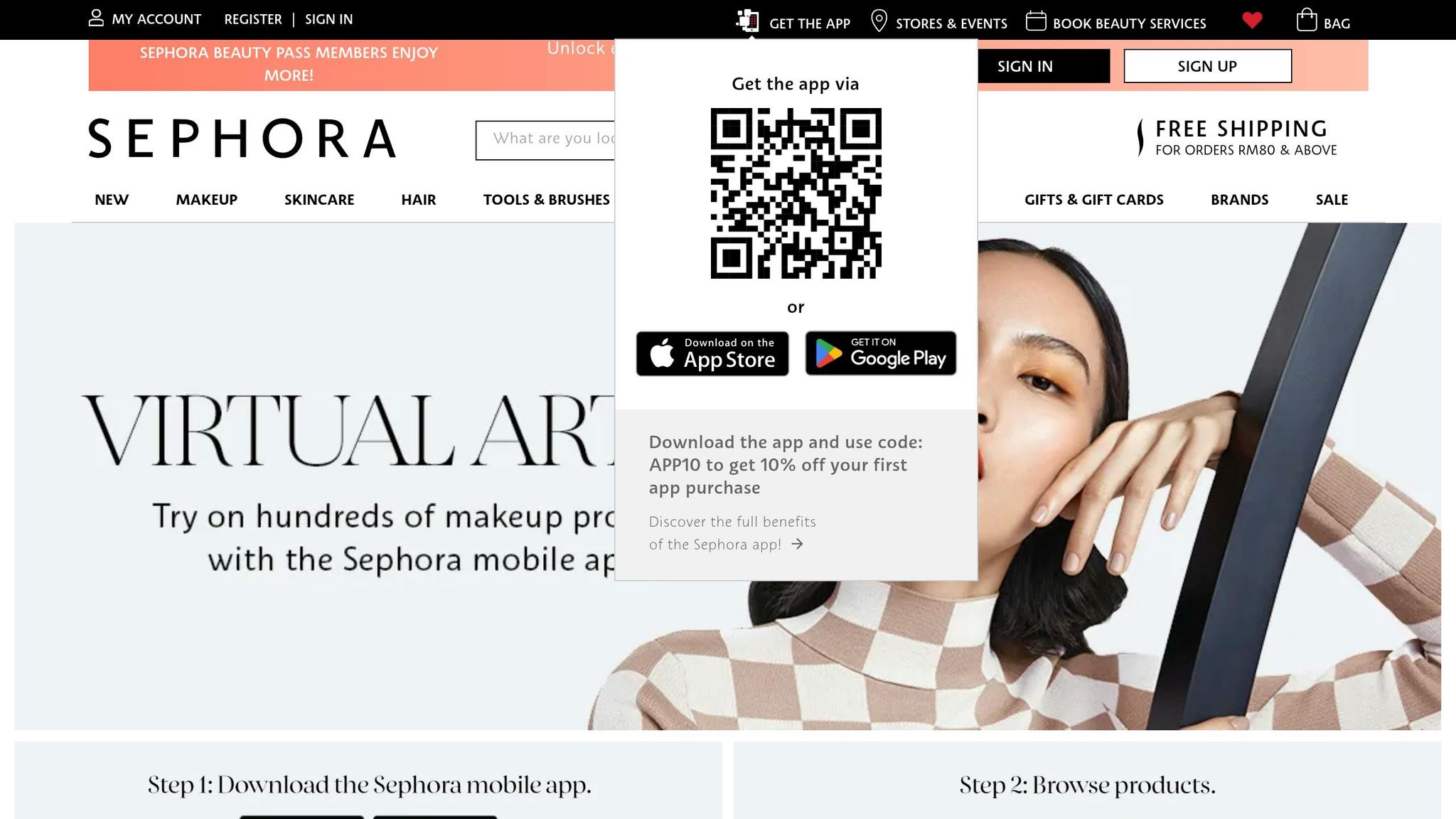
Sephora teamed up with ModiFace to create Virtual Artist, an augmented reality tool designed to revolutionize online makeup shopping. One of the biggest hurdles in buying beauty products online is figuring out if they'll actually work for you. Virtual Artist, part of Sephora's AI-powered customer service, tackles this by using advanced AI to predict how product colors will look on various skin tones under different lighting conditions.
Unlike simple 2D filters that just place static images on a face, Virtual Artist uses 3D face mapping to account for facial structure, texture, and depth. It tracks facial features in real time, ensuring digital makeup looks natural even as the user moves. On top of that, its eye-tracking technology takes the eyeshadow try-on experience to a whole new level, surpassing the capabilities of standard digital lenses.
The tool’s skin tone analysis, powered by proprietary algorithms, drives the "Makeup Color Match" feature. This function recommends products tailored to each user's specific complexion, solving a common issue: 70% of women have bought foundation that didn’t match their skin tone. Virtual Artist removes the guesswork entirely.
How Virtual Artist Works
The system identifies and tracks key facial features - like eyes, lips, and skin - in real time. As users experiment with products, the AI ensures that lipstick, eyeshadow, and other makeup are applied precisely where they belong on the digital image.
To make this process seamless, the tool uses functional boxes and alignment guides, helping users standardize their video feed for more accurate results. It’s fully integrated with Sephora’s inventory system, reflecting availability across up to 600,000 SKUs. This means users can try on products that are actually in stock, streamlining the shopping experience.
Virtual Artist also adjusts for facial curves and shadows, making the digital try-on feel realistic. Shoppers can test thousands of products instantly, avoiding the hygiene concerns and time constraints that come with physical swatching. This interactive experience is a stepping stone to even more advanced personalized tools, like Sephora’s AI chatbots.
"Before Sephora, we would have to go to brands and try to motivate them and show them why technology could make sense for their business. Sephora has gotten it from day one, wanting and incorporating new ideas."
– Parham Aarabi, CEO of ModiFace
Results for Customer Experience
By 2018, Virtual Artist had attracted over 8.5 million visits, and the results were clear: Sephora saw a 20% increase in online sales thanks to AI-driven virtual try-ons.
Customer engagement also soared, jumping 40% when users interacted with Virtual Artist tools. The technology has significantly reduced return rates by offering more accurate product matches, addressing the "shade-match hesitation" that often stops people from buying beauty products online.
Virtual Artist has expanded beyond mobile devices, now featured in Sephora’s in-store "Beauty Hubs" with interactive mirrors. This omnichannel approach lets customers transition easily from virtual testing to in-store purchases, ensuring the products they receive match exactly as previewed. It’s a perfect example of how AI can bridge the gap between digital and physical shopping, building confidence at every step.
Key Insight: Virtual Artist demonstrates how personalized technology can eliminate doubts about product suitability. With a 20% boost in sales, it’s clear that when customers feel confident in their choices, they’re more likely to buy.
AI Chatbots: Personalized Conversational Support
Sephora's chatbots are changing the game by offering personalized conversational support that bridges the gap between online and in-store experiences. These AI-driven assistants tap into customer data to provide tailored help across multiple platforms. With access to the insights of Sephora's 80 million active Beauty Insider members, the chatbots can reference purchase history, skin concerns, and loyalty rewards on the spot.
And the impact? It's clear. Sephora's AI beauty advisor on Facebook Messenger boosted conversions by 11%, showing how personalized conversations can directly drive sales. Plus, the chatbots handle 40% of routine queries, freeing up Sephora's human consultants to focus on more in-depth beauty consultations.
In March 2026, Sephora introduced an AI-enhanced ChatGPT experience exclusively for U.S. Beauty Insider members. This new tool offers advice tailored to individual profiles and even allows direct payments within the ChatGPT interface.
"At Sephora we are passionate about assisting our customers with the best beauty advice and curation, wherever and whenever they want. Today this means piloting the Sephora app on new intelligent channels such as ChatGPT."
– Anca Marola, Global Chief Digital Officer, Sephora
Using Customer Account Data for Personalization
Sephora's chatbots take personalization to the next level by tapping into a unified customer profile that includes browsing habits, past purchases, and Beauty Insider activity. This means the AI won't recommend a foundation shade you've already tried but will suggest products that complement your skincare routine. It's not about pushing products - it’s about making thoughtful, informed suggestions.
The Skin Quiz tool is another standout feature. It remembers your profile over time, so if you’ve mentioned having dry, fragrance-sensitive skin, the chatbot will use that information to refine future recommendations without asking again. Over time, the system builds a more complete understanding of your preferences, making each interaction feel more tailored.
These bots also handle account-related tasks like sharing details about rewards, Beauty Insider Cash, and exclusive perks such as free shipping and samples - all within the chat. By consolidating product discovery and account management in one place, Sephora’s chatbots make the customer experience smoother and more convenient.
Building Omnichannel Conversational Support
Sephora ensures its chatbots are available wherever customers prefer to interact. Whether through Facebook Messenger, the Sephora mobile app, or ChatGPT, the AI assistants provide consistent, personalized support. For example, a skin diagnostic done on the app will immediately influence recommendations on the desktop site. This omnichannel approach creates a seamless experience across all platforms.
The success of the Reservation Assistant on Facebook Messenger highlights how AI can enhance in-store engagement by making digital interactions feel effortless. It’s a prime example of how technology can connect the digital and physical shopping worlds.
Sephora's hybrid support model balances automation with human expertise. AI handles up to 80% of inquiries instantly, while more complex issues are passed to human consultants. What’s more, human agents are given the full context of previous conversations, so customers don’t have to repeat themselves. This thoughtful integration of AI and human support keeps things efficient without losing the personal touch that beauty shoppers value.
Key Insight: Sephora’s chatbots show that personalization goes beyond product recommendations. By leveraging customer data, they create a seamless, context-aware experience across every channel. When AI remembers your preferences and connects digital and in-store interactions, it feels less like support and more like advice from a trusted friend.
Skin Diagnostics: AI-Powered Skincare Analysis
Sephora has teamed up with ModiFace to create a Skin Diagnostic Tool that uses computer vision to analyze your skin in real time. This tool evaluates factors like pigmentation, texture, wrinkles, and redness, delivering insights grounded in science. Building on their success with AR and chatbot technology, Sephora has taken personalization to the next level with this innovation.
The numbers are staggering: Sephora handles 200,000 diagnostic sessions every week, which breaks down to about 10 sessions every minute. It's a workload that no human team could manage, but the AI tackles it with consistency and precision every time.
How AI Analyzes Skin and Recommends Products
The process starts with something as simple as a selfie. Using convolutional neural networks, the AI maps out facial features and compares your skin tone to a database of over 40 million lab-grade images. This advanced technology picks up on details that even the sharpest human eye might miss.
"Foundation shade match is THE biggest pain point in beauty because it simply cannot be done well by eye."
– Sergio Rattner, CEO, FitSkin
But it doesn't stop at visual analysis. The AI also incorporates information from Sephora's "Skin IQ" quizzes, where customers share their concerns - like sensitivity or preferred ingredients. This data is combined with a customer's browsing history, purchase patterns, and Beauty Insider activities to create a unified profile. The result? Recommendations that feel like they were made just for you. This approach fits into Sephora's broader AI ecosystem, which already features AR try-ons and personalized chatbot support.
The tool also offers long-term benefits. It keeps a record of your skin profile, tracking changes over time. This means it can adapt its recommendations as your skin evolves, without you having to repeatedly provide the same information.
Planned Improvements to AI Diagnostics
Sephora is not stopping here. The company is working on refining the tool to better serve a wider range of skin tones and conditions. By addressing gaps in representation, they aim to make the AI even more effective for everyone.
Key Insight: Sephora’s skin diagnostic tool shows how AI can handle complex, personalized tasks on a massive scale. By blending computer vision with customer data, it delivers accurate, tailored recommendations. This not only enhances the customer experience but also lightens the load for support teams, reducing routine inquiries by up to 40% while equipping human advisors with valuable insights for better guidance.
How Sephora Connects Online and In-Store AI
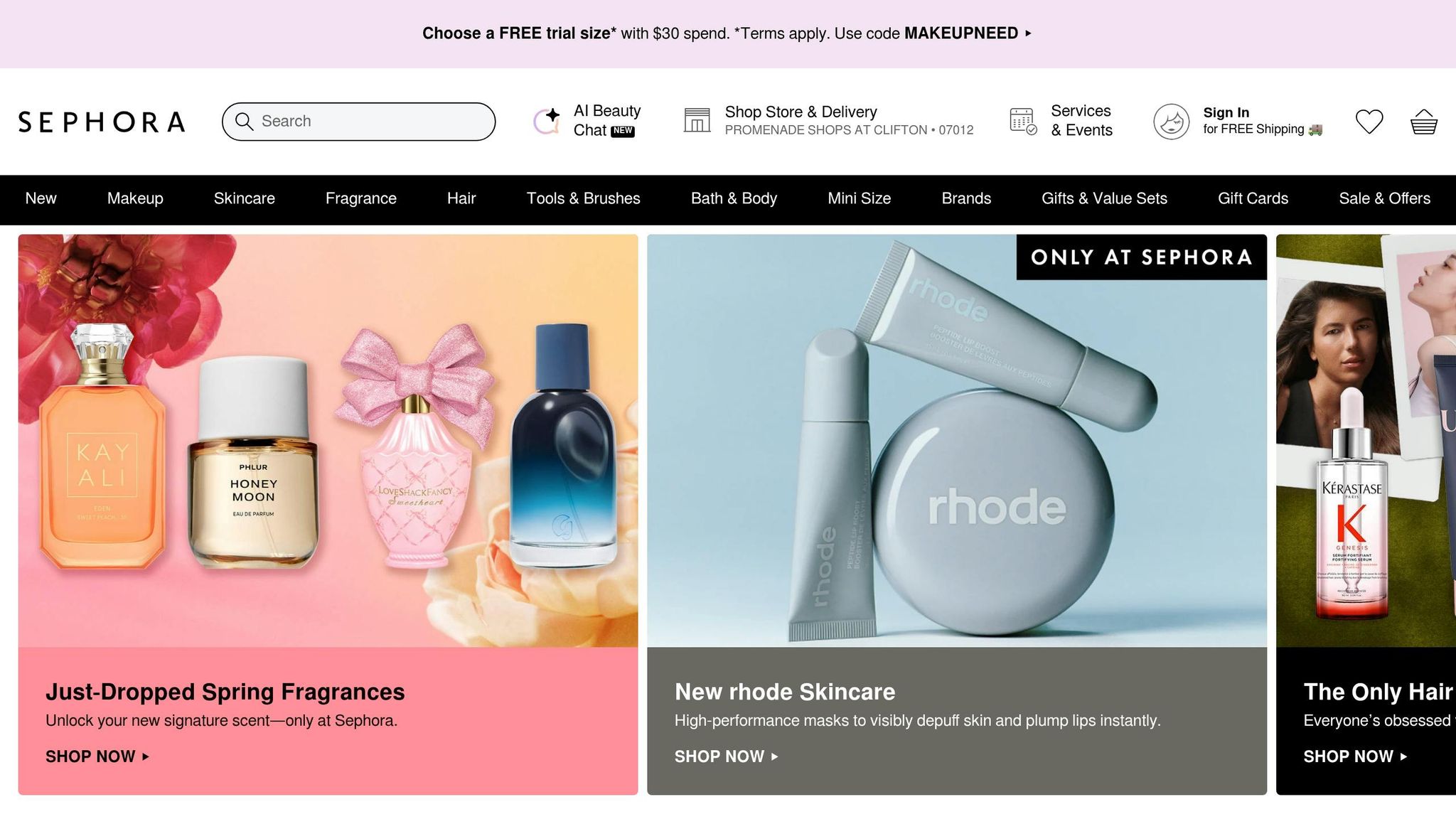
Connecting Digital and Physical Customer Touchpoints
Sephora has found a way to bridge the gap between online and in-store experiences, using AI to create a seamless customer journey across both channels.
In April 2023, Sephora Singapore took a bold step by merging its online and in-store teams into one "omni-retail department." This change broke down silos, enabling over 9,000 customers in Singapore and Malaysia to interact directly with in-store advisors through a conversational AI virtual assistant. The results speak volumes: over 332,000 conversation sessions and an additional $30,000 in monthly revenue on average.
Inside Sephora's physical stores, "Beauty Hubs" equipped with interactive mirrors and iPad stations bring the same AR technology from the mobile app to life. Customers can try on products virtually in-store, using the same tools they’ve explored at home. This consistency between digital and physical experiences gives shoppers the confidence to make decisions.
What’s even more impressive is how seamlessly AI transitions to human advisors. When a customer shifts from chatting with a bot to speaking with a live consultant, the advisor has access to the full conversation history. This eliminates the need for customers to repeat themselves, saving time and ensuring a smooth experience.
"Sephora's virtual assistant lets customers reserve products, pick them up in-store, check product availability, and ask questions about store timings and return policies. The beauty advisors in-store answer any questions the customer may have about their purchase decisions as they would when they're in-store."
– eTail Asia
This integration not only enhances customer satisfaction but also builds a foundation for scaling eCommerce customer support with AI and automation.
Using Automation to Scale Retail Support
Sephora has taken its unified strategy a step further by using automation to handle routine tasks, freeing up human advisors for more complex customer needs. Tasks like checking store hours, booking appointments, and verifying product availability are now managed by AI, making operations more efficient.
The impact is clear. AI chatbots now resolve up to 80% of customer inquiries instantly, cutting response costs by 23.5%. Around 40% of routine queries are deflected, allowing support teams to focus on providing expert guidance to those who need it most.
| Automation Tool | Channel | Primary Benefit | Impact |
|---|---|---|---|
| Messenger Chatbot | Online/Mobile | Deflects routine FAQs | 11% conversion lift |
| Reservation Assistant | Online to In-Store | Automates appointment scheduling | 11% increase in bookings |
| Virtual Artist (AR) | Mobile/In-Store | Reduces shade-match hesitation | 20% jump in online sales |
| Beauty Hubs | In-Store | Provides digital self-service stations | 4x increase in online sales over 6 years |
Key Insight: Sephora’s approach proves that AI isn’t about replacing human interaction - it’s about connecting experiences more effectively. By automating repetitive tasks and ensuring smooth transitions between digital tools and human advisors, retailers can scale personalized support while keeping quality intact. The secret lies in maintaining context, whether a customer starts their journey online or in-store.
What Support Teams Can Learn from Sephora
Steps to Add AI Personalization to Your Support
Sephora's success with AI personalization isn't accidental - it's built on a clear strategy that any support team can replicate. The secret lies in unifying website, email, and support data into a single system. This eliminates the risk of outdated or irrelevant recommendations that can frustrate customers.
The first step? Focus on real-time behavioral signals instead of relying solely on historical data. What customers are doing right now - like how long they hover, how far they scroll, or their immediate actions - reveals more about their intent than past purchases. For example, set up behavioral triggers to act on "browse abandonment" (browsing without adding to cart) rather than waiting for cart abandonment to occur.
"The core of AI personalization is the 'relevancy score.' Success is no longer about showing more products, but showing the most relevant ones by synthesizing clickstream data in real-time."
– Vinod Sivagnanam, Adobe
Another game-changer is implementing a two-agent AI system. In this setup, one AI handles customer-facing conversations around the clock, while a second "Assistant Agent" works in the background. This second agent analyzes interactions to uncover customer intent, objections, and potential leads. One skincare brand using this approach saw a 27% jump in chat-to-purchase conversions and reduced routine support queries by 40% in just two weeks.
Make use of visual tools and interactive diagnostics. Allow customers to upload images or screenshots to find matching products instantly. Quizzes and diagnostic tools can also gather zero-party data - information customers willingly share - helping you deliver better recommendations across all channels.
These strategies create a strong foundation for tools like CoSupport AI to help scale your support operations effectively.
How CoSupport AI Helps Scale Personalized Support
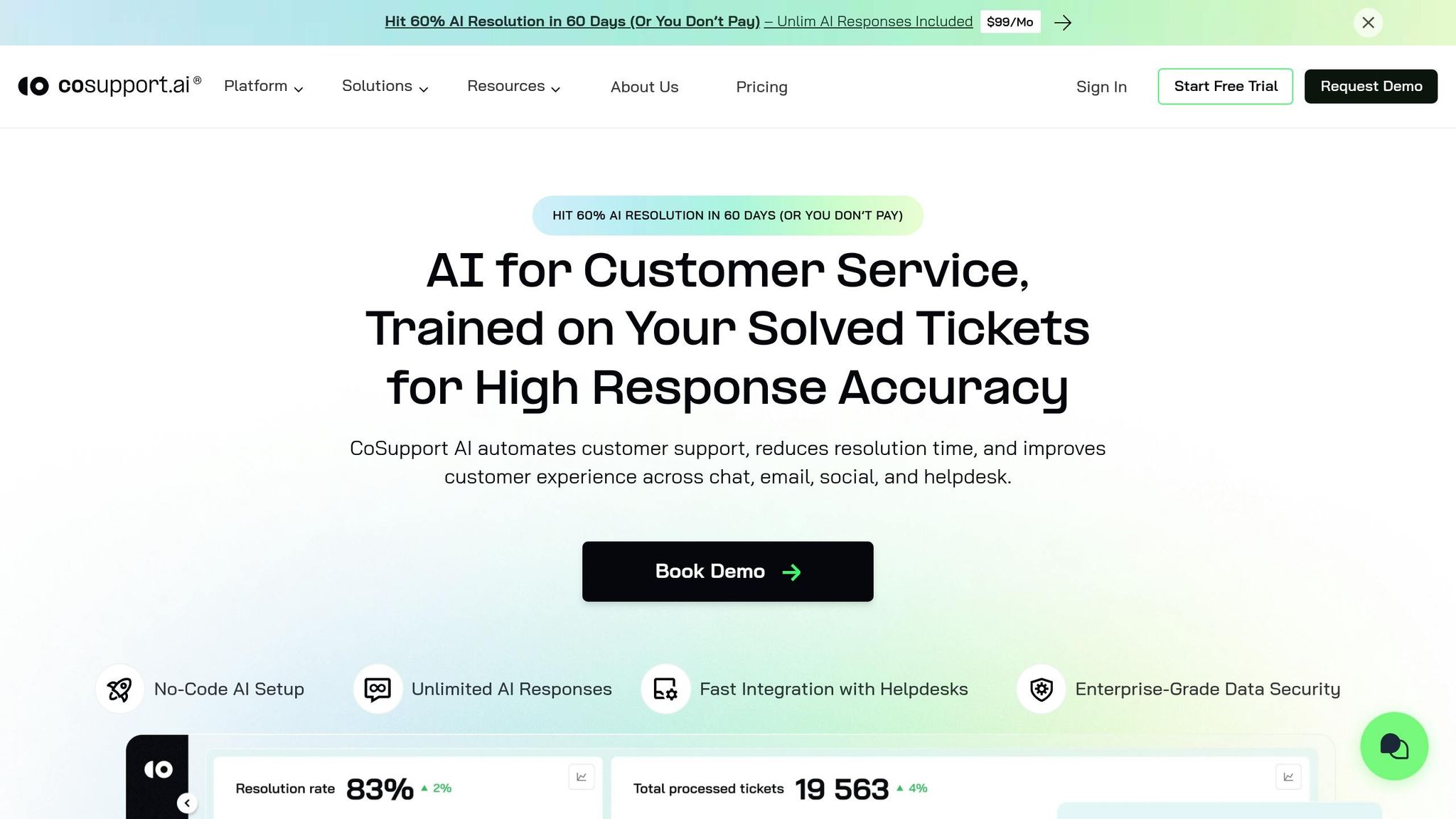
Inspired by Sephora's approach, CoSupport AI offers a way to bring personalization to teams without needing a massive budget or technical expertise. It works by training AI agents on your existing helpdesk content - whether it's from Zendesk, Intercom, or Slack - and requires no coding. This allows the AI to immediately understand your products, policies, and customer needs.
The platform is designed to handle routine support tasks instantly, freeing your human agents to focus on complex, high-stakes issues. When a handoff to a human agent is required, the AI ensures a seamless transition by providing full conversation context, so customers never have to repeat themselves. This mirrors Sephora's strategy of blending digital tools with human expertise for a smooth, consistent experience.
CoSupport AI's technology combines RAG (Retrieval-Augmented Generation) with Knowledge Graphs and includes a fact-validation layer to prevent errors, often referred to as AI "hallucinations." This is especially important in industries like beauty or skincare, where incorrect advice could harm customers or damage trust. The AI won't suggest out-of-stock items or incompatible products, ensuring recommendations are always accurate.
Additionally, the platform analyzes customer interactions and generates daily summaries of objections and high-value leads. These insights can guide your marketing and product teams in real-time. With support for over 40 languages and pricing starting at just $0.04 per AI-generated response, CoSupport AI makes scaling personalized support both practical and cost-effective.
By combining smart strategies with specialized tools, support teams can create a unified, customer-first experience that scales effortlessly.
Key Insight: AI personalization isn't about replacing human expertise - it’s about delivering the right information at the right time. By integrating data systems, focusing on real-time signals, and ensuring smooth collaboration between AI and human agents, support teams can make every interaction feel personal. The brands that thrive in the coming years will be those that make every customer feel like they’re having a one-on-one conversation, no matter the channel.



.png&w=828&q=100)
.png&w=96&q=100)
.png&w=828&q=100)
.png&w=96&q=100)