.png&w=96&q=75)

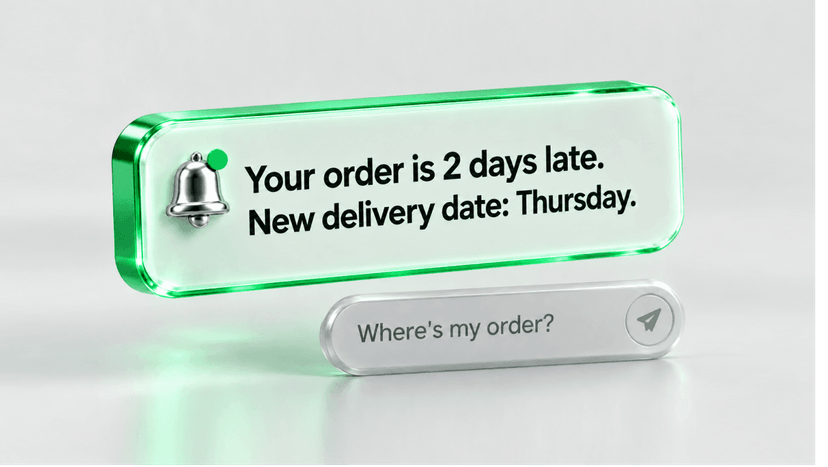
AI is transforming customer service by automating routine tasks, improving response times, and enabling businesses to scale support without adding staff. Here's the big picture:
- Handles up to 90% of routine inquiries: AI tools free human agents to focus on complex issues.
- 24/7 availability: Customers get instant, consistent responses across all channels.
- Personalization: AI analyzes customer data to deliver tailored support.
- Multi-language support: Modern systems break language barriers, handling multiple languages in real time.
- Cost savings: Reduces the need for hiring and training additional staff.
AI tools also improve over time through learning and feedback, ensuring better accuracy and efficiency. Businesses that adopt AI early can streamline operations, enhance customer satisfaction, and stay ahead in a competitive market.
Key takeaway: AI-powered customer service is no longer optional - it's the future of support.
How to Automate Customer Service with AI: A Success Story with TeamSystem

What Is AI-Powered Customer Service and Why It Matters
AI-powered customer service uses advanced technology to handle routine customer inquiries automatically, without needing to involve a human agent for every interaction.
Unlike basic chatbots that stick to rigid, pre-written scripts, AI agents are more advanced. They can grasp context, interpret complex queries, and provide tailored responses based on your company’s knowledge base.
This matters because traditional customer support systems often struggle to keep up with the sheer volume of inquiries as businesses grow. Scaling up a support team by hiring and training new staff takes significant time and resources. Understanding how AI agents function reveals why they’re so effective in addressing these challenges.
How AI Agents Work
AI agents learn from the resources your company already has - such as help articles, customer chat logs, FAQs, and internal documentation. When a customer asks a question, the system quickly identifies the most relevant information and responds in a way that matches your brand's tone. For questions that are too complex, the AI seamlessly transfers the issue to a human agent.
Over time, the system gets smarter. Through reinforcement learning, it adapts and improves as human agents review and refine its responses. This ongoing learning process ensures faster, more accurate replies while driving a range of business benefits.
Business Benefits
One clear advantage is cost savings. By managing a large portion of routine inquiries, AI reduces the workload for human agents, which can help cut down on support costs.
AI also delivers fast, round-the-clock responses. This ensures customers get the help they need right away, even during busy periods, leading to higher satisfaction.
Consistency is another key strength. AI agents provide uniform responses that align with your approved support materials, ensuring your brand’s voice remains consistent across all interactions.
Top Trends in AI-Powered Customer Service
AI-powered customer service is evolving at an impressive pace, transforming how businesses support their customers. These advancements go beyond simple automation, creating smarter systems that respond to customer needs with precision. Let's explore the trends shaping this new era.
Personalized and Predictive Support
AI tools now analyze a wealth of customer data - everything from past purchases to previous interactions - to deliver more tailored and relevant support. This means customers are no longer treated as just another ticket number but as individuals with unique needs.
Even more impressive is AI's ability to predict potential issues before they arise. By identifying patterns in customer behavior or account activity, these systems allow businesses to shift from merely reacting to problems to proactively addressing them. For example, if a customer’s usage data suggests they might encounter a technical issue soon, support teams can step in early to resolve it, creating a smoother experience.
Account context sharpens those predictions. ZoomInfo, a B2B data and intelligence platform, pairs that data with AI to surface decision-maker details and signals like hiring surges, so teams spot needs sooner.
Generative AI for Knowledge Management
Generative AI is revolutionizing how businesses manage and deliver support content. Surveys highlight its growing popularity as a tool for streamlining customer service and saving time.
This technology can analyze past interactions to predict common questions and draft helpful knowledge articles that align with your company’s tone. It even organizes content efficiently by tagging and classifying new information as it’s created. By referencing multiple sources, AI generates clear and concise answers, making even the most complex topics easier for customers to understand.
One standout feature is the ability to identify gaps in existing documentation. AI reviews support data to pinpoint areas where information is lacking, suggesting updates or new articles to fill those gaps. According to Gartner, by 2025, 80% of customer service teams will rely on generative AI for these tasks.
Multi-Channel and Multi-Language Support
AI systems now provide seamless customer support across various channels, including chat, email, social media, and voice. Rather than juggling multiple platforms, businesses can rely on a single AI agent to ensure consistent service, no matter how customers choose to reach out.
Language barriers are also becoming a thing of the past. Modern AI agents can handle multiple languages in real time, even switching between them mid-conversation. This makes global support more accessible and eliminates the need for separate teams for different regions.
Another key advancement is maintaining conversation context across channels. For instance, a customer who starts a query via email can continue the discussion over chat without having to repeat their issue. As businesses expand their reach across platforms and languages, ensuring data security becomes even more critical.
Running that across channels needs management, not just deployment. Parloa provides a platform for building, testing, and monitoring voice and chat agents as conversation volume grows.
Data Security and Compliance
As AI becomes more integrated into customer service, safeguarding interactions and maintaining compliance are top priorities. A recent study shows that 81% of contact center executives are investing in AI tools that enhance security while supporting agents.
Leading platforms adhere to strict standards like ISO 27001 and GDPR to ensure secure data handling. Features like automated data retention policies, audit trails, and the ability to delete customer data on request provide added layers of protection.
Looking ahead, AI-to-AI communication is emerging as a new frontier. These systems will increasingly collaborate, analyzing issues, generating solutions, and executing tasks - all while keeping humans involved for oversight and handling more complex decisions. This balance between automation and human input ensures both efficiency and accountability.
sbb-itb-97114f1
Case Study: AI Transforming Customer Support
SaaS Company Success Story
Here's a real-world example of how AI can reshape customer support. A mid-sized project management software company faced a common challenge: its small support team was overwhelmed by routine inquiries. This led to long response times and dissatisfied customers.
Training the AI Agent
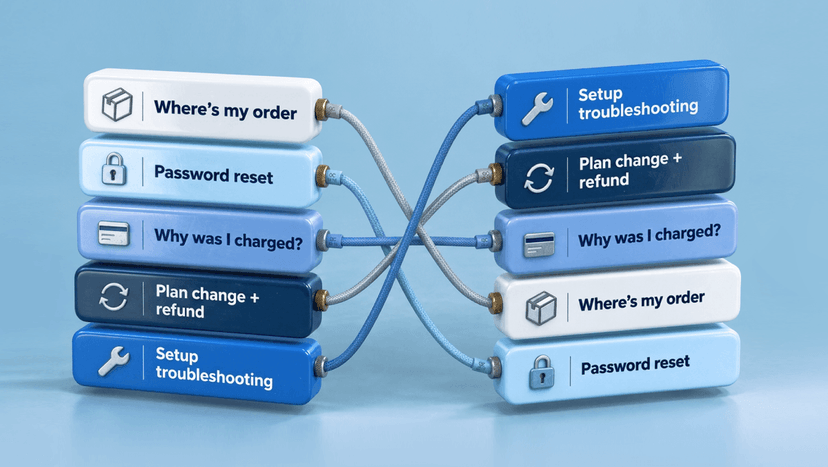
To tackle the issue, the company decided to deploy an AI-powered solution. The first step was training the AI agent using a rich dataset that included help articles, past support conversations, product documentation, and website FAQs. This preparation enabled the AI to handle common issues like password resets, billing questions, feature explanations, and basic troubleshooting effectively.
Implementation and Results
Once implemented, the AI quickly took over most routine tickets, providing nearly instant responses. Customers no longer had to endure long waits for simple answers, which significantly boosted satisfaction levels.
Cost Savings and Team Evolution
With the AI handling repetitive tasks, the company saw a noticeable reduction in overtime costs. Human agents were reassigned to focus on more complex issues, gather product feedback, and engage strategically with clients. This shift not only improved team efficiency but also enhanced the overall support experience.
Continuous Improvement
Months after the launch, the AI continued to handle an increasing number of tickets with ease. It also improved over time by learning from new interactions. Meanwhile, human agents regularly reviewed and fine-tuned the AI's responses to ensure quality and relevance.
This case study illustrates the transformative potential of AI in customer service. By letting AI manage routine tasks, companies can free up human agents for more meaningful and complex interactions, creating a more efficient and impactful support system.
Key Takeaways for Customer Support Teams
AI-powered customer service is reshaping how support teams operate, blending efficiency with precision and forward-looking strategies. Companies leveraging AI are seeing measurable improvements in productivity, cost management, and customer satisfaction.
Scale Support Without Adding Staff
With AI agents, your team can handle a growing number of support tickets without the need to hire additional staff. These virtual assistants take care of routine inquiries, allowing your team to focus on complex issues that require human expertise and empathy - all while keeping operational costs steady.
For instance, instead of hiring three agents at $45,000 each, you could implement an AI solution capable of managing up to 90% of routine queries. Training your AI agent with your company's resources - like help articles, past customer interactions, and product documentation - turns it into a knowledgeable, tireless team member. Plus, AI operates 24/7, ensuring round-the-clock support.
This efficiency also comes with enhanced accuracy and stringent security protocols.
Accurate and Secure AI Solutions
Modern AI platforms provide reliable, policy-compliant answers by relying on your business data. These systems are designed to deliver responses that align with your guidelines, ensuring consistency and accuracy in customer interactions.
Security is a cornerstone of these solutions. Look for platforms that meet high standards, such as ISO 27001 certification and GDPR compliance, to protect sensitive customer information. Beyond security, AI can identify patterns in customer issues, flagging potential problems early and offering insights to proactively address them - ultimately reducing future ticket volumes.
Once your team has achieved operational efficiency and safeguarded data, the next step is preparing for what’s ahead.
Preparing for the Future of Customer Support
Adopting AI early gives support teams a head start. The technology is advanced enough to deliver tangible results, and early adopters can refine their strategies while competitors are still catching up.
Many AI platforms now offer multi-language support, often covering over 40 languages. This feature allows businesses to expand their reach without hiring additional multilingual staff, opening doors to new markets.
To get started, consider a pilot program targeting your most common ticket types - like password resets, billing inquiries, or basic troubleshooting. Once you’ve seen success in these areas, you can gradually expand AI automation to handle more complex scenarios.
FAQs
How does AI make customer service more personalized?
AI helps make customer service more personal by diving into data like purchase history, preferences, and previous interactions. This means businesses can offer responses and recommendations that truly match what each customer is looking for.
On top of that, AI can identify patterns among customers with similar habits or needs. By doing so, companies can provide more focused support and offers, making customers feel appreciated and creating a more enjoyable and meaningful experience.
How can companies keep customer data secure and stay compliant when using AI-powered customer service tools?
To safeguard customer data and adhere to privacy regulations, companies must take several key steps. First, encrypt data both while it's being transmitted and when it's stored. This ensures that sensitive information remains protected from unauthorized access.
Additionally, enforcing strict access controls and using multi-factor authentication can significantly reduce the risk of data breaches by limiting access to only those who truly need it.
It's also essential to perform regular security audits to identify vulnerabilities and ensure compliance with current privacy laws, such as GDPR or CCPA. These measures not only protect customer information but also help build and maintain trust in your AI-driven tools.
How can businesses train AI agents to reflect their brand's tone and knowledge accurately?
To ensure AI agents reflect your brand’s tone and expertise, start by offering them high-quality data. This could include past customer interactions, support tickets, or internal documents - anything that captures your brand's unique style and messaging.
Be clear about the tone of voice you want the AI to adopt. Provide specific instructions or examples to guide it. As your brand evolves, make sure to regularly update the AI with fresh data to keep its responses aligned with your current identity.
Ongoing tweaks to both the training data and prompts are key. This process helps the AI consistently deliver responses that are accurate and in line with your brand’s voice.
.png)