.png&w=96&q=75)

AI tools like ChatGPT can simplify customer service by handling routine tasks, such as answering FAQs and providing instructions, allowing human agents to focus on complex issues. With 24/7 availability, it ensures faster responses and improves efficiency without increasing team size.
Key Takeaways:
- Automates repetitive queries like password resets or billing questions.
- Learns from your support materials to deliver accurate, on-brand responses.
- Escalates complex issues to human agents with clear handoff rules.
- Integrates with existing tools like Zendesk for seamless operations.
- Requires regular updates to knowledge bases for consistent and accurate responses.
- Tracks performance through metrics like resolution rates and customer satisfaction.
What to Avoid:
- Over-relying on AI without human backup.
- Neglecting updates to support content.
- Ignoring data privacy and security protocols.
- Allowing inconsistent tone across support channels.
Start small by automating simple tasks, setting up clear escalation processes, and regularly refining your system to keep up with customer needs. This balance of AI speed and human expertise ensures a better customer experience.
ChatGPT For Customer Support Crash Course | How To Use ChatGPT For Customer Service | Simplilearn
What is ChatGPT for Customer Service Workflows
ChatGPT for customer service workflows is an AI-driven virtual assistant designed to integrate seamlessly with your support systems. By learning from your help documentation, FAQs, and past customer interactions, you deliver responses that feel natural and align perfectly with your brand voice.
How ChatGPT Automates Support Tasks
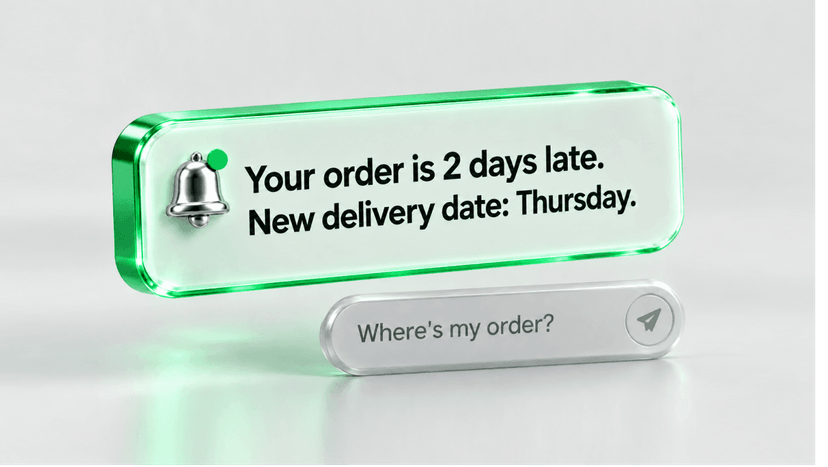
ChatGPT takes automation to the next level by interpreting customer inquiries and pulling precise answers directly from your support content. For instance, if a customer asks how to cancel their subscription, ChatGPT can provide the exact steps without delay.
It’s versatile too - it can work with various support materials, whether they’re FAQs, troubleshooting guides, or even insights from previous successful resolutions.
Main Benefits of Using ChatGPT
- 24/7 Instant Responses: Handle spikes in customer inquiries without needing to add more staff.
- Streamlined Query Management: Let the AI tackle repetitive questions, saving your team’s time for more complex problems.
- Consistent Tone and Messaging: ChatGPT mimics your company’s voice and terminology, ensuring every interaction feels on-brand.
Why AI Matters for Growing Support Teams
As your customer base expands, so do support demands. For example, a startup growing from 1,000 to 10,000 customers might experience a surge in support tickets that’s tough to manage with a human-only team. AI solutions like ChatGPT help bridge that gap, ensuring support scales efficiently. Up next, discover how to build workflows that make the most of AI-powered tools.
How to Build AI-Powered Customer Service Workflows
Creating AI-driven customer service workflows involves striking the right balance between automation and human intervention. The goal is to handle routine tasks efficiently while ensuring that more complex issues get the attention they deserve from human agents.
Review Your Current Support Processes
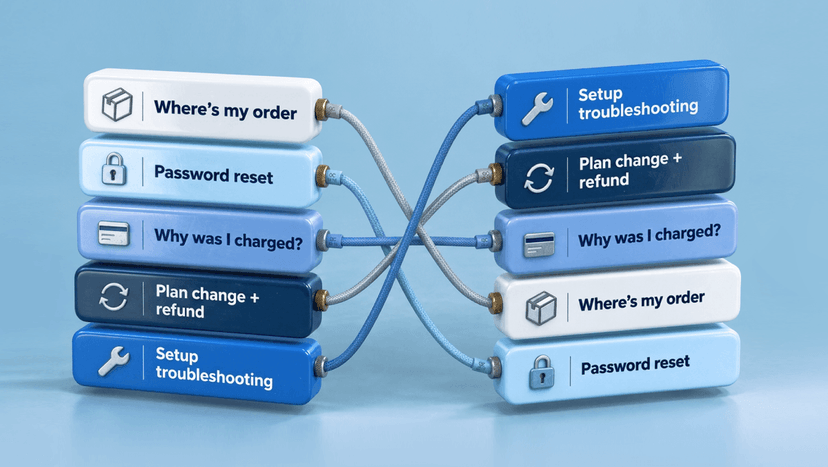
Start by mapping out your existing customer support workflows. Then, analyze recent ticket volumes to categorize requests. Look for high-volume, low-complexity queries - things like password resets, billing inquiries, account setup issues, or basic product details. These are ideal candidates for automation.
If customers often experience delays due to unclear or outdated content, make sure to update your support materials before training your AI.
Train ChatGPT on Your Content
Once your workflows are reviewed, focus on preparing your content for AI training. ChatGPT performs best when it’s trained on complete, well-organized support materials. Gather all relevant documents, such as FAQs, help articles, troubleshooting guides, and transcripts from successful past interactions, into one central repository.
Organize the content by topic and priority. For example, group materials into categories like billing, technical support, account management, and product features. This structure helps the AI understand the context better and respond more accurately.
Prioritize uploading documents related to the most common issues first. If billing questions dominate your support tickets, start with thorough and up-to-date billing guides.
Remove any inconsistencies in your content, as conflicting information can lead to confusing AI responses. Test the AI with real customer queries and refine its responses to ensure accuracy.
Set Up Escalation and Handoff Rules
To combine the speed of AI with human expertise, establish clear escalation and handoff rules.
Define triggers for escalation based on customer behavior and business needs. For instance, train the AI to recognize explicit requests like "I need to speak to someone" or indirect signs like repeated questions or frustrated language.
Set up AI-initiated escalation protocols for situations where the system encounters repetitive loops, falls back on generic responses multiple times, or handles issues beyond its scope. Technical glitches, such as unresponsive internal tools, should also prompt immediate escalation.
Additionally, implement business-driven escalation rules for high-priority issues. Examples include cancellations, large refunds, security concerns, or inquiries from VIP customers. Ensure that escalations include a full summary of the conversation so agents can pick up seamlessly.
Connect ChatGPT with Your Existing Tools
Once your content and escalation rules are ready, integrate ChatGPT with your existing support tools. Start by connecting it to your primary helpdesk platform, such as Zendesk, so it can access ticket histories, customer information, and internal notes.
Enable real-time data syncing to ensure updates - like recent orders or account changes - are immediately available. Set up internal communication channels, such as Slack, to notify team members about escalations, including all necessary context.
Test these integrations with sample scenarios, such as account updates or recent orders, to confirm smooth data flow between systems.
Track Performance and Make Improvements
After implementing your workflows, monitor their performance to identify areas for improvement. Keep an eye on metrics like resolution rates, response times, and customer satisfaction to assess how well ChatGPT is handling routine queries.
Pay attention to escalation trends. If the AI frequently escalates certain types of issues, revisit its training materials or adjust escalation rules to address gaps.
Collect customer feedback to uncover pain points. Review interactions with low satisfaction scores and figure out what changes could prevent similar problems in the future.
Finally, keep your knowledge base updated. Make sure it reflects new products, policy changes, or emerging customer concerns. Regular updates and reviews will help you stay on top of trends and ensure your workflows remain effective.
sbb-itb-97114f1
What Most People Get Wrong About AI in Customer Support
When it comes to setting up AI in customer support, the implementation phase is where things often go off track. Many businesses dive headfirst into AI-powered solutions without fully understanding potential pitfalls, leading to disappointing results. The root of these issues usually lies in unrealistic expectations about what AI can handle on its own and a lack of preparation for ongoing upkeep.
Automating Too Much Without Human Backup
One of the most common mistakes is attempting to automate everything from the start. Businesses often rely entirely on AI, like ChatGPT, to manage all customer inquiries without establishing proper escalation processes. This leaves customers stranded when the AI can’t provide a satisfactory resolution.
30% of users abandon AI chatbots after just one interaction, mainly due to irrelevant or unhelpful responses. This happens when businesses fail to set up clear handoff procedures for handling complex or emotionally charged situations.
The smarter approach? Start small. Automate straightforward, repetitive tasks - like password resets or providing basic account details - while keeping human agents available for more nuanced issues. This strategy aligns with customer preferences, as 74% of customers would choose a chatbot over a human for simple questions, but they still expect access to a person when the situation calls for it.
The takeaway: Automate what’s simple, but always have a process in place to escalate when customers express frustration or need extra help. Even if it means a longer wait, customers value the option of speaking to a human when necessary.
Not Updating Your Knowledge Base
A well-maintained knowledge base is the backbone of effective AI support. Yet, many businesses neglect to update this critical resource, leading to inconsistent or incorrect AI responses.
Only 45% of businesses believe their chatbots meet customer expectations during the first interaction, often due to outdated information or insufficient training. This can erode trust quickly - customers who receive incorrect product details or outdated policy information are less likely to rely on your support system in the future.
This issue doesn’t just affect individual interactions. Outdated content creates inconsistencies across support channels, where AI might give one answer while human agents provide another. This lack of alignment frustrates customers and forces them to repeat their concerns multiple times.
The solution? Tie your knowledge base updates to product releases and policy changes. Whenever you launch new features or adjust pricing, update your AI’s training materials right away. Use customer feedback to identify gaps where the AI struggles to provide helpful responses and address those shortcomings promptly.
Skipping Data Privacy and Security
In the rush to deploy AI, businesses often overlook critical data privacy and security measures. Sensitive customer information - like payment details and personal data - is frequently mishandled or stored without adequate protections.
This oversight can have serious consequences. Without strong security measures, you risk data breaches that could lead to regulatory fines and a loss of customer trust.
Before going live with AI, conduct a thorough audit of your data handling processes. Ensure your system complies with regulations like GDPR and CCPA, and establish clear policies about what data your AI can access and how long it should be retained.
Don’t stop at system-level protections - train your team on proper data privacy practices. Even the most secure systems can be compromised by human error if staff members aren’t aware of the right protocols.
Mixed Brand Voice Across Channels
Even when AI provides accurate answers, it can still miss the mark if its tone doesn’t align with your brand. Customers expect a consistent experience, and a mismatch between your AI’s tone and your human agents’ style can create confusion.
This issue often arises during training. Businesses frequently load their AI with technical documents and FAQs but fail to incorporate examples of their brand’s personality. As a result, the AI might come across as robotic in chat, while human agents sound warm and conversational over the phone.
To fix this, create clear voice guidelines that apply across all support channels. Train your AI using examples of your best human interactions, not just dry documentation. Regularly review AI responses to ensure they reflect your brand’s tone and personality.
Finally, test your support experience across multiple channels to identify and resolve inconsistencies. Regular reviews and adjustments are essential to maintaining a unified, customer-friendly approach.
Key Takeaways
ChatGPT is reshaping customer service by automating up to 90% of routine support tasks, blending the speed of AI with human expertise to deliver scalable and efficient support.
The key to success lies in strategic implementation. Start by automating simple, repetitive tasks like password resets, and gradually expand as the system proves reliable. A well-structured content base ensures responses remain consistent and accurate.
"AI models should learn not just from historical data, but also from real-time customer feedback and agent input to refine their performance over time." - IBM
But implementation is just the first step. According to a March 2025 report from IBM's Institute for Business Value, companies that continuously optimize their AI systems experienced a 17% boost in customer satisfaction compared to those that didn’t prioritize updates.
These insights summarize the core strategies for integrating ChatGPT into your customer support operations.
Balance Automation with Human Support
AI excels at handling straightforward, repetitive tasks, but human agents are essential for addressing more complex issues that demand empathy and creative thinking. Customers appreciate the speed of AI for simple queries but expect seamless access to human support when problems escalate.
Clear escalation protocols are a must. If a customer expresses frustration or faces an issue beyond the AI's capabilities, ensure they’re quickly directed to a human agent. This balance not only improves customer satisfaction but also builds trust in your support system.
Keep Improving Your System
Once automation is in place, ongoing monitoring and refinement are critical. Customer needs shift, products evolve, and new challenges arise that your AI may not initially recognize.
"Remember, implementing AI in customer service isn't a one-and-done process; it requires ongoing attention and refinement." - Jamil Valliani, Head of Product, AI, Atlassian
Make regular maintenance part of your routine. Update your knowledge base to reflect new product features and policy changes. Review AI interactions frequently to identify areas where responses fall short. Performance metrics - like resolution rates, customer satisfaction scores, and escalation frequency - should guide your adjustments.
For instance, a global camping company revamped its contact center with AI and saw a 33% boost in agent efficiency and a 40% increase in customer engagement by focusing on continuous improvements.
FAQs
How can businesses make sure ChatGPT reflects their brand voice across all customer support channels?
To ensure ChatGPT matches your brand voice, start by crafting detailed brand voice guidelines. These should clearly define your preferred tone, language, and style. Use examples like FAQs, past conversations, and support documents that embody these standards to train the AI effectively. Make it a habit to regularly review and tweak the AI's responses to keep them consistent across all platforms. Pro tip: Update your guidelines periodically as your brand grows and changes to keep everything in sync.
How can I integrate ChatGPT with Zendesk for customer service?
To connect ChatGPT with Zendesk, begin by selecting a no-code platform that can bridge the two systems. Obtain API keys from both OpenAI and Zendesk, and integrate them through the platform. Use your customer support resources - like FAQs, help center articles, and previous tickets - to train ChatGPT effectively. Set up workflows to address routine inquiries and establish clear escalation protocols for more complex issues that need human attention. Afterward, thoroughly test the setup to confirm smooth operation, and fine-tune as necessary for better accuracy and performance.
How often should we update our knowledge base to keep ChatGPT responses accurate?
To ensure ChatGPT provides accurate and up-to-date information, refresh your knowledge base every 1 to 3 months or whenever significant changes occur in your products, services, or policies. Regular updates help keep the AI aligned with current details, minimizing the risk of outdated or incorrect responses. This is particularly crucial for businesses that evolve rapidly or roll out frequent updates.
.png)