.png&w=96&q=75)

AI agents are transforming how businesses operate by automating repetitive tasks, improving efficiency, and reducing costs. From customer support to HR and sales, these tools handle multi-step processes, integrate with existing systems, and scale with business growth. Here’s a quick overview of how companies are leveraging AI agents:
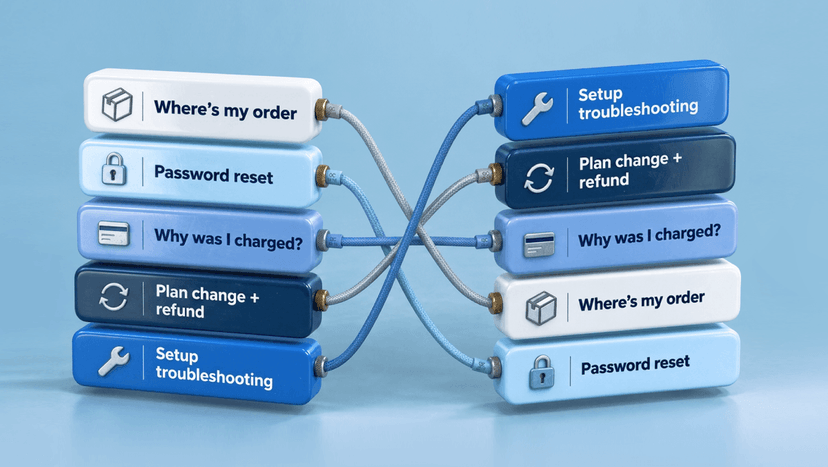
- Customer Support: Automates tasks like ticket routing, FAQs, and refunds, cutting response times by up to 90%.
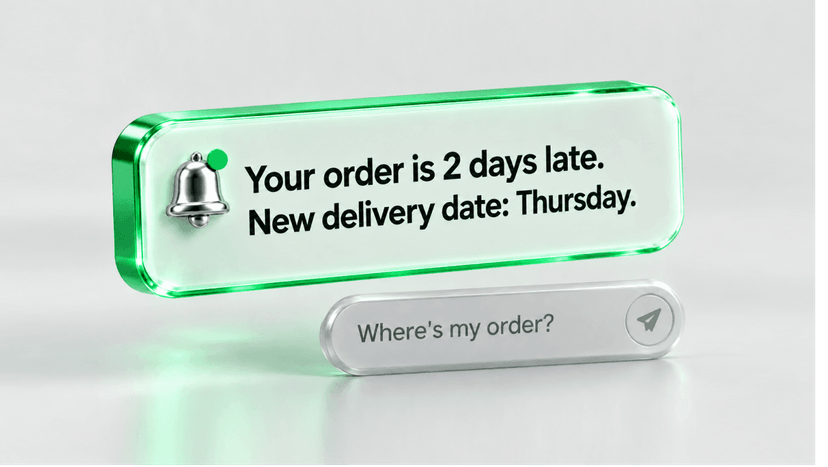
- E-commerce: Manages order tracking, returns, and inventory updates, handling peak shopping seasons effortlessly.
- HR: Streamlines onboarding, answers employee queries, and integrates with HR tools for seamless workflows.
- Sales: Automates lead research, follow-ups, and CRM updates, freeing up reps to focus on closing deals.
- IT Support: Handles password resets and troubleshooting, reducing IT workloads by up to 40%.
- Scheduling: Coordinates meetings, manages calendars, and aligns global teams across time zones.
- Knowledge Management: Keeps content updated, flags outdated articles, and organizes knowledge bases.
- Operations: Automates workflows like invoice handling and supply chain monitoring, reducing manual errors.
- Multilingual Support: Provides 24/7 customer service in 60+ supported languages (120+ compatible), improving satisfaction scores.
- Feedback Analysis: Collects and analyzes customer feedback, identifying trends and actionable insights.
These tools don’t replace humans - they complement them, handling routine tasks while escalating complex issues to people. With no-code setups and seamless integrations, AI agents are becoming essential for businesses to scale efficiently and deliver better customer experiences.
OpenAI Agent Builder Customer Service Template
What Are AI Agents for Business Operations?
AI agents function as a digital workforce for your business. Unlike traditional chatbots that stick to rigid, pre-written scripts, these agents are dynamic tools trained on your company’s data. They learn from resources like your documentation, support tickets, and FAQs to deliver accurate and context-aware responses.
Here’s the difference: while a basic chatbot might stumble over a complicated request, an AI agent can reason, plan, and execute multi-step tasks. For example, it can check inventory, update customer records, and send follow-up emails - all without human intervention.
How AI Agents Learn Your Business
The real strength of AI agents lies in their ability to adapt to your business. They learn from your company’s unique content, such as product manuals or chat logs. This ensures their responses align with your organization’s language, policies, and product specifics. Plus, they use past interactions to deliver personalized answers.
This tailored learning doesn’t just improve accuracy - it drives operational efficiency that you can measure.
The Business Impact
Businesses using AI agents have seen up to an 18% ROI and reduced support costs. By handling routine inquiries, these agents free up your team to focus on more complex tasks. Unlike traditional tools, AI agents don’t just follow commands; they manage multi-step processes with context and precision.
| Traditional Chatbot | Generative AI Agent |
|---|---|
| Follows pre-set scripts | Can reason, plan, and act independently |
| Limited to basic Q&A | Manages multi-step workflows |
| Requires technical setup | No-code deployment is possible |
| Struggles with complex queries | Trained on company data for higher accuracy |
These benefits make AI agents a game-changer, offering a straightforward, no-code implementation process.
No-Code Deployment Made Easy
You don’t need a development team to get started. With tools like CoSupport AI, you can build and deploy AI agents in under 10 minutes. Simply upload your documents and connect your data. This no-code approach allows teams like customer success to quickly train an agent on your knowledge base or lets HR create an onboarding assistant without hassle.
AI agents represent a leap forward from basic automation to intelligent assistance that scales with your business. They don’t replace your team but expand its ability to tackle complex challenges and enhance customer relationships. This makes them an essential tool for cutting support costs and improving productivity across departments.
1. Customer Support Automation
AI agents are transforming the way businesses handle customer support, freeing up human resources to focus on more nuanced and complex issues. One of the clearest examples of this transformation is how automation is streamlining repetitive tasks, integrating with existing tools, and scaling operations effectively.
Automation of Repetitive Tasks
AI agents are particularly skilled at managing high-volume, repetitive tasks that often bog down support teams. Think about routine activities like resetting passwords, tracking orders, updating accounts, or answering FAQs. These systems can automatically categorize incoming tickets by urgency and intent, route them to the right department, and even draft responses using your company’s knowledge base.
A strong example of this is ProjectFitter’s success in 2025, where they automated 70% of their support requests in just one month using Freshdesk and Freshchat. The AI agent handled common issues - like billing questions and troubleshooting - significantly reducing response times.
Beyond basic tasks, modern AI agents can execute more complex workflows. Whether it’s processing refunds, updating records, or sending follow-ups, these systems ensure faster resolutions, allowing your team to focus on fewer, more challenging tickets. This kind of automation also lays the groundwork for seamless integration across various platforms.
Integration with Existing Tools
AI agents don’t operate in isolation - they integrate smoothly with popular support tools like Zendesk, Freshdesk, Salesforce, and Intercom. Through APIs, they access customer histories and update records in real time, creating a more cohesive support experience.
Take Cocoatech, for instance. In 2025, they achieved an impressive 82% deflection rate for Zendesk chats using an AI solution. By connecting the AI agent to existing ticket data and help documentation via a simple API, the system quickly learned and improved its resolution rates.
"It was easy to set up with our Zendesk workspace - this AI for customer service learned everything on its own with just an API key. First month - 69% resolution rate, second - 76%, third - 82%. I think the numbers speak for themselves. We couldn't achieve even close results with the other 6 companies." - Josh Brown, CEO, Softorino
These integrations also ensure consistency in tone and information across all communication channels, providing a unified customer experience.
Scalability for Business Growth
Scaling customer support is a challenge for growing businesses, but AI agents make it manageable. Unlike hiring and training new staff - which takes time and adds costs - AI agents can instantly handle thousands of conversations simultaneously.
According to Gartner, chatbots and virtual customer assistants are expected to manage 70% of customer conversations by 2027, up from 40% in 2023. This scalability is especially helpful during busy periods, like seasonal spikes or product launches, ensuring smooth operations without the need for additional staffing.
Accuracy and Reliability of AI Responses
Modern AI agents are designed to avoid errors by relying on verified company data. Instead of generating potentially incorrect answers, they pull information from trusted sources like your knowledge base, help center articles, or past successful resolutions.
Additionally, these systems include escalation protocols to recognize when a query is beyond their scope. In such cases, the AI seamlessly transfers the issue to a human agent, complete with the full conversation context. This ensures customers aren’t stuck in frustrating automated loops.
IBM reports that businesses using AI-powered customer service have seen up to a 30% reduction in support costs while maintaining - or even improving - customer satisfaction. This combination of cost efficiency and high-quality service makes customer support automation a powerful entry point for introducing AI into your operations.
2. E-commerce Order Management
E-commerce businesses are constantly managing growing order volumes and rising customer expectations. AI agents are transforming how these companies handle tasks like tracking orders and processing returns, making it easier to scale operations as the business expands.
Automation of Repetitive Tasks
AI agents shine when it comes to managing repetitive order-related tasks that often overwhelm support teams. These include providing order status updates, sending shipping notifications, handling returns, and answering basic product questions - all without needing human input.
Take H&M, for example. Their virtual shopping assistant autonomously resolved 70% of customer queries, including tasks like order tracking and product recommendations. This automation not only sped up response times by threefold but also allowed human agents to focus on more complex issues.
AI agents go beyond just answering questions. They can prioritize orders by urgency or customer type, trigger shipping updates, process straightforward returns, and even request restocking when inventory runs low. For instance, eCatering used CoSupport AI to handle routine product and order inquiries via email, delivering instant, context-aware responses through their Freshdesk integration.
This level of automation creates a more connected and efficient system.
Integration with Existing Tools
AI agents seamlessly integrate with platforms like Shopify and Magento, pulling real-time data on orders and inventory to ensure accurate and timely responses.
For example, Walmart uses an autonomous inventory bot to monitor shelves and automatically initiate restocking through its inventory management system. Similarly, AI agents can access order histories, check inventory levels, process refunds, and update customer records - all without manual effort.
Scalability for Business Growth
The combination of automation and integration allows AI agents to scale effortlessly, particularly during peak shopping periods like Black Friday or holiday sales. These busy seasons can overwhelm even the most prepared support teams, but AI agents can handle thousands of conversations simultaneously, eliminating the need for additional hiring or training.
Klarna, for instance, developed a support agent using OpenAI tools that now manages two-thirds of all support tickets. AI agents can also process bulk orders, update inventory across multiple channels, and coordinate with logistics providers to ensure customers receive timely responses 24/7.
Accuracy and Reliability of AI Responses
Mistakes in orders or returns can erode customer trust and hurt revenue. AI agents help prevent this by pulling verified data from order systems, inventory databases, and shipping providers to deliver accurate and up-to-date information.
H&M saw a 25% increase in conversion rates after implementing AI-driven solutions that provided reliable product recommendations and precise order details. And when a situation is too complex - like a unique return dispute or an unusual shipping issue - the system can escalate the case to a human agent, complete with all the necessary context, so the customer doesn’t have to repeat their concerns.
3. Internal Helpdesk and IT Support
Internal IT teams often find themselves bogged down by routine tasks like password resets and basic troubleshooting. AI agents are transforming how these requests are managed, turning tedious manual processes into automated workflows that run around the clock.
Automation of Repetitive Tasks
AI agents are particularly effective at handling everyday IT requests. Tasks like resetting passwords, providing software installation instructions, and resolving basic connectivity issues can now be managed without human involvement. This gives IT staff the breathing room to tackle more complex problems.
These agents can automatically create and close tickets, provide step-by-step guides for common issues, and even handle account unlocks. For example, a global consulting firm saw a 40% drop in IT support workload after deploying an AI agent integrated with Slack to handle routine employee requests. On average, AI agents can resolve 70–80% of repetitive queries, significantly lightening the load on IT teams. Plus, since they operate 24/7, employees can get help with urgent issues even outside normal business hours.
This kind of automation also ensures seamless compatibility with existing IT tools.
Integration with Existing Tools
AI agents are designed to work hand-in-hand with the IT service management tools your team already relies on. Using APIs, they connect with platforms like ServiceNow, Jira, and Zendesk, enabling them to pull user data, update tickets, and trigger workflows directly.
When employees use AI agents through familiar platforms like Slack or Microsoft Teams, managing support requests becomes much simpler. These agents can verify user permissions via identity management systems, check system statuses, and coordinate with other IT tools to resolve issues on their own.
CoSupport AI takes this a step further by syncing with your existing helpdesk content and historical tickets. This ensures responses are consistent with your company’s internal procedures and terminology, giving employees answers that align perfectly with your documentation.
This seamless integration makes the AI agent a natural extension of your IT team.
Scalability for Business Growth
AI agents can handle increasing workloads without requiring additional staff, making them ideal for growing businesses. As your organization expands, the same agent can support more users and adapt to more complex workflows by learning from new data.
This flexibility is especially valuable for startups and rapidly growing companies that need to maintain high-quality support without hiring more personnel. The agent evolves with new systems, learns from added documentation, and manages growing ticket volumes. Whether your company has 50 employees or 5,000, the system keeps up without slowing down.
Accuracy and Reliability of AI Responses
Precision is critical in internal IT support - errors can disrupt productivity or even compromise security. AI agents, trained on company-specific documentation and past tickets, achieve an impressive 80–90% accuracy rate for standard IT queries. For more complex issues, they escalate cases to human experts with all the necessary context.
This combination of accuracy and escalation ensures high service quality while maximizing the efficiency of automation. Regular updates further refine the agent’s responses, keeping them aligned with your evolving needs.
4. HR Onboarding and Employee Questions
HR teams often find themselves fielding the same questions about benefits, policies, and onboarding. AI agents can take over these repetitive tasks, freeing HR professionals to focus on more complex responsibilities.
Just like in customer support and IT, AI agents help HR teams save time by managing routine processes.
Automation of Repetitive Tasks
AI agents are a game-changer for managing onboarding tasks. They can handle everything from sending welcome emails and collecting documents to scheduling orientations and guiding new hires through benefits enrollment. For example, one startup reported cutting its HR workload by 60% by automating the entire onboarding process.
These tools don't stop at onboarding. They also address everyday employee questions about payroll schedules, paid time off, and training requirements, significantly reducing the volume of repetitive inquiries HR teams face.
Integration with Existing Tools
AI agents can seamlessly integrate with your current HR systems via APIs. For instance, when a new hire completes their onboarding steps, the agent can automatically update HR records, eliminating manual data entry and ensuring accurate records.
You can also deploy these agents on tools like Slack or Microsoft Teams. Solutions like CoSupport AI sync with company policies and handbooks, providing consistent, policy-aligned answers to employees' questions.
Scalability for Business Growth
As your company grows, so does the demand on your HR team. Whether you're onboarding 5 or 50 new hires in a week, AI agents can handle multiple conversations simultaneously, keeping the process smooth and efficient.
Companies using AI agents have reported a 40% reduction in onboarding time and a 30% drop in repetitive employee queries. This scalability is especially helpful for startups or expanding businesses that need to maintain strong employee support without adding more HR staff.
Accuracy and Reliability of AI Responses
Clear and accurate communication is critical in HR. AI agents, trained on employee handbooks and policy documents, deliver precise answers to common questions. For unusual or complex queries, they provide full context when escalating to a human team member for follow-up.
HR teams can easily update policies and documentation through a no-code interface, ensuring the AI agent stays up-to-date as company guidelines evolve. This keeps responses reliable and aligned with current policies.
5. Sales Outreach and Lead Research
Sales teams often lose valuable hours on tasks like prospect research, follow-up emails, and updating CRM systems. AI agents take over these time-consuming duties, freeing up sales professionals to focus on building relationships and closing deals.
Automation of Repetitive Tasks
AI agents excel at handling routine tasks. They can automatically fill in missing lead details - like job titles, company size, and contact information - by pulling data from public sources. They also keep CRM records accurate and up-to-date in minutes, while sending personalized follow-up emails at scheduled intervals. Leads that remain unresponsive are flagged for human attention.
For instance, in 2024, a SaaS company implemented an AI sales agent to enrich over 10,000 inbound leads each month and draft tailored introductory emails. Within just three months, the company saw a 40% increase in qualified meetings and cut manual sales admin time by 30%.
This level of automation sets the stage for seamless integration with essential sales tools.
Integration with Existing Tools
AI agents don’t disrupt your current workflow - they integrate directly with your existing sales stack. Through APIs, they connect to CRMs like Salesforce and HubSpot, email platforms such as Gmail and Outlook, and calendar tools like Google Calendar.
For example, when an AI agent qualifies a lead, it can automatically schedule a meeting on the sales rep's calendar, update the CRM with conversation notes, and initiate follow-up sequences in your marketing automation system - all without requiring manual input or switching between tools.
Solutions like CoSupport AI enhance this process by syncing with your existing data sources, ensuring your platforms stay consistent and up-to-date.
Scalability for Business Growth
AI agents adapt to growing demands effortlessly. While a single sales rep might handle 50–100 leads effectively, an AI agent can engage with thousands simultaneously, maintaining both quality and personalization.
As businesses expand, AI agents can be quickly updated with new product knowledge, market trends, or customer segments - no additional hiring required. This makes them especially valuable for startups and growing companies that want to scale outreach without inflating team size.
For example, a real estate company deployed AI agents on its website to qualify leads and assess buying intent. The agents managed client interactions, prioritized leads, and sent tailored communications, leading to a 30% boost in conversion rates and a 40% reduction in manual lead qualification efforts.
Accuracy and Reliability of AI Responses
Sales success depends on accurate, trustworthy communication. AI agents trained on company-specific resources - like product guides, FAQs, and past sales conversations - provide precise answers to common questions. They can also access live inventory, pricing, and product specifications to ensure responses are always current.
For more complex queries, AI agents seamlessly escalate to human team members, providing full context to avoid any disconnect. Regular performance reviews help maintain a 90% accuracy rate in routine interactions, ensuring prospects receive timely and reliable engagement throughout the sales cycle.
6. Scheduling and Meeting Setup
Coordinating meetings amidst packed calendars can feel like a never-ending puzzle. Sales reps often waste valuable hours trading emails with prospects to find a time that works. Meanwhile, HR teams juggle the complexity of aligning interview schedules across hiring managers, time zones, and other logistical hurdles.
AI agents simplify this process by taking over the entire scheduling workflow. They check calendars, propose meeting times, send invites, and even handle changes - no human intervention required. This seamless automation integrates directly into your existing workflow, ensuring scheduling tasks align with your broader support systems.
Automation of Repetitive Tasks
Just as AI streamlines customer support, it also eliminates the tedious back-and-forth of scheduling. When someone requests a meeting, the AI scans calendars, identifies open slots, sends out invites, and manages rescheduling if conflicts arise.
Beyond booking meetings, the AI handles follow-up tasks like sending reminders and nudging participants who haven’t responded to invitations. This cuts down on the endless email exchanges that can eat up hours of administrative time each week.
Integration with Existing Tools
These AI agents don’t operate in isolation - they integrate seamlessly with the tools you already rely on. Whether it’s Google Calendar, Outlook, Slack, or your CRM system, the AI connects through APIs to keep scheduling data consistent across platforms.
For example, if integrated with Slack, the agent can handle scheduling requests directly within a team channel. Imagine asking to book a client demo, and the agent instantly checks availability, schedules the meeting, and posts the confirmation - all without leaving the conversation.
CRM integration takes things a step further. The AI can automatically log meeting details in platforms like Salesforce or HubSpot, attach contact information, and update deal stages based on outcomes. This ensures your sales pipeline remains accurate without requiring manual data entry.
CoSupport AI fits right into your existing workflow, syncing effortlessly with your tools to ensure everything stays aligned.
Scalability for Business Growth
As your business grows, so does the demand for efficient scheduling. AI agents are built to handle these increasing demands, making them perfect for sales, HR, and global teams managing high volumes of scheduling requests.
For recruiting teams, this means smoother operations during hiring surges. The AI can coordinate multiple rounds of interviews, communicate with candidates, and manage last-minute changes - all without needing additional staff. Sales teams, on the other hand, can rely on AI to manage lead-heavy periods without missing a beat.
Global teams, in particular, benefit from the AI’s ability to handle time zone differences. The agent identifies each participant’s location and proposes meeting times that work for everyone, no matter where they are.
Accuracy and Reliability of AI Responses
AI scheduling agents use real-time calendar data and predefined business rules to avoid double-bookings and handle changes instantly. For unusual or complex requests, the system can escalate to a human team member, providing full context to streamline the process.
The agents confirm meeting details with participants and send updates immediately if changes occur. Over time, they learn from scheduling patterns and preferences, offering smarter, more tailored suggestions.
Healthcare providers have already seen success with AI scheduling assistants, using them to streamline appointment bookings and send automated reminders. This has reduced patient wait times, cut down on no-shows, and improved satisfaction scores across various clinics.
sbb-itb-97114f1
7. Knowledge Base Management
Keeping your knowledge base up-to-date can become a daunting task as your business expands. Support teams often invest countless hours revising articles, organizing information, and tracking outdated content. Meanwhile, customers may face difficulties finding the answers they need, which leads to an increase in support tickets.
AI agents can step in to simplify this process. They take on repetitive tasks like updating and organizing content, scanning recent support tickets to identify trending questions, flagging outdated articles, and even suggesting new topics based on common customer issues. For instance, when a support agent resolves a unique case, the AI can recommend adding that solution to the knowledge base. This kind of automation helps streamline operations, saving time and effort.
Automation of Repetitive Tasks
AI agents excel at handling routine tasks that often consume valuable time. They can automatically update, categorize, and tag articles, making it easier for users to find the information they need. These systems also identify duplicate entries and recommend consolidations, keeping the knowledge base organized and efficient.
Integration with Existing Tools
Building on earlier automation successes, AI agents also integrate seamlessly with your existing documentation systems. They learn from resolved support tickets and update relevant articles accordingly, ensuring the knowledge base remains accurate and helpful. Companies that adopt these AI-driven solutions often see measurable improvements, such as up to a 60% resolution rate thanks to better content integration.
These tools also work with team communication platforms like Slack and Microsoft Teams, enabling employees to ask questions directly within their workflow and receive quick answers, complete with links to relevant articles. Additionally, CRM integration connects customer data with the knowledge base, offering tailored content recommendations for specific customer segments.
Scalability for Business Growth
AI agents adapt to the growing demands of your business. As your product offerings expand and your customer base increases, these tools can handle the rising volume of content and user queries. For example, a global SaaS company deployed an AI agent to monitor support tickets and automatically update their knowledge base. Within three months, they saw a 40% reduction in duplicate tickets and a 25% faster average resolution time.
These systems also respond to seasonal trends and product launches, prioritizing updates during peak periods. For global operations, AI agents can translate updates and synchronize localized versions with the master copy, ensuring consistency across regions.
Accuracy and Reliability of AI Responses
AI agents use retrieval-augmented generation (RAG) to base their responses on verified documents while maintaining version control. Human oversight ensures significant changes are reviewed. When customers provide feedback that an answer wasn’t helpful, the AI logs this input and suggests updates to improve the knowledge base, keeping it aligned with actual customer needs.
Reports show that companies leveraging AI for knowledge management can achieve up to an 18% ROI. Top-performing businesses even triple their profit contributions through AI-enabled workflows. These benefits stem from reduced manual workload, quicker response times, and higher customer satisfaction - ultimately leading to fewer support tickets and better self-service options for users.
8. Operations Workflow Automation
Operations teams often find themselves bogged down by repetitive tasks that could easily be automated. Processes like invoice handling and inventory tracking consume valuable time and resources - time that could be better spent on strategic initiatives. This is where AI agents step in, taking over these routine tasks and transforming operations. From supply chain monitoring to quality control, AI is reshaping how businesses manage their day-to-day workflows.
What sets AI agents apart is their ability to go beyond simple automation. They can handle multi-step processes, make decisions based on real-time data, and interact with other systems to complete intricate workflows. This evolution from basic task automation to intelligent process management is redefining operational efficiency.
Automation of Repetitive Tasks
AI agents shine when it comes to eliminating the busywork that slows down operations. They can reconcile orders, flag discrepancies, and update records in seconds. In supply chain management, for instance, AI agents monitor inventory levels and trigger reorders automatically when stocks run low, eliminating the need for constant manual oversight.
In manufacturing, AI agents equipped with computer vision inspect products for defects before they are shipped. These agents perform inspections faster and with greater consistency than teams of human inspectors working around the clock.
The impact is undeniable. Companies report up to a 90% reduction in manual work for repetitive tasks like support ticket triage and lead enrichment. This shift allows employees to focus on higher-value tasks that require creativity and human judgment.
Integration with Existing Tools
One of the key strengths of AI agents is their ability to integrate seamlessly with existing business tools. Through APIs, they can pull data from CRMs, update ERP systems, and trigger actions in platforms like Slack or Microsoft Teams. For example, an AI agent can receive a support ticket from a helpdesk system, update customer records in a CRM, and notify the appropriate team in Slack - all without human intervention. This connectivity ensures workflows remain fluid and avoids the creation of isolated processes.
Scalability for Business Growth
AI agents also bring scalability to operations, enabling businesses to grow without the need for additional staff or increased costs. As demand rises, these agents can handle more tasks simultaneously - whether it’s processing thousands of orders or managing a surge in support requests - without delays or errors.
For example, an e-commerce company can deploy AI agents to handle new product lines or increased order volumes during peak seasons. These agents can quickly adapt to new workflows, products, or regulations by updating their training data or rules, allowing businesses to respond to market changes without overhauling their processes.
Accuracy and Reliability of AI Responses
Accurate data management is the backbone of efficient operations, and AI agents excel in this area. They perform real-time data checks and error handling to minimize mistakes. In scenarios like predictive maintenance, AI agents analyze sensor data to forecast equipment failures with impressive precision, reducing downtime and costly repairs.
That said, human oversight remains crucial for handling exceptions or situations requiring nuanced judgment. Enterprises leveraging AI-enabled workflows have reported notable improvements in profitability - 3.6% in 2023 and 7.7% in 2024 - with some top performers achieving up to 18% ROI from AI initiatives. These gains stem from cost savings, improved efficiency, and the ability to scale operations rapidly without adding headcount.
AI agents also operate around the clock, ensuring that critical processes continue even outside regular business hours. They generate actionable insights from workflow data, helping leaders pinpoint bottlenecks and refine processes based on real performance metrics instead of assumptions. This combination of accuracy, reliability, and 24/7 availability makes AI agents a game-changer for modern operations.
9. Multi-Language Customer Service
For global businesses, delivering quality customer support in multiple languages while keeping costs manageable is no small feat. Traditionally, this meant hiring native speakers for each market - a solution that’s both expensive and hard to scale. But with AI agents, companies can now provide instant, accurate support in 60+ languages, 24/7.
A 2024 Zendesk report highlights that over 70% of customers expect support in their native language. Companies that meet this expectation see a 20% boost in customer satisfaction scores, showcasing how multilingual support directly enhances customer experiences across global markets.
Automation of Repetitive Tasks
AI-powered multilingual agents can identify a customer’s language, translate queries, and respond accurately by understanding the context and intent behind each message. By automating routine tasks like ticket routing, categorization, and initial responses, these agents free up human staff to focus on more complex issues.
Take the example of a global e-commerce retailer that, in January 2025, adopted Azure OpenAI-powered multilingual agents to provide support in 12 languages. Within three months, they slashed average response times from 18 minutes to just 2 minutes, cut support costs by 55%, and saw a 22% increase in customer satisfaction scores.
Integration with Existing Tools
AI agents are designed to seamlessly integrate with popular customer service platforms like Zendesk, Freshdesk, Intercom, and Salesforce. This allows businesses to enhance their existing workflows with multilingual capabilities without disrupting established processes. When a case needs to be escalated to a human representative, the AI ensures a smooth handoff by preserving all interaction history and context.
For businesses with custom systems, API integrations make it easy to connect AI agents with in-house tools and backend systems. This means companies can add multilingual support without the need for a complete overhaul of their infrastructure.
Scalability for Business Growth
AI agents are a scalable solution for businesses expanding into new markets. Instead of hiring and training multilingual teams for each region, companies can deploy AI agents to handle increased ticket volumes and new language needs. For instance, a U.S.-based SaaS company could effortlessly support customers in Spanish, French, German, and Japanese without setting up local support centers. Many businesses using AI-driven multilingual support report cost savings of up to 60% compared to hiring dedicated human agents for every language.
Accuracy and Reliability of AI Responses
Accuracy is key when it comes to multilingual support, and advanced AI models have made significant strides in this area. These systems become more accurate by training on high-quality, domain-specific data. They don’t just translate word-for-word but understand context, regional nuances, and even cultural references to provide meaningful responses.
AI agents can also handle language switching mid-conversation without losing context, making them incredibly versatile. While human oversight remains crucial for sensitive or complex cases, these agents can resolve over 80% of routine queries on their own. This allows support teams to focus on more intricate issues that require deeper understanding or problem-solving skills.
10. Customer Feedback Collection and Analysis
Manually collecting and analyzing customer feedback eats up valuable time and resources from support teams. AI agents take on this burden, transforming raw feedback into clear, actionable insights.
These agents gather input from a variety of sources - email surveys, chat logs, social media mentions, and support tickets - and then analyze sentiment, identify patterns, and flag urgent issues automatically. This process delivers organized insights to your team without requiring them to sift through countless individual responses. Here's how AI agents streamline feedback collection and turn it into actionable data.
Automation of Repetitive Tasks
AI agents are built for the repetitive, time-consuming tasks involved in feedback management. They can automatically categorize feedback by topic, measure sentiment on a positive-to-negative scale, and detect recurring themes across thousands of responses - all in a matter of seconds.
The time savings are remarkable. A task that might take a human 30 minutes, like analyzing 100 survey responses, can be completed by an AI agent in under a minute. Plus, the results are consistently accurate. This allows your team to spend more time addressing the issues customers raise instead of organizing and sorting through complaints.
These agents also handle follow-up actions that are easy to overlook. For example, they can flag urgent negative feedback, create summary reports, and activate workflows based on specific keywords or sentiment scores.
Integration with Existing Tools
AI agents seamlessly integrate with the tools your team already relies on. They can pull data from platforms like Zendesk, analyze responses from Google Forms surveys, and track social media mentions through APIs. This means you can enhance your current workflow without needing to overhaul it.
For instance, an AI agent can monitor your helpdesk for resolved tickets, automatically send follow-up satisfaction surveys, analyze the responses, and update your CRM with customer sentiment scores - all without requiring manual input.
Scalability for Business Growth
As your business grows, the volume of customer feedback can quickly become overwhelming. AI agents adapt effortlessly, processing thousands of responses with the same speed and accuracy they apply to smaller datasets. This makes them especially valuable for startups experiencing rapid growth or for established companies entering new markets.
One retail company saw immediate benefits after implementing AI-powered feedback analysis. The AI agent collected post-purchase feedback from email and chat, analyzed sentiment automatically, and alerted managers to negative trends. This led to a 30% improvement in response times and noticeable gains in customer satisfaction scores.
Scalability is particularly important during peak times, like holiday seasons or product launches, when feedback volumes surge. While human teams may struggle to keep up, AI agents maintain their performance, ensuring no feedback is missed. This ability to handle high volumes efficiently enhances overall business processes.
Accuracy and Reliability of AI Responses
Advanced AI agents use natural language processing to grasp context, not just keywords. This helps avoid the misclassifications that some basic sentiment analysis tools might produce.
When trained on company-specific data, AI agents become even more accurate. By learning your product terminology, common customer concerns, and industry nuances, they deliver more reliable insights. Many businesses report over 90% accuracy in sentiment classification and theme identification.
This precision empowers managers with real-time trends and actionable insights.
AI agents are also adept at identifying trends before they escalate into larger issues. By spotting emerging patterns early, your team can address root causes proactively, rather than reacting to widespread customer complaints. This advanced feedback analysis lays the groundwork for smarter decision-making across your operations.
What Most People Get Wrong About AI Customer Service Agents
Even with all the buzz around AI customer service agents, many businesses still misunderstand what these systems can and can’t do. A common assumption is that AI will completely replace human teams. But the reality? AI works best as part of a hybrid model. It handles repetitive, straightforward tasks, while human agents step in for more nuanced or complex issues. Take H&M’s virtual shopping assistant as an example - it autonomously resolved 70% of customer queries, leaving the human team to focus on escalated and more personalized concerns. Misjudging this balance often leads to frustrated employees and unmet expectations.
The Instant Perfection Myth
One of the biggest misconceptions is expecting AI systems to perform flawlessly from day one. Some business leaders believe these tools will instantly handle every customer query with 100% accuracy. But AI isn’t magic - it requires constant learning, updates, and human input to improve. For instance, Bank of America's Erica has handled over a billion interactions, yet still depends on human intervention for complex financial questions and regular updates to stay accurate.
A 2024 Gartner report backs this up: while 70% of companies using AI agents reported faster first-response times, only 35% managed to fully automate their support workflows. This highlights the need for patience and a well-thought-out implementation strategy.
Integration Oversights
Another pitfall? Skipping proper integration. Some companies expect AI agents to function independently, but without connecting them to systems like helpdesk software, CRMs, or internal knowledge bases, these agents can’t access the latest information. This lack of integration limits their ability to streamline processes or provide accurate responses.
The Cost Reduction Fantasy
Perhaps the most damaging misconception is the belief that AI agents will immediately slash costs without much effort. Some leaders expect instant returns on investment, overlooking the time and resources needed for setup, training, and ongoing monitoring. Siemens, for example, achieved a 30% reduction in downtime using predictive maintenance agents, but this success relied heavily on continuous human oversight and regular fine-tuning. Companies that expect full automation without human involvement often end up with unresolved issues and frustrated teams.
Key Takeaways
Drawing from the examples above, here’s what stands out about using AI agents in business. First and foremost, they deliver measurable results across a range of operations. For instance, Bank of America’s virtual assistant reduced call center demand by 17%, while predictive maintenance agents cut unplanned downtime by 30% and maintenance costs by 20%. These kinds of savings directly impact the bottom line and highlight how AI tools improve efficiency across different business areas.
Another major advantage is accuracy and consistency. AI agents trained on company-specific data eliminate the guesswork and human errors often found in traditional support systems. This means customers get faster, more accurate answers, which not only enhances satisfaction but also increases the likelihood of completed purchases.
Scalability is another game-changer, especially during growth phases or seasonal peaks. Take Walmart’s autonomous inventory bot - it improved inventory accuracy by 15% and slashed excess inventory by 35%. These systems can handle thousands of interactions simultaneously, making them invaluable for large-scale operations without the need to hire additional staff.
Customization and integration play a crucial role in determining success. The best AI agents adapt to your business processes, not the other way around. For example, Softorino boosted their resolution rate from 69% to 82% in just three months by integrating CoSupport AI with their Zendesk workspace using a simple API key. This kind of seamless integration ensures that AI works hand-in-hand with existing systems, enhancing overall performance.
Collaboration between humans and AI leads to the best results. IBM’s AIOps deployment is a great example - AI agents filtered and prioritized IT alerts, allowing engineers to focus on critical issues. This partnership sped up incident resolution and reduced R&D costs. Across industries, the trend is clear: AI takes care of repetitive tasks, freeing humans to focus on more complex challenges.
Then there’s the benefit of 24/7 availability. AI agents never clock out, which not only raises customer satisfaction but also captures opportunities that might be missed during off-hours.
Whether it’s customer support or internal operations, these insights show how AI agents are reshaping business processes. The companies seeing the greatest success treat AI agents as specialized team members rather than simple tools. They start with straightforward, high-volume tasks like ticket triage or calendar management before moving on to more complex workflows. Integration with existing systems through APIs and connectors is key, as is maintaining human oversight and ongoing improvement. This hybrid approach ensures issues are caught early, keeping both systems and customer experiences running smoothly.
FAQs
Here are some common questions about how AI agents enhance efficiency and accuracy in business operations.
How do AI agents handle complex or multi-step customer support questions?
AI agents use advanced language processing to break down complex queries into smaller, manageable steps. They pull information from company-specific documentation and past interactions to deliver precise, context-aware responses. For example, CoSupport AI goes through rigorous testing with real customer interactions, including sarcasm and emotional nuance.
"The AI performance has been very good. It handles FAQs and many complex questions well, and the escalated tickets I'm seeing come through are ones I wouldn't expect AI to be able to handle." - Matthew Brown, Director of Customer Solutions, Shelterluv
Can AI agents integrate with my existing business tools and platforms?
Yes, modern AI agents are designed to work seamlessly with popular tools like Zendesk, Salesforce, Freshdesk, Intercom, Slack, and Microsoft Teams. Custom API connections can also be set up for other platforms. For instance, in 2023, Softorino integrated CoSupport AI into their Zendesk workspace using just an API key. By the third month, they achieved an 82% resolution rate.
"It was easy to set up with our Zendesk workspace - this AI for customer service learned everything on its own with just an API key. First month - 69% resolution rate, second - 76%, third - 82%. I think the numbers speak for themselves. We couldn't achieve even close results with the other 6 companies." - Josh Brown, CEO, Softorino
How do I train an AI agent on my company's data, and how long does it take?
Training is straightforward and quick, especially with no-code platforms. It involves configuring the AI to align with your company’s tone, uploading documents, FAQs, or chat logs, and connecting existing knowledge bases. This process can take less than 10 minutes. For example, Outstaff Your Team completed their integration in just three days, which led to a 55% reduction in HR response time.
Are AI agents secure, and how is sensitive data protected?
AI agents prioritize security through encryption and strict access controls. They comply with industry standards like ISO 27001, GDPR, and CCPA, using the same protocols trusted by banks to safeguard customer data and prevent fraud.
What happens when an AI agent cannot answer a customer's question?
If an AI agent encounters a query it can't address, it automatically escalates the issue to a human support agent. The AI provides full context, so customers don’t need to repeat themselves, ensuring a smooth and consistent customer experience.
These insights show how AI agents complement your team, paving the way for enhanced efficiency and seamless operations.
Getting started with CoSupport AI
AI is reshaping support, sales, and operations - why not see what it can do for your business? CoSupport AI makes it easy to get started, with no coding required and no complex setup.
In fact, you can have your AI agent up and running in less than 10 minutes. Just upload your data, and the AI will quickly adapt to your business’s tone and terminology. The result? Responses that are accurate, relevant, and aligned with your brand - without the inaccuracies that often plague other AI tools.
The numbers tell the story. For example, ProjectFitter automated 70% of their support requests in just one month. Meanwhile, Hour Timesheet cut their resolution times by 70% and automated more than half of their incoming chats.
CoSupport AI takes care of the routine, from tracking orders and answering FAQs to handling internal helpdesk queries and onboarding employees. And when it encounters a question it can’t solve, it seamlessly hands off to your human agents, providing full context so customers never have to repeat themselves.
FAQs
How can AI agents be tailored to fit different industries and business sizes, and what steps should companies take to get started?
AI agents can be tailored to meet the unique needs of different industries and businesses, no matter their size. They can be programmed to mirror your brand’s tone, communication style, and specific demands, making them a great fit for tasks like customer support, sales, or even managing internal processes.
To get started, the first step is to align the AI with your brand’s personality and objectives. Train the AI using your existing resources - things like FAQs, helpdesk articles, or past customer interactions work well. Once trained, connect the AI to your current tools, such as CRMs or ticketing systems, to ensure everything runs smoothly. When set up correctly, AI agents can quickly become an essential part of your operations.
What challenges do businesses face when adopting AI agents, and how can they address them for a smooth implementation?
Adopting AI agents can bring plenty of advantages, but it’s not always smooth sailing. Businesses often face challenges like poor data quality, limited customization options, and resistance from teams hesitant to embrace change. If these issues aren’t handled early on, they can slow down or complicate the implementation process.
Here’s how to address these common obstacles:
- Focus on quality training data: Use accurate, up-to-date information from sources like your FAQs, documentation, or helpdesk. This ensures your AI agents are more reliable and effective.
- Start small and adapt: Pick a specific use case, such as customer support, and customize the AI agent to meet your company’s unique needs. This helps build trust in the technology.
- Engage your team: Help your team understand the value AI agents can bring and offer training to show them how to work alongside these tools effectively.
By addressing these challenges head-on, businesses can integrate AI agents more smoothly and unlock their full potential without unnecessary disruptions.
How do AI agents protect sensitive data while managing tasks across different business areas?
AI agents, such as those developed by CoSupport AI, prioritize data security and privacy at every level. They implement robust measures like data encryption, anonymization, and secure, dedicated servers to keep sensitive information safe.
On top of that, these agents adhere to critical regulations like the CCPA and GDPR, ensuring your business remains compliant with legal standards while protecting both customer and internal data. With these protections in place, businesses can confidently integrate AI into their operations without worrying about security risks.
.png)