.png&w=96&q=75)

AI Response Accuracy Rate measures how often AI delivers correct and relevant answers to customer queries. It’s calculated with a simple formula: (Accurate Responses ÷ Total Responses) × 100. Accuracy is vital because customers expect precise answers, and errors can lead to escalations, increased costs, and reduced trust.
Key Points:
- Accuracy Standards: Most industries target 85–95%. High-stakes fields like healthcare aim for 95%+.
- Factors Affecting Accuracy: Training data quality, continuous updates, and integration with support tools.
- Measurement Tools: Human reviews, customer feedback, and error analysis.
- Channel Performance: Chat (88–92%), email (82–88%), voice (75–85%).
Tracking accuracy by channel and query type while acting on feedback helps improve AI performance and customer satisfaction. Consistent updates to training data and error reviews are essential to maintaining high accuracy.
Generative AI 101, Part 8: How to Measure Chatbot Accuracy
Introduction
Support teams today face the challenge of managing an ever-growing number of customer queries without increasing staff. As businesses grow, it’s not uncommon for daily support requests to surge from hundreds to thousands. This increase has made accurate AI responses a must-have for scaling customer support effectively.
Many companies turn to AI agents for help, but success hinges on one key factor: the ability of these systems to deliver consistently accurate and helpful answers. The AI Response Accuracy Rate is a key metric that tracks how often an AI agent provides correct and contextually relevant answers to customer inquiries. For responses to count as accurate, they must be factually correct, align with the customer’s intent, and resolve the issue at hand. Take a travel AI, for instance - it might provide the right flight details, but if the information is confusing or doesn’t address the customer’s actual question, the accuracy rate takes a hit.
Why does this metric matter so much? Because customers expect fast, accurate answers - every time. The stakes are high, as real-world examples show. Softorino, for example, saw its resolution rates climb from 69% to 82% in just three months after improving its AI accuracy. On the flip side, another company faced a 30% spike in support tickets due to incorrect AI responses, forcing them to hire more staff to manage the fallout.
What Is AI Response Accuracy Rate and Why Does It Matter
What AI Response Accuracy Rate Means
AI Response Accuracy Rate is essentially a measure of how often an AI provides answers that are factually correct, contextually relevant, and solve the customer’s issue.
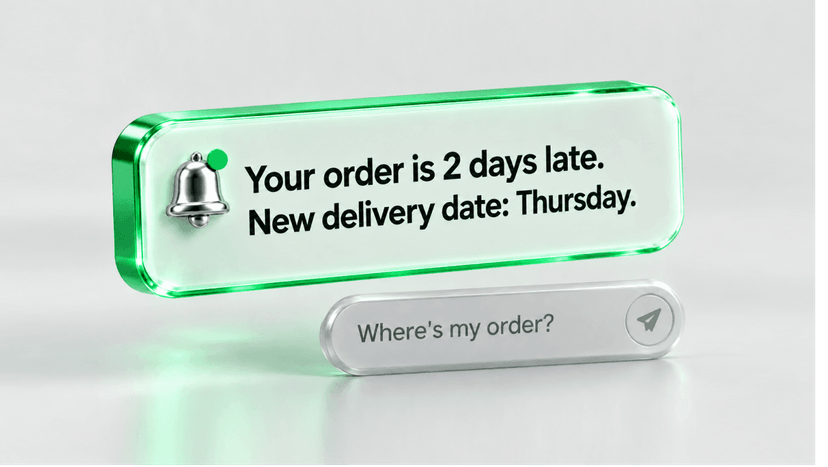
For example, an AI might give you the exact departure time for a flight, but if the response is confusing, fails to address your actual concern about delays, or feels robotic, it doesn’t pass the accuracy test.
Modern AI systems work hard to avoid "hallucinations" - those moments when the AI fabricates information that seems believable but is completely wrong. The key is training the AI on business-specific content instead of generic data. CoSupport AI, for instance, achieves up to 99% response accuracy by focusing on your unique business data.
Now that we understand what the metric represents, let’s look at how to calculate it.
How to Calculate AI Response Accuracy Rate
The formula is simple: (Accurate AI Responses ÷ Total AI Responses) × 100.
For instance, if a chatbot handles 1,000 queries and 920 of them are accurate, the accuracy rate would be (920 ÷ 1,000) × 100 = 92%.
Many companies rely on human reviewers to refine these measurements, catching subtle errors that automated systems might overlook. This ensures the metric reflects real-world performance and helps fine-tune the AI for even better results.
Why Accuracy Rate Matters for Customer Support
A high accuracy rate not only saves money but also builds customer trust. SupportYourApp automated 7,000 monthly chats and emails, managing 80% of incoming requests with CoSupport AI. This saved the company thousands of dollars every month while maintaining exceptional support quality. Similarly, ProjectFitter automated 70% of its support tickets, cutting resolution times from hours to just minutes.
Different industries set varying benchmarks for accuracy, as shown here:
| Industry | Target Accuracy Rate | Reasoning |
|---|---|---|
| Customer Service & E-commerce | 85–92% | Standard for staying competitive |
| Healthcare & Finance | 95%+ | Critical for high-stakes, regulated fields |
| Retail & Travel | 80–90% | Handles a mix of informal, varied queries |
The benefits extend beyond cost savings. High accuracy improves operational efficiency and even boosts team morale. For example, Outstaff Your Team reduced its average resolution time by more than 50% after implementing high-accuracy AI. Agents were freed from repetitive tasks and could focus on more complex, rewarding challenges.
In short, accurate AI doesn’t just lighten the workload - it strengthens trust and encourages customers to rely on self-service options. On the flip side, poor accuracy has the opposite effect, driving customers to escalate issues to human agents and eroding confidence in AI systems.
How to Measure and Track AI Response Accuracy Rate
Methods for Measuring Accuracy
Evaluating AI accuracy goes beyond a simple right-or-wrong approach. It's about assessing whether the AI understands customer intent and delivers appropriate responses in both content and tone.
Human annotation and review are still the most reliable way to measure accuracy. Skilled reviewers analyze responses, classifying them as correct, partially correct, or incorrect based on their factual accuracy, context, and tone.
Customer feedback surveys offer direct insights into how well the AI is performing. When customers mark responses as helpful or unhelpful, it highlights gaps between technical accuracy and customer satisfaction - giving you actionable feedback from the people who interact with the system the most.
Error categorization is another effective tool. By grouping 50-100 errors into categories, you can identify patterns and focus on areas that need improvement.
Semantic scoring uses advanced metrics like BLEU, ROUGE, and BERTScore to measure how closely AI responses align with expected answers. These tools go beyond word-for-word matches and assess the meaning and structure of responses.
Using Confidence Scoring and Escalation Thresholds
These methods lay the groundwork for managing responses proactively. Confidence scoring is a key tool that assigns a numerical value (e.g., 0-1 or 0-100) to indicate how certain the AI is about its response. This score depends on factors like data quality, query complexity, and how well the AI has been trained.
To maintain quality, support teams can set escalation thresholds. For instance, if a response scores below 0.75, it can be flagged for review or escalated to a human agent. This ensures customers receive accurate answers while allowing high-confidence responses (e.g., 0.85 or higher) to go through immediately.
In industries like healthcare or finance, where errors carry higher risks, thresholds might be set even higher - typically 0.90 or above. For general customer service, thresholds in the 0.75-0.80 range are often sufficient.
The process involves testing to establish baseline confidence thresholds, monitoring how these scores align with actual performance, and adjusting based on real-world data. Escalated queries can also serve as valuable training data, helping refine the AI over time and creating a feedback loop for continuous improvement.
Measuring Across Different Channels
Once confidence thresholds are in place, it’s important to track how accuracy varies across different communication channels, as customer behavior and AI performance can differ significantly.
Chat channels tend to achieve the highest accuracy rates (88-92%). Queries in chat are usually short and direct, making them easier for AI to process, and customers expect quick responses, which aligns well with the AI's strengths.
Email accuracy generally falls between 82-88%. Emails often contain longer, more complex questions or multiple queries in a single message, which can challenge the AI's ability to understand and respond comprehensively.
Voice channels present the biggest challenge, with accuracy rates ranging from 75-85%. These channels require speech-to-text conversion and an understanding of spoken language, including nuances like accents and background noise, which can lead to more errors.
To improve performance, accuracy should be tracked separately for each channel using consistent benchmarks. This helps identify channel-specific error patterns, such as rushed responses in chat, incomplete answers in email, or misunderstood queries in voice interactions.
| Channel | Typical Accuracy Range | Common Error Types |
|---|---|---|
| Chat | 88-92% | Rushed responses, context gaps |
| 82-88% | Incomplete answers, complexity issues | |
| Voice | 75-85% | Misunderstood queries, transcription errors |
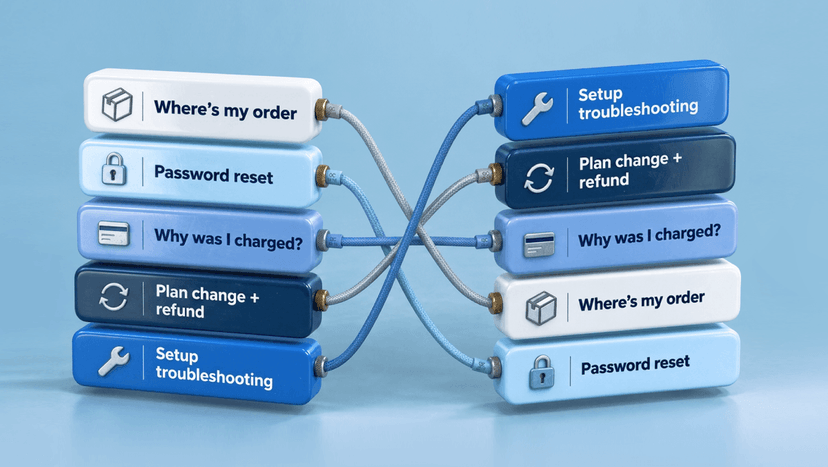
It’s also helpful to analyze accuracy by query type within each channel. For example, billing questions, technical support, and account access requests each come with unique challenges that can impact AI performance differently depending on the context.
sbb-itb-97114f1
What Affects AI Response Accuracy Rate
Several factors play a role in how well your AI handles customer questions. Knowing these elements can help you create a support system that delivers reliable and consistent answers.
Training Data Quality and Documentation
The quality of your training data forms the backbone of your AI’s performance. If your data is outdated or incomplete, the AI is more likely to provide incorrect or confusing responses.
Key points to focus on include relevance, completeness, and correctness. Your training data should reflect the actual questions customers ask, address uncommon scenarios, and provide accurate answers. Errors or outdated details in your source material will inevitably carry over into the AI’s responses.
Consistency in your knowledge base is equally important. For instance, if one document says "shipping takes 5–7 days" and another says "5–10 days", your AI might give conflicting answers, frustrating customers. Organized and consistent FAQs and documentation reduce these issues.
Including diverse training data also improves the AI's ability to handle unusual or complex queries. Focusing only on common questions might leave the model unprepared for edge cases. Teams that regularly update and audit their training data often see measurable improvements - accuracy rates can increase by 5–15% within a month by removing outdated content, consolidating duplicate answers, and ensuring all information is current.
Once you’ve established a solid data foundation, the next step is to refine the AI model continuously and adapt to changing customer needs.
Continuous Learning and Model Updates
Good training data is just the beginning; keeping your AI accurate requires ongoing updates. AI models don’t improve on their own - they need structured feedback and regular retraining. Without this, accuracy can decline as customer behaviors evolve and new types of questions arise.
Reinforcement learning is a key tool for adapting to change. Feeding incorrect responses back into the system allows the AI to learn from its mistakes. This process ensures the model can handle new product features or shifts in customer language.
Take Softorino as an example. In 2023, they improved their AI’s resolution rate from 69% in the first month to 76% in the second, and then to 82% by the third month. As CEO, Josh Brown explained:
"First month - 69% resolution rate, second - 76%, third - 82%. I think the numbers speak for themselves."
By reviewing errors weekly and retraining monthly, companies can maintain or even improve accuracy by 2–8% each quarter. For instance, a financial services firm raised its AI’s accuracy from 88% to 96% by incorporating weekly feedback from support agents and updating the model with new regulatory information.
Integration with Support Tools and Systems
Continuous learning is most effective when your AI is integrated with tools that provide real-time context. Systems like Zendesk, Slack, or your helpdesk platform can supply the AI with crucial information, such as customer history, previous tickets, or live inventory data. This enables the AI to deliver tailored responses instead of generic ones.
For example, if a customer has already contacted support multiple times about the same issue, an AI with proper integration can escalate the matter instead of repeating the same response. This avoids frustration and improves resolution rates.
Integration also enhances handoffs to human agents. When the AI provides full context, customers don’t have to explain their issue again, leading to a smoother experience. Poor integration, on the other hand, can reduce accuracy by 10–20% due to incomplete or outdated information.
One retail company saw its accuracy jump from 82% to 94% by linking its chatbot to live order data. This reduced escalations to human agents by 35%. Access to real-time information - like order status, account details, or inventory levels - lets the AI deliver precise, up-to-date answers, improving both efficiency and customer satisfaction.
3 Common Mistakes in Measuring AI Response Accuracy Rate
Getting accurate measurements is crucial, but it’s easy to make missteps that can derail your efforts. Many support teams fall into traps when evaluating their AI’s performance. These errors can obscure critical issues and hinder the development of an effective customer service system.
Focusing Only on Correctness, Not Context and Tone
One of the biggest mistakes is focusing solely on whether the AI provides accurate information while ignoring how it delivers that information. A response might be factually correct but still leave customers feeling frustrated or unheard if it misses emotional cues or comes across as robotic.
For example, if a customer is upset about a delayed refund and hears, “Refunds take 5-7 business days to process,” the reply may be accurate, but the lack of empathy could worsen the situation. Context and tone are just as important as getting the facts right.
To avoid this, your AI should recognize emotions like anger, confusion, or urgency, tailoring its tone to match the customer’s state of mind. A technically correct answer without compassion can escalate a problem rather than resolve it.
Industry leaders recommend aiming for an accuracy range of 85–92% in customer service. However, this metric should include not just factual correctness but also tone and alignment with customer intent. Many top-performing companies use scoring systems that evaluate responses based on clarity, empathy, and how well they address the customer’s needs - not just on whether the facts check out.
Another key mistake to avoid? Treating all channels and query types as if they’re the same.
Not Tracking Accuracy by Channel or Query Type
It’s a major error to lump all accuracy data into one overall figure. Your AI might handle simple live chat FAQs with ease, but struggle with more intricate billing issues over email. Without breaking down the data, these discrepancies remain hidden.
Different channels, like live chat, email, or social media, each operate at their own pace and require varying levels of detail. Tracking accuracy by channel is essential because performance can vary widely depending on the medium.
Similarly, query complexity plays a huge role. Straightforward questions like “What are your business hours?” should achieve 95%+ accuracy. On the other hand, more complex issues, such as troubleshooting or billing disputes, might only reach 70–80% accuracy - and that can still be acceptable if you have effective escalation protocols in place.
To get a clearer picture, support teams should segment their metrics by channel (e.g., live chat, email, social media) and by query type (e.g., product information, technical support, billing). This granular approach highlights where your AI is excelling and where it struggles. High accuracy on FAQs, for instance, might mask poor performance on more challenging queries.
Finally, it’s critical to act on the insights you gather from feedback.
Not Acting on Feedback and Error Patterns
Another common misstep is treating accuracy tracking as a reporting task rather than a tool for improvement. Many teams gather feedback through thumbs-up/down ratings or post-chat surveys but fail to use that data to refine their AI.
Customer feedback serves as free training data. Ignoring it allows the same mistakes to persist, which can erode customer trust over time. Recurring issues often point to gaps in your AI’s training data. For example, if multiple customers complain that the AI struggles to answer questions about a specific product feature, that’s a clear signal to update its training.
The best support teams establish regular feedback review cycles. This involves analyzing customer feedback, identifying common errors, and updating training data accordingly. They look for patterns in negative feedback, track which queries are frequently escalated, and use these insights to retrain their AI or adjust escalation rules.
Some organizations take this a step further by holding weekly feedback reviews. During these meetings, support leaders and AI trainers collaborate to prioritize improvements based on the latest findings. This proactive approach can prevent accuracy rates from stagnating and help maintain customer confidence in your AI system.
Key Takeaways
Accuracy in AI responses is crucial for effective customer support automation. By tracking how often AI delivers correct responses, support teams can build trust, cut costs, and maintain high-quality service - even as they scale up operations.
To monitor and sustain accuracy, calculate it using the formula: (accurate responses / total responses) × 100. However, accuracy isn’t just about being factually correct. Responses must also align with context, tone, and intent. After all, a technically correct answer that ignores emotional cues can harm customer relationships.
Accuracy benchmarks differ across industries. For customer service, targets often range between 85–92%, while fields with higher stakes aim for over 95%. Regular measurement and improvement are non-negotiable. Customer needs shift, products evolve, and AI models can drift over time. Weekly feedback cycles allow teams to identify trends, address issues, and update AI training data to keep performance on track.
Outdated or incomplete documentation is one of the biggest barriers to accuracy. Keeping training materials up-to-date not only strengthens factual correctness but also improves the AI’s ability to understand context. Teams that prioritize maintaining current, detailed documentation often see consistent gains in performance.
Breaking down accuracy by channel and query type can reveal specific weaknesses. For instance, your AI might handle live chat FAQs well but struggle with complex email inquiries. These insights help teams focus their improvement efforts where they’re needed most.
For startup founders and customer experience leaders, high AI accuracy has a direct impact on the bottom line. With high accuracy, AI agents can automate up to 90% of support tickets, drastically cutting support costs and boosting customer trust.
The key to sustained success? Measure regularly, act on feedback, and keep training data fresh. AI response accuracy isn’t a one-and-done effort - it’s an ongoing process that drives long-term results.
FAQs
How can companies keep their AI systems accurate over time?
Maintaining precision in AI systems demands consistent updates and dependable tools. Platforms such as CoSupport AI play a key role by offering features like context-aware responses and a multi-layered knowledge base. These capabilities help minimize mistakes and stop the AI from producing irrelevant or incorrect answers.
To keep your AI accurate over time, it’s essential to train it with current information, keep an eye on its performance, and make necessary tweaks. This ensures your AI stays in sync with both your business goals and customer expectations.
What challenges arise when measuring the accuracy of AI responses across various support channels?
Measuring how accurately AI responds across various communication channels can be a bit of a challenge. Each platform - whether it's email, live chat, or social media - comes with its own set of rules, expectations, and interaction styles. These differences can shape how users perceive the AI's accuracy.
Take email, for instance. AI tends to do well in this structured setting, where responses can be more formal and thought-out. On the other hand, social media often demands quick, casual replies, which can trip up AI systems that aren't tuned for that environment. Ensuring consistent accuracy across all these platforms requires well-curated training data specific to each channel, along with constant monitoring to keep up with evolving customer behaviors and expectations.
The best way to tackle these hurdles? Evaluate AI performance for each channel separately and keep its training updated with real-world examples that reflect the nuances of each communication method.
Why do context and tone matter when evaluating the accuracy of AI responses?
While getting the facts right is crucial, context and tone are just as important for creating AI responses that are genuinely helpful and user-friendly. Context allows the AI to grasp the specifics of a situation or query, steering clear of irrelevant or confusing replies. Tone shapes how the AI interacts, ensuring it matches your brand's personality and helps users feel valued and understood.
Imagine this: a response that's technically accurate but delivered in a stiff or overly formal tone could push customers away. On the flip side, a reply that's both relevant and friendly can foster trust and leave users feeling satisfied. Striking the right balance between accuracy, context, and tone enables AI agents to offer support that feels more natural and human.
.png)