.png&w=96&q=75)
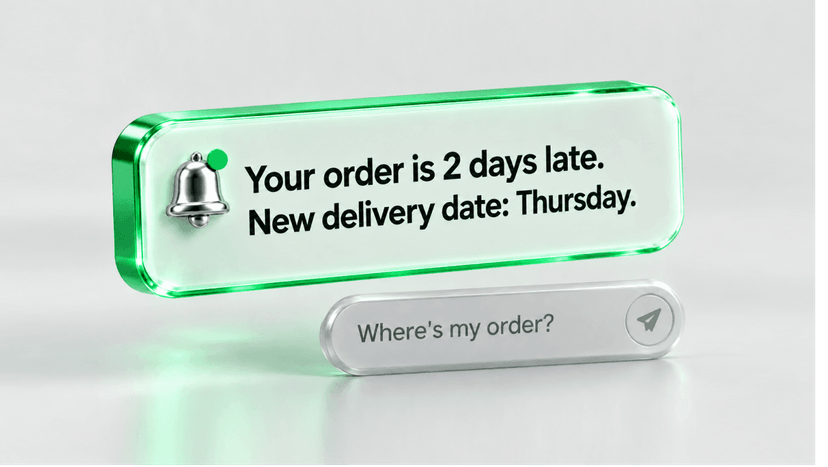
AI feedback loops are transforming the future of customer support by turning every interaction into a learning opportunity. Unlike static systems, these loops continuously refine responses based on real customer conversations, improving accuracy and efficiency over time. Here's why they matter:
- Efficiency Boost: Automates up to 90% of repetitive tasks, cutting costs and saving time.
- Higher Accuracy: Achieves up to 99% response accuracy by learning from past mistakes.
- Customer Satisfaction: Faster resolutions and smarter responses lead to happier customers.
For example, an e-commerce company saved $7,000 monthly by automating 75% of inquiries, while another improved resolution rates from 69% to 82% within three months.
How feedback loops take AI from 60 to 95% accuracy
What Are AI Feedback Loops and Why Do They Matter?
AI feedback loops are systems designed to learn and improve with every customer interaction. Unlike traditional chatbots that stick to pre-programmed responses, these loops enable AI agents to refine their answers over time by analyzing real customer conversations. The result? A smarter, more responsive system that evolves to meet user needs.
This concept isn’t just a trendy tech term - it’s a practical way to transform every customer interaction into a learning opportunity for your AI.
How AI Feedback Loops Work
The process is straightforward but powerful. Here’s how it unfolds:
When a customer interacts with the system, the AI tracks the entire exchange. Did the customer seem satisfied? Were there follow-up questions? Was the interaction positive overall? These details are captured and analyzed.
Using tools like sentiment analysis and natural language processing, the AI identifies patterns in language and emotional cues. It determines which responses effectively solve problems and which ones fall short, leaving customers frustrated.
The system then compiles this data to update its knowledge base. For instance, if customers frequently ask about a new feature, the AI learns to recognize those queries and crafts better responses. On the flip side, if a particular answer consistently leads to dissatisfaction, the system flags it for revision.
This creates a continuous improvement cycle. Each interaction feeds into the system, enabling real-time updates. In fact, AI can process and analyze feedback up to 60% faster than manual methods, ensuring quicker refinements and better customer experiences.
Why Feedback Loops Matter for Customer Support
Customer needs are always evolving. New products are introduced, policies change, and unexpected issues arise. Traditional support systems often struggle to keep up, but AI feedback loops adapt seamlessly.
For example, one case study revealed a 40% reduction in bug resolution times and an 18% increase in customer retention within just six months. The AI didn’t just answer questions - it identified recurring issues and helped prioritize solutions.
One of the most valuable aspects of AI feedback loops is their ability to detect patterns that humans might overlook. Whether it’s a confusing checkout step or widespread misunderstanding of a new feature, the system identifies these trends early - often before they escalate into larger problems.
This proactive approach allows your support team to stay ahead of the curve. The AI recognizes emerging issues and updates its responses before those problems overwhelm your team. It’s a step-by-step improvement process that keeps customer support efficient and effective.
What AI Feedback Loops Deliver
By continually updating its knowledge base, an AI feedback loop delivers tangible benefits that enhance customer support.
- Improved accuracy: As the AI learns from more interactions, it becomes better at interpreting customer needs and providing relevant answers.
- Faster resolutions: With fewer repeated mistakes, the AI resolves issues more quickly. For instance, in 2024, Zonka Feedback implemented feedback loops for a retail client. Over three months, the client saw a 25% drop in repetitive queries and a 15% boost in customer satisfaction scores.
- Reduced repetition: When a response doesn’t work, the system avoids repeating that same ineffective answer. This creates a compounding effect, where support quality improves exponentially over time.
Most importantly, customers feel the difference. They receive more accurate answers, faster resolutions, and see their feedback lead to meaningful changes. This fosters trust and builds long-term loyalty - key ingredients for any successful business.
How AI Feedback Loops Improve Customer Support: Step-by-Step
Building effective AI feedback loops isn’t some mystical process - it’s a structured approach that transforms every customer interaction into an opportunity to improve. Below, we break it down into four straightforward steps your support team can follow.
Step 1: Collect Data from Customer Interactions
Every feedback loop starts with one critical step: gathering data from all customer interactions. This includes everything - chat logs, emails, support tickets, survey responses, and even social media mentions.
Modern AI platforms simplify this process by integrating directly with your existing tools. Take Softorino, for example. In 2023, they connected CoSupport AI to their Zendesk workspace using just an API key. From there, the AI began analyzing their customer service data automatically.
"It was easy to set up with our Zendesk workspace - this AI for customer service learned everything on its own with just an API key."
– Josh Brown, CEO, Softorino
Comprehensive data collection is key. For instance, ProjectFitter automated 70% of their support requests in just a month by linking CoSupport AI to both Freshdesk and Freshchat. Similarly, eCatering tapped into Freshdesk to analyze email interactions, while other companies pull insights from platforms like Intercom, Salesforce, or their internal CRM systems.
This process doesn’t just capture what customers are saying - it also picks up on the emotions and sentiments behind their words. Indicators like frustration or urgency, which might otherwise be overlooked, are now part of the equation.
Step 2: Find Patterns and Insights
Once the data is collected, the AI digs in, using machine learning and natural language processing to uncover meaningful patterns. It does more than just count mentions of specific issues - it examines the context and emotion behind them.
For example, the system can flag when customers seem confused about a particular feature or frustrated with a process. If multiple users struggle with checking out, the AI identifies this as a recurring issue, even if the complaints are phrased differently.
Intent recognition plays a big role here. It groups similar problems together, ensuring that varied descriptions of the same issue are treated as one. The AI also prioritizes issues based on how often they occur and their severity, allowing teams to address critical problems - like a widespread bug - right away. Real-time analysis means teams can spot dissatisfaction early, before minor frustrations turn into major problems.
With these insights in hand, the next step is to feed them back into the AI system for continuous learning.
Step 3: Update and Train the AI
The insights gathered don’t just sit idle - they’re fed back into the AI model through a continuous learning loop. This ensures the system evolves and adapts over time.
For instance, if customers repeatedly ask about a new feature that isn’t in the AI’s knowledge base, the system flags this gap and updates its training. Similarly, when human agents correct the AI or provide improved responses, those corrections are incorporated into the training data.
This process turns raw data into actionable improvements. It also involves testing the AI against challenging scenarios - like sarcasm, anger, or emotional volatility - to ensure it can handle nuanced conversations. CoSupport AI, for example, uses reinforcement learning to apply lessons broadly, not just to individual cases but across similar situations.
Step 4: Monitor and Refine Performance
The final step is all about keeping the AI on track. Continuous monitoring ensures the system maintains and improves its performance over time. Key metrics like resolution rates, customer satisfaction scores, and escalation frequency are tracked to measure success and highlight areas for improvement.
Real-time dashboards provide visibility into how the AI is performing, while regular simulation tests ensure new updates don’t accidentally disrupt existing functionality. Alerts for unusual patterns - like sudden drops in satisfaction or unexpected spikes in escalations - help teams quickly identify and address issues.
sbb-itb-97114f1
What Most People Get Wrong About AI Feedback Loops
While AI feedback loops offer plenty of advantages, mistakes in their implementation can lead to frustration for both teams and customers. Here’s where things often go wrong.
Relying Too Much on Automation
One of the biggest missteps is assuming AI can manage every customer query without human involvement. AI is great at handling routine questions, but it often falters when faced with complex or emotionally charged issues.
"The AI performance has been very good. It handles FAQs and many complex questions well, and the escalated tickets I'm seeing come through are ones I wouldn't expect AI to be able to handle."
– Matthew Brown, Director of Customer Solutions, Shelterluv
The key is finding the right balance. AI might misinterpret sarcasm, fail to pick up on cultural nuances, or miss signs of a customer in distress. These are areas where human agents excel, offering empathy, judgment, and the ability to adapt to context - qualities that AI simply cannot replicate.
Rather than abandoning automation, it’s better to set clear boundaries. Identify situations where human intervention is essential, such as escalated complaints, sensitive account issues, or inquiries involving multiple layers of complexity. Regularly review AI decisions to pinpoint areas where human oversight can make a meaningful difference. By blending AI responses with human judgment, companies can maintain effective and empathetic support.
This brings us to another common oversight.
Missing Feedback from All Channels
Another frequent mistake is focusing feedback collection on just one channel, like email or chat. This narrow approach can leave you blind to critical issues bubbling up elsewhere.
Customers voice their opinions everywhere - social media, app store reviews, third-party review sites, and online forums. For example, if a new product feature sparks debates on Twitter or Reddit but your feedback loop only tracks support tickets, you might miss the problem entirely until it grows into a bigger issue.
To avoid this, expand your data collection to cover every touchpoint. Use tools for social media monitoring, pull in reviews from external platforms, analyze survey responses, and even gather insights from sales teams. Many modern AI platforms can integrate with multiple data sources, but it’s up to you to ensure those connections are established.
Collecting data is just the first step, though. What you do with that data matters even more.
Not Acting on the Data
Gathering insights without taking action renders the entire feedback loop ineffective. AI feedback loops only create value when businesses use the insights to make meaningful changes. For instance, if the system flags that customers are consistently confused about a feature but the product team doesn’t address it, the confusion will persist. Similarly, if billing-related questions keep coming up but the FAQ or billing interface remains unchanged, the problem won’t go away.
Often, the issue lies in poor communication between teams. Support teams might identify key insights, but those findings don’t always make it to the product or engineering teams. Or leadership might fail to prioritize the fixes that could improve the customer experience.
To get it right, companies need clear processes for acting on AI-driven insights. Assign ownership to ensure recommendations are followed up on, hold regular cross-team meetings to discuss findings, and track whether changes lead to better customer satisfaction. Without this kind of follow-through, even the most sophisticated AI feedback loop becomes little more than a costly data collection tool that fails to deliver real improvements.
Key Takeaways
These takeaways highlight how continuous learning through AI feedback loops transforms customer support into a system that gets better with every interaction. The result? Tangible benefits like improved efficiency, cost savings, and enhanced customer satisfaction.
AI Feedback Loops Drive Continuous Improvement
AI feedback loops stand out because they learn from every customer interaction, evolving constantly. Unlike static traditional support systems, AI-powered tools adapt and improve with each conversation.
Take Softorino as an example: their AI resolution rate jumped from 69% to 82% in just three months. This demonstrates how continuous learning can lead to measurable progress.
AI systems utilize tools like sentiment analysis, text analysis, and emotion detection to extract valuable insights from customer feedback. They pinpoint recurring issues, rank them by importance, and recommend solutions based on past data and best practices. Essentially, every interaction becomes a stepping stone for more accurate and efficient responses.
The Power of AI and Human Collaboration
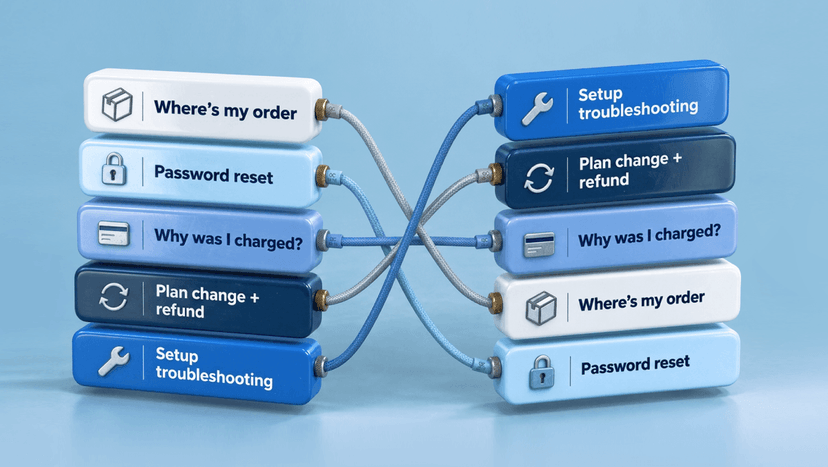
The best support teams don’t rely solely on AI or human agents - they integrate both. AI excels at handling up to 90% of repetitive tasks, such as FAQs, order tracking, and account inquiries. Meanwhile, human agents focus on more complex cases that demand empathy and critical thinking.
This collaboration doesn’t just improve efficiency; it also boosts team morale. Ann Kuss, CEO of Outstaff Your Team, noted:
"The turnover in the team has improved as our agents were no longer bored resolving repetitive questions."
By automating repetitive tasks, human agents can dedicate their time to meaningful interactions, which enhances job satisfaction and customer relationships.
Matthew Brown, Director of Customer Solutions at Shelterluv, shared his perspective:
"The AI performance has been very good. It handles FAQs and many complex questions well, and the escalated tickets I'm seeing come through are ones I wouldn't expect AI to be able to handle."
Proper Implementation Cuts Costs and Elevates Customer Experience
When done right, AI feedback loops deliver major cost savings while improving the customer experience. For instance, SupportYourApp saved $14,000 per month by automating 80% of internal requests.
Faster response times and higher resolution rates are key drivers of these savings. ProjectFitter reduced resolution times from hours to minutes, while Hour Timesheet slashed resolution time by 70%. Customers get answers faster, and support teams handle more inquiries without needing to expand their workforce.
AI feedback loops create a self-reinforcing cycle: better data leads to smarter AI responses, which boosts customer satisfaction and generates even more useful feedback. Axel Barrionuevo, Account Manager at SupportYourApp, explained:
"After launching CoSupport AI, we've automated around 7k monthly chats and emails - with AI tools for customer service like this, 80% of our incoming requests are handled automatically now. This allowed us to significantly cut operational costs, saving thousands of $, while maintaining high support quality."
Companies that master AI feedback loops don’t just save money; they build scalable, efficient support systems that grow alongside their business while keeping customers happy. These examples underscore the pivotal role AI feedback loops play in modern customer support.
FAQs
What makes AI feedback loops different from traditional customer support systems, and how do they improve support?
AI feedback loops stand apart from traditional customer support systems by continuously evolving through real customer interactions. Instead of relying on static responses, AI agents analyze patterns, pinpoint gaps in their replies, and refine their answers over time. This ongoing learning ensures their responses remain both precise and relevant.
Key benefits include:
- Greater accuracy: With each interaction, AI agents improve, minimizing errors and misunderstandings.
- Quicker solutions: Drawing on past experiences, they deliver faster and more accurate responses.
- Lower costs: Automation reduces the need for human intervention, helping cut operational expenses.
This continuous learning process enables AI agents to provide support that is not only efficient and reliable but also scalable in ways traditional systems can't match.
How can companies successfully implement AI feedback loops in their customer support processes?
To make AI feedback loops work effectively in customer support, start by ensuring your AI system is trained with accurate and current information. This includes resources like FAQs, help documents, and records of past customer interactions. Regularly evaluate the AI's responses to spot patterns or areas that need improvement, then use those insights to refine its training.
Bring your support team into the process by tapping into their knowledge of frequent customer issues and recurring feedback. Their input can significantly enhance the AI's ability to address real-world concerns. Lastly, set up a system for ongoing monitoring and adjustments. This ensures the AI stays aligned with both your business objectives and the evolving needs of your customers.
What challenges do businesses face when using AI feedback loops, and how can they address them?
Integrating AI feedback loops into a business can feel like a daunting task, but with the right strategy, these challenges can be tackled effectively. Here are some common obstacles and how to address them:
- Data quality issues: AI systems thrive on accurate and relevant data. When the data is outdated or poorly maintained, the system may produce incorrect or unhelpful responses. The solution? Regularly update and clean your training data to keep it precise and useful.
- Overfitting to narrow scenarios: If AI is trained too specifically, it may falter when faced with unusual or unexpected situations. To avoid this, ensure your training data includes a diverse range of customer queries, striking a balance that prepares the system for a variety of scenarios.
- Insufficient human oversight: While AI can handle many tasks autonomously, human involvement is essential to maintain accuracy and adapt to changing customer expectations. Regularly audit AI-generated responses to catch errors and refine performance as needed.
By addressing these challenges head-on, businesses can build AI feedback loops that are not only more dependable but also enhance the overall customer support experience.
.png)