.png&w=96&q=75)

Introduction. From Cost Center to Growth Engine
For decades, customer service has been treated as a necessary expense. It was measured in cost per contact, headcount efficiency, and ticket backlogs. When budgets tightened, service was often the first function scrutinized for cuts. When demand grew, leaders braced for rising operational spend. That framing is no longer sustainable.
According to Deloitte’s Future of Service playbook, service demand has increased by 20-30% in recent years, while customer expectations and case complexity continue to climb. At the same time, nearly 70% of executives report pressure to reduce costs and improve customer experience simultaneously.
Those numbers describe a structural shift. Customer service can no longer be optimized purely for efficiency. It must be redesigned as a scalable, intelligence-driven engine that protects margin, strengthens loyalty, and drives revenue retention. Artificial intelligence is the inflection point. This is not about incremental automation. It is about redefining the economics of support.
With AI, success in service shifts from speed and efficiency of live agent resolution to AI accuracy in supporting human agents and improving customer experiences.
The Traditional Service Model Is Financially Unsustainable
The legacy service model operates on a linear equation. If contact volume increases by 25%, staffing must expand accordingly. If complexity rises, training investment grows. If new channels are introduced, additional tooling and management overhead follow.
That equation made sense in a slower, less interconnected environment. It fails in today’s conditions.
According to Deloitte’s research, service volumes have grown by 20-30% across many industries. Digital channels have expanded the number of entry points into support, multiplying interactions rather than replacing them. Instead of choosing between phone and email, customers now use chat, messaging apps, in-product prompts, and social platforms simultaneously.
Each interaction carries a cost. Cost per contact varies by channel, but the aggregate financial burden is clear. As volume rises, operating expenses climb in parallel.
Meanwhile, efficiency gaps persist. Many service organizations still rely on manual triaging, fragmented knowledge bases, and siloed systems. Deloitte’s findings show that more than 60% of leaders report an increase in case complexity. Agents are navigating interconnected products, integrations, compliance requirements, and contract-specific obligations.
This complexity slows resolution. It increases average handling time. It raises escalation rates. And it amplifies cost.
Staffing presents another constraint. Talent shortages, turnover, and burnout are common in service environments. Scaling headcount is not only expensive but operationally fragile. Recruitment cycles lengthen, onboarding requires training investment, and productivity lags during ramp-up periods.
SLA pressure compounds the challenge. For B2B organizations in particular, contractual response and resolution times are tied to revenue and client retention. Missing SLAs carries financial penalties and reputational risk. Yet maintaining SLA compliance becomes increasingly difficult as volume and complexity rise. The result is a model under strain.
Linear scaling no longer works because cost grows faster than value. As demand increases by 20-30%, organizations cannot afford equivalent growth in staffing and overhead. Without structural change, margins erode. This is why customer service must evolve from cost containment to economic transformation.
AI Changes the Economics of Support
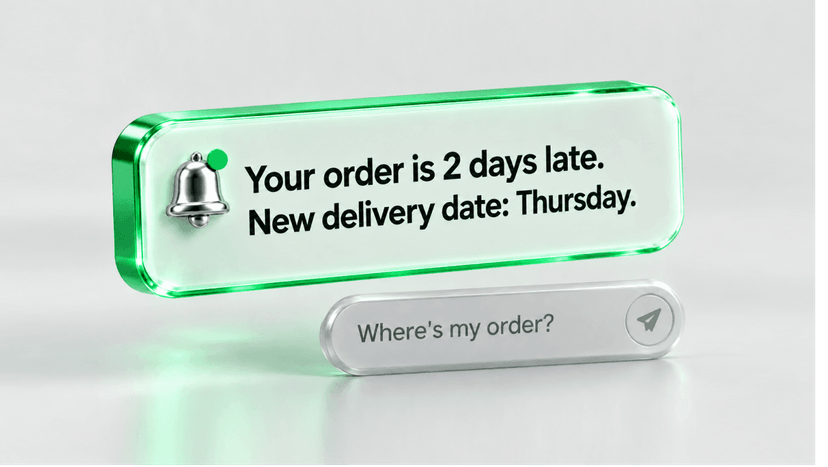
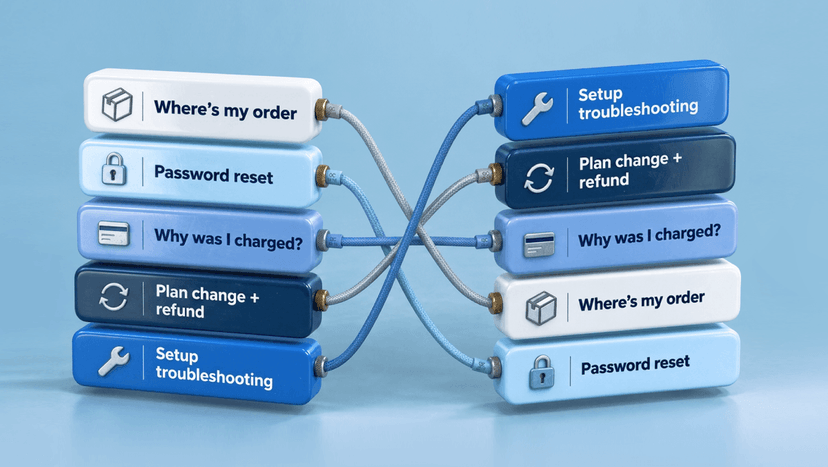
Artificial intelligence alters the equation in two critical ways: automation and augmentation. According to Deloitte’s Future of Service research, between 20-40% of service interactions can be automated depending on industry and maturity level. These interactions are typically repetitive and structured, such as order tracking, billing inquiries, account updates, and standard troubleshooting.
Automating even 25% of high-volume inquiries has profound financial implications. If one quarter of tickets no longer requires human handling, the cost per contact drops. Backlogs shrink. Staffing growth decouples from demand growth.
But automation is only one lever. Deloitte reports measurable reductions in average handling time among organizations deploying AI-enabled service tools. By surfacing relevant knowledge, suggesting responses, and streamlining routing, AI reduces cognitive load on agents. Even a 10-20% reduction in handling time across thousands of interactions translates into significant cost savings and capacity expansion.
First-contact resolution improves as well. When AI systems provide context-aware recommendations and access to accurate documentation, agents solve issues more effectively on the first interaction. Deloitte’s research highlights improvements in resolution rates and reductions in escalation frequency among AI adopters.
Resolution cycles accelerate. Instead of prolonged back-and-forth exchanges, AI-assisted workflows shorten time to closure. Faster resolution improves customer satisfaction and reduces operational overhead.
Customer satisfaction itself rises. Organizations leveraging AI report measurable increases in customer experience metrics. Faster responses, consistent answers, and proactive engagement create stronger brand perception. These outcomes shift the economic narrative.
AI becomes:
- Margin protection. By automating 20-40% of interactions and reducing handling time, organizations flatten the cost curve.
- Productivity multiplier. AI enables agents to manage higher case volumes without compromising quality.
- CX accelerator. Faster, more accurate service enhances retention and loyalty.
The combined effect is not an incremental improvement. It is structural leverage. Customer service transitions from a reactive cost center to a strategic growth engine.
Service as a Revenue Lever
To understand the revenue implications, consider retention economics. Acquiring new customers is significantly more expensive than retaining existing ones. Poor service experiences drive churn. According to Deloitte’s findings, more than half of customers are willing to switch brands after a negative service interaction.
When AI reduces resolution time and improves satisfaction, it directly influences retention rates. In subscription-based or contract-driven models, even marginal improvements in churn have a substantial revenue impact.
SLA adherence is another revenue lever. In B2B environments, contracts often include penalties for missed service levels. AI-driven improvements in routing, prioritization, and response generation enhance compliance. Protecting SLA performance protects revenue streams.
Additionally, efficient service operations create cross-sell and upsell opportunities. When agents are not overwhelmed by repetitive tasks, they can focus on value-added conversations. AI insights can surface relevant product recommendations or identify expansion opportunities within accounts.
Service becomes proactive rather than reactive. This is the economic transformation Deloitte’s research points toward. Organizations that integrate AI deeply into service operations are not merely reducing costs. They are increasing revenue resilience.
B2B vs B2C, Where AI Delivers the Highest ROI
The financial implications of AI in service vary between B2B and B2C contexts, but the opportunity exists in both.
In B2B environments, SLA sensitivity is high. Contracts specify response and resolution windows. Missed targets can result in penalties, client dissatisfaction, or even lost accounts. According to Deloitte’s research, organizations using AI-enhanced routing and case management report improvements in SLA compliance and faster resolution cycles.
For B2B companies, the ROI of AI often centers on revenue protection and account retention. A single retained enterprise client may justify a substantial investment. AI-driven augmentation reduces risk in high-value relationships.
Case complexity is also higher in B2B settings. Agents benefit significantly from AI assistance that aggregates knowledge, summarizes histories, and suggests compliant responses. Productivity gains translate directly into cost stabilization without compromising expertise.
In B2C environments, volume dominates. Millions of interactions occur across digital channels. Here, automation potential has an outsized financial impact. If 30 percent of high-volume inquiries are automated, cost savings scale dramatically.
Speed and satisfaction are critical in B2C. Deloitte notes rising customer expectations for rapid responses. AI-driven self-service and intelligent chat solutions meet those expectations while reducing strain on human teams.
ROI in B2C often emerges through cost per contact reduction and improved customer lifetime value. Faster resolution and consistent experiences drive repeat purchases and brand loyalty. In both contexts, AI aligns economic performance with customer outcomes. The mechanism differs. The result converges.
The New Service KPIs
As customer service transforms economically, performance measurement must evolve.
- Traditional KPIs focused heavily on cost per contact and ticket backlog. These metrics remain relevant but are no longer sufficient. According to Deloitte’s Future of Service research, organizations adopting AI increasingly track:
- Automation rate. What percentage of interactions are resolved without human intervention? Higher automation correlates with cost efficiency.
- Resolution time reduction. How much has the average handling time decreased? Even modest reductions scale significantly.
- SLA compliance percentage. AI-enabled routing and prioritization improve adherence to contractual commitments.
- Agent productivity per head. AI augmentation allows agents to handle more complex cases without increased cognitive burden.
- Customer lifetime value impact. Improved service influences retention and expansion revenue.
Aligning With the AI-First Operating Model

The transformation Deloitte describes requires more than isolated tools. It demands integration. AI must operate across workflows, connecting to helpdesks, CRMs, and knowledge systems. Automation must coexist with augmentation.
This is where platforms like CoSupport AI align naturally with the new economics of service.
AI Agents enable deflection of high-volume, repetitive inquiries, directly increasing automation rate and reducing cost per contact.
AI Assistant enhances agent productivity by generating responses, summarizing cases, and surfacing relevant information instantly. This reduces handling time and improves resolution quality.
Together, these capabilities support the KPIs that matter: automation rate, SLA compliance, productivity per head, and customer lifetime value impact. The economic logic is consistent with Deloitte’s findings. Service transformation is not about replacing humans. It is about amplifying human capacity while removing inefficiencies.
Why Waiting Is Expensive
One of the clearest implications of Deloitte’s research is acceleration. More than 70% of organizations are investing in AI for service. Early adopters are already achieving measurable automation rates, productivity improvements, and cost reductions.
As adoption spreads, competitive advantages compound. Organizations that act early flatten their cost curves and enhance customer loyalty. Those that delay continue scaling linearly, absorbing rising costs and increasing operational strain. The longer the wait, the larger the gap. Transformation becomes more complex as technical debt accumulates. Workforce burnout increases turnover risk. Customer expectations continue to rise regardless of internal readiness. Waiting is not neutral. It is expensive.
The Bottom Line
Customer service economics are being rewritten. Demand is growing by 20-30%. Complexity is rising. Expectations are accelerating. Cost pressure persists. According to Deloitte’s Future of Service research, AI enables 20-40% automation potential, measurable reductions in handling time, improved first-contact resolution, and stronger SLA compliance.
These outcomes shift service from cost containment to strategic leverage.
- AI protects the margin by reducing unnecessary labor expansion.
- It multiplies productivity by empowering agents.
- It accelerates customer experience by delivering faster, more consistent service.
When integrated effectively, AI transforms service into a growth engine. The organizations that recognize this shift will not merely survive rising demand. They will capitalize on it. Customer service is no longer a line item to minimize. It is a strategic asset to optimize. And AI is the lever that redefines its economics.
.png)