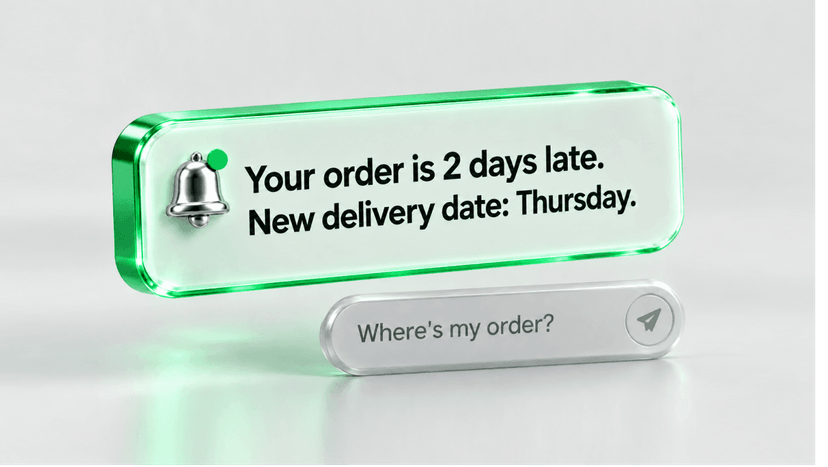
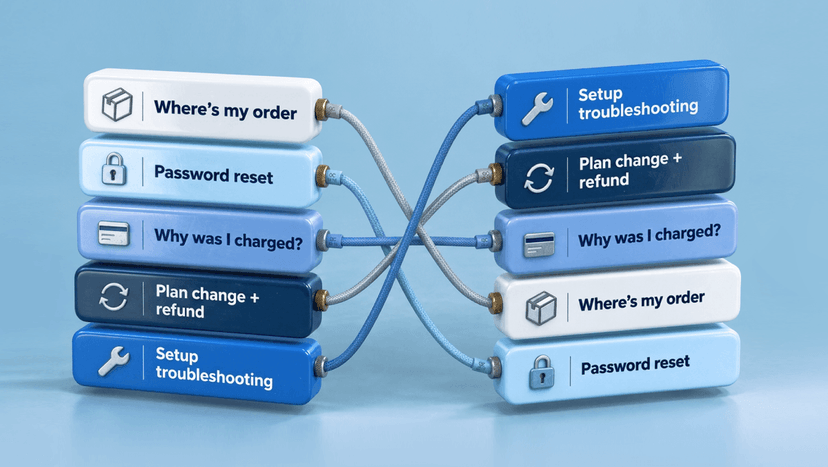
AI is reshaping customer support for both B2B and B2C businesses, but the approach and priorities differ significantly. In B2C, speed and efficiency are key, with AI handling high volumes of simple, repetitive tasks like password resets or order tracking. For B2B, the focus is on precision and managing complex, multi-departmental issues, often requiring a mix of AI and human expertise. The stakes are higher in B2B, where losing a single client can mean millions in lost revenue, while B2C prioritizes quick resolutions to retain individual customers.
Key Points:
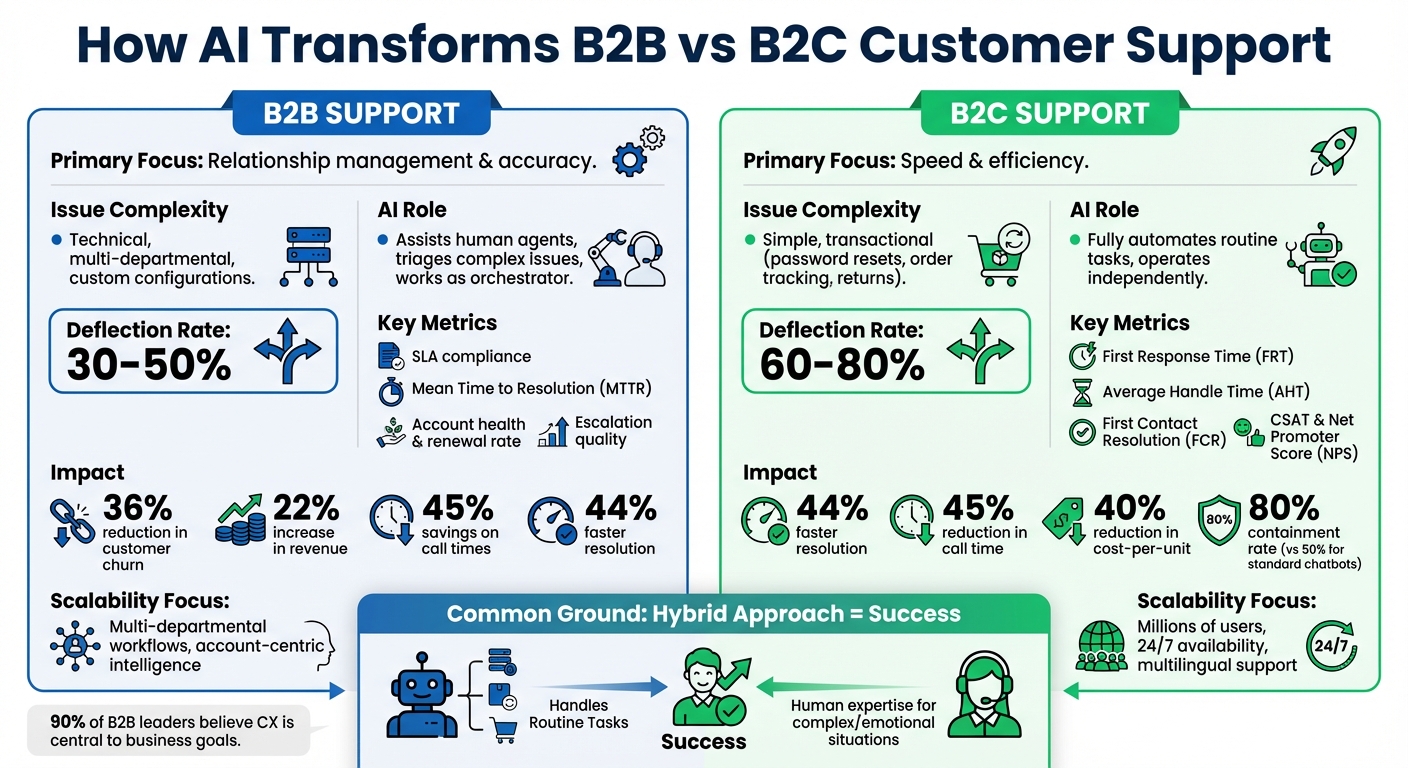
- B2C Support: AI handles routine tasks autonomously, delivering faster responses and reducing costs.
- B2B Support: AI works alongside human agents to manage complex issues, ensuring SLA compliance and protecting client relationships.
- Metrics: B2C focuses on speed (e.g., response time, containment rate), while B2B emphasizes relationship health (e.g., SLA compliance, account retention).
Quick Comparison:
| Feature | B2B Support | B2C Support |
|---|---|---|
| Primary Focus | Relationship management, accuracy | Speed, efficiency |
| AI Role | Assists humans, triages complex issues | Fully automates routine tasks |
| Metrics | SLA compliance, account health | First response time, containment rate |
| Scalability | Handles multi-departmental workflows | Manages millions of users seamlessly |
AI's success lies in blending automation with human input. For B2C, this means automating repetitive tasks while keeping human agents available for emotional or complex situations. For B2B, AI supports human agents by triaging issues, analyzing risks, and ensuring compliance, allowing experts to focus on high-value interactions.
B2B vs B2C AI Customer Support: Key Differences in Focus, Metrics, and Implementation
1. B2B Customer Support Automation
Issue Complexity
B2B customer support often deals with highly technical challenges - think custom configurations, complex subscription tiers, and coordination across multiple departments. AI is reshaping how these issues are handled by analyzing account data and offering tailored, context-aware recommendations.
Instead of reacting to problems as they arise, AI enables a proactive approach. By spotting usage anomalies and error patterns before a ticket is even submitted, AI helps businesses reduce customer churn by 36% and increase revenue by 22%.
In the past, B2B support relied heavily on manual triage processes, which were slow and inefficient. Now, AI can assess ticket urgency based on customer value and SLA commitments, instantly directing cases to the right agent. This smart routing eliminates delays and ensures that critical issues are addressed without hesitation.
"The most impactful benefit we've seen is AI-driven ticket deflection: let AI handle L1 queries end-to-end, while human experts focus on L2 issues that require judgment and nuance." - Kumar Krishnasami, CEO & Founder, Desk365
Take Jenzabar, for example - a higher education software provider managing hundreds of products. In October 2025, they swapped out their outdated CRM for an AI-powered support platform. With features like intelligent routing and AI-driven summarization, Jenzabar achieved faster ticket resolution and improved SLA compliance for its diverse client base.
These advancements highlight how performance metrics in B2B support are evolving.
Key Metrics
B2B support success is measured through metrics that emphasize long-term client relationships rather than quick fixes. While B2C metrics often focus on speed and cost efficiency, B2B metrics prioritize SLA compliance, account health, and escalation quality - key indicators of strong partnerships.
For example, Mean Time to Resolution (MTTR) is a critical metric in B2B, as resolving complex issues often requires collaboration across multiple teams. AI helps reduce MTTR by offering instant routing and real-time agent assistance, while automated SLA monitoring ensures that escalations happen before deadlines are missed. By matching cases with the most qualified agents, AI directly improves SLA compliance.
| Metric Type | B2B Focus | B2C Focus |
|---|---|---|
| Primary Goal | Retaining Relationships & Meeting SLAs | Transactional Speed & Deflection |
| Resolution | Mean Time to Resolution (MTTR) | First Contact Resolution (FCR) |
| Success Indicator | Account Health & Renewal Rate | CSAT & Net Promoter Score (NPS) |
| AI Role | Agent Assistance & Triage | Full Autonomy & Self-Service |
AI Role
In B2B support, AI acts as an orchestrator rather than a replacement for human agents. While it handles straightforward Level 1 tasks like password resets, it allows human experts to focus on more complex Level 2 issues requiring technical expertise. This hybrid approach is essential, as the complexity of B2B services still demands significant human involvement.
AI also revolutionizes knowledge management. Instead of relying on manual updates, AI identifies gaps in documentation as issues arise and drafts new articles based on resolved cases. This turns static knowledge bases into dynamic, ever-evolving resources.
The consistency AI brings to customer interactions is another game-changer. Companies using AI report a 20% drop in error rates due to improved response accuracy. By eliminating the inconsistencies of human-only support, AI ensures clients receive precise information tailored to their technical and contractual needs.
These intelligent workflows pave the way for scalable, multi-channel support.
Scalability
AI’s ability to streamline response times and optimize routing makes scaling support operations seamless. Enterprise clients expect consistent service across channels like email, Slack, and Teams, and AI ensures that quality remains uniform no matter the platform. This is crucial, as 90% of B2B leaders believe customer experience is central to achieving their business goals.
AI-enabled teams report saving 45% on call times and resolving issues 44% faster. This increased efficiency allows businesses to scale their support operations without needing to expand their workforce proportionally. In fact, three out of five tech vendors have reduced their support teams by up to 25% after adopting AI.
The next big leap is agentic AI, which can independently observe, plan, and act to resolve backend issues across platforms - no human intervention required. Early adopters of agentic AI are aiming for productivity gains of 60% or more, signaling a fundamental shift in how enterprise support can scale.
Key Insight: The real power of B2B customer support automation lies in the balance - AI handles routine tasks, while humans focus on the interactions that truly matter. It’s not about replacing people but enhancing their ability to provide exceptional service while improving operational efficiency.
sbb-itb-97114f1
The difference between B2C & B2B customer journey
2. B2C Customer Service AI
In the world of B2C support, AI takes center stage, managing a wide range of routine customer inquiries with minimal human involvement.
Issue Complexity
B2C customer service AI is built to handle high volumes of simple, transactional queries. These include tasks like resetting passwords, tracking orders, processing returns, and answering basic account-related questions. Customers typically expect these issues to be resolved quickly, often in a single interaction.
Modern AI systems have transformed how these queries are managed. Instead of following the traditional "intake-respond-escalate" process, AI now acts as the first point of contact. It not only triages but also resolves straightforward issues before they ever reach a human agent. This allows businesses to provide 24/7 support across channels like SMS, WhatsApp, and web chat - without needing to expand their teams.
By automating repetitive, Tier-1 tasks, AI enables human agents to focus on more complex or emotionally charged situations that require a personal touch. This shift boosts both efficiency and speed while keeping costs in check.
Key Metrics
For B2C support, speed and efficiency are paramount. Metrics like First Response Time (FRT) and Average Handle Time (AHT) are crucial. Customers now expect near-instant responses, regardless of when they reach out. AI-powered service teams meet these expectations, resolving issues 44% faster and cutting 45% off the time spent on calls.
Another important metric is containment rate, which measures how effectively AI resolves issues without human intervention. Advanced AI agents achieve an impressive 80% containment rate for customer service inquiries, compared to just 50% for standard chatbots. This means four out of five issues are resolved entirely by AI, allowing businesses to handle surges in demand without hiring more staff.
The financial benefits are also striking. Companies using advanced AI report a 40% reduction in cost-per-unit for their most efficient workflows. For example, JetBlue partnered with ASAPP in 2023 to deploy generative AI for chat support. This system saved an average of 280 seconds per chat, freeing up 73,000 hours of agent time in just one quarter.
| Metric | Traditional B2C Support | AI-Enhanced B2C Support |
|---|---|---|
| Response Time | Hours or days (queue-based) | Seconds or minutes |
| Availability | Limited to business hours | 24/7 across digital channels |
| Scalability | Requires more staff | Handles spikes without new hires |
| Consistency | Varies by agent mood/training | Highly consistent |
These metrics underscore how AI is reshaping B2C customer support, making it faster, more reliable, and cost-effective.
AI Role
In B2C settings, AI operates with a level of independence not typically seen in B2B scenarios. While B2B AI supports human agents, B2C AI often takes full control of the customer journey. Modern advancements, such as conversational AI and generative AI, allow these systems to craft contextually accurate responses that feel natural and engaging.
"AI should handle the common path. Humans should own the moments that matter." - Kenji Hayward, Senior Director of Customer Support, Front
This philosophy drives the modern B2C support model. AI handles routine inquiries from start to finish, while human agents step in only for cases requiring empathy, complex problem-solving, or exceptions to company policies. This hybrid model is gaining traction, with 67% of customer service organizations now using generative AI.
The benefits are clear. In 2023, Octopus Energy implemented generative AI to assist with email responses. AI-drafted emails scored 18% higher in customer happiness compared to those written solely by humans. Today, the system manages one-third of all customer inquiry emails.
Scalability
When it comes to scalability, AI is a game-changer for B2C businesses. These companies often serve millions of customers across global markets, and AI allows them to maintain consistent service quality without adding staff. Features like multilingual natural language processing (NLP) and real-time translation make it possible to provide seamless support across different languages and time zones, eliminating the need for regional support centers.
B2C customers also expect a unified experience across multiple channels, whether they contact support via WhatsApp, social media, email, or in-app chat. AI ensures that context follows the customer across channels, creating a smooth and personalized experience. For instance, WhatsApp messages have an impressive 90% open rate within three minutes, making AI-powered responses on this platform especially effective.
In this environment, AI moves beyond being just a support tool - it becomes the primary mechanism for service delivery, managing routine queries end-to-end while complementing human agents for more nuanced tasks.
Key Insight: B2C customer service AI thrives on handling high-volume, repetitive tasks. The key to success lies in setting clear handoff rules, ensuring customers can easily transition to human agents when needed, and avoiding frustrating "AI loops."
Advantages and Disadvantages
AI brings both benefits and challenges to customer support, and these vary significantly between B2B and B2C contexts. Understanding these distinctions is key to setting realistic goals and avoiding common missteps.
In B2C support, AI shines when managing large volumes of simple, repetitive queries. For example, tasks such as order tracking or password resets can achieve deflection rates of 60–80%, resulting in considerable cost savings. However, the downside is that automation can sometimes feel impersonal. Customers may miss the empathy of human interaction, particularly during emotionally sensitive situations like complaints or refund requests. This loss of the "human touch" can hurt brand loyalty over time.
B2B support, on the other hand, has a different set of trade-offs. AI is valuable for analyzing sentiment trends and triggering escalations for high-value accounts, helping to prevent customer churn. Companies with strong customer experience (CX) programs are 4.5 times more likely to see revenue growth above 20%. However, B2B AI typically achieves lower deflection rates (30–50%) due to the complexity of technical issues that often require human expertise. Additionally, meeting stricter security and compliance standards like SOC2, ISO, and HIPAA can increase both implementation time and costs.
Despite these differences, both models face shared challenges. For instance, as of late 2025, only 28% of companies have reported measurable business value from generative AI in customer service. A major hurdle is change management - 50% of executives cite difficulties in redesigning workflows and integrating AI into existing systems. AI's occasional "hallucinations" or factual inaccuracies also pose risks, especially in corporate environments where errors can damage reputations or lead to financial losses.
Here’s a quick comparison of the advantages and disadvantages of B2B and B2C AI support:
| Feature | B2B AI Advantages | B2B AI Disadvantages | B2C AI Advantages | B2C AI Disadvantages |
|---|---|---|---|---|
| Primary Benefit | Prevents churn through sentiment analysis | Lower deflection rates (30–50%) | High deflection rates (60–80%) | Loss of the human touch |
| Cost Impact | Protects high-value accounts | Higher implementation costs (security/compliance) | Significant cost savings | Uneven ROI during initial adoption |
| Complexity | Handles multi-stakeholder coordination | Requires deep CRM/billing integrations | Automates repetitive tasks 24/7 | Struggles with emotionally charged situations |
| Scalability | Provides account-centric intelligence | Information may be scattered across silos | Manages millions of users seamlessly | Frustrations during handoffs |
The key distinction lies in priorities. B2C support prioritizes speed and efficiency to handle high volumes, while B2B support emphasizes relationship management and accuracy to protect valuable accounts.
Key Insight: Success with AI in customer support isn’t about choosing one approach over the other. Instead, it’s about aligning the technology with your business goals. For B2C teams, the focus should be on rapid ticket resolution and efficiency. Meanwhile, B2B teams should leverage AI for monitoring account health and enabling smart escalations to safeguard critical relationships. Tailoring your strategy to these priorities is crucial for achieving both operational efficiency and customer satisfaction.
Conclusion
AI changes the game for B2B and B2C support, but in distinct ways. For B2C, it’s all about speed and scale - handling up to 70% of routine inquiries like order tracking or password resets. On the other hand, B2B support leans on AI for precision, focusing on complex troubleshooting and monitoring account health to keep high-value clients happy and engaged.
The winning formula? A hybrid human-AI model. Let AI handle the repetitive stuff, while human agents step in for the moments that matter most. In B2C, this means automating transactional tasks but keeping human empathy front and center for sensitive issues. In B2B, it’s about using AI to triage, analyze sentiment, and flag risks, while human experts tackle technical escalations and nurture key relationships.
To make this work, there are some practical steps to take. Keep your knowledge base up to date so AI has reliable information to pull from. Set clear escalation rules to ensure AI knows when to pass the baton to a human. For B2B, consider implementing account health scoring to catch signs of churn early. For B2C, focus on optimizing AI’s ability to deflect routine inquiries while maintaining quality responses across high-volume channels.
As Laura Ramos, VP and Principal Analyst at Forrester, puts it:
"B2B use cases will always require a hybrid human-AI agent approach."
Key Takeaways:
- AI’s role varies: In B2C, it’s about efficiency; in B2B, it’s about precision and relationships.
- Hybrid models work best, blending automation for routine tasks with human expertise for complex issues.
- Preparation is key: Audit your documentation and define escalation rules for smooth AI deployment.
- Look beyond cost savings: Measure success by how well AI enhances customer experience and strengthens relationships.