.png&w=96&q=75)

AI can solve up to 90% of routine customer issues instantly, saving time for both customers and support teams. By automating common requests like password resets or billing inquiries, businesses can reduce wait times, improve satisfaction, and cut costs. For instance, Unity saved $1.3M by using AI to handle 8,000 tickets.
To make this work:
- Train AI with your help docs, FAQs, and ticket histories for accurate responses.
- Set clear handoff rules for complex cases to ensure seamless transitions to human agents.
- Monitor AI performance and update its training regularly to keep it effective.
The result? Faster resolutions, happier customers, and a more efficient support process.
How to Automate Customer Service with AI: A Success Story with TeamSystem

Introduction: Why Quick Resolution Matters
Your support team likely handles the same types of questions over and over again - password resets, billing inquiries, feature clarifications, and account setup issues. These requests pile up in the ticket queue, leaving customers waiting for answers they need right now. This constant flood of repetitive issues takes a toll on both your agents and your customers.
Addressing common queries manually wastes valuable time. Customers grow frustrated waiting for responses to simple problems, while your agents spend their time on tasks that could easily be automated. Think about it: when someone can't log into their account or needs to update their payment method, waiting 24 hours for help feels like an eternity.
And here's the kicker: when customers don’t get timely assistance, they’re 40% more likely to abandon your service and typically cut their spending by 25%. For routine issues, people expect fast, accurate solutions - they assume these should be easy to resolve.
Unfortunately, manual processes and disconnected systems slow everything down, even for straightforward problems. This often leads to customers repeating their queries, which only adds to the workload and costs.
Repeated queries hurt your bottom line and customer satisfaction. When customers don’t get clear, complete answers the first time, they reach out again, creating duplicate work and testing their patience. Each follow-up not only drives up operational costs but also leaves customers feeling like their concerns aren’t being taken seriously.
What Common Request Resolution Is and Why It Affects CSAT
Common request resolution is all about quickly identifying and solving recurring customer support questions. These are the straightforward issues that pop up regularly, and customers expect them to be resolved fast and without hassle.
How you handle these requests - both in terms of speed and accuracy - can have a big impact on your Customer Satisfaction (CSAT) scores. When customers get quick, correct answers to these common problems, they’re more likely to walk away feeling positive about their experience. On the flip side, even minor delays in addressing these issues can leave them frustrated, dragging down satisfaction levels.
What Falls Under Common Requests in Customer Support
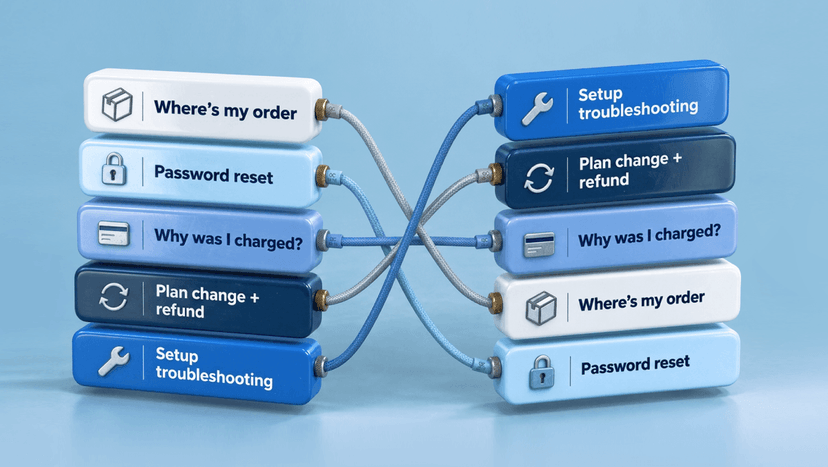
For many support teams, a significant portion of tickets revolves around common, predictable issues. These typically fall into a handful of categories:
- Account and login issues: Things like password resets, account lockouts, two-factor authentication hiccups, or recovering usernames.
- Billing and payment questions: Clarifications on charges, updating payment methods, accessing invoices, or handling pricing changes.
- Product usage and setup: New users needing help with setup or existing customers asking about specific features.
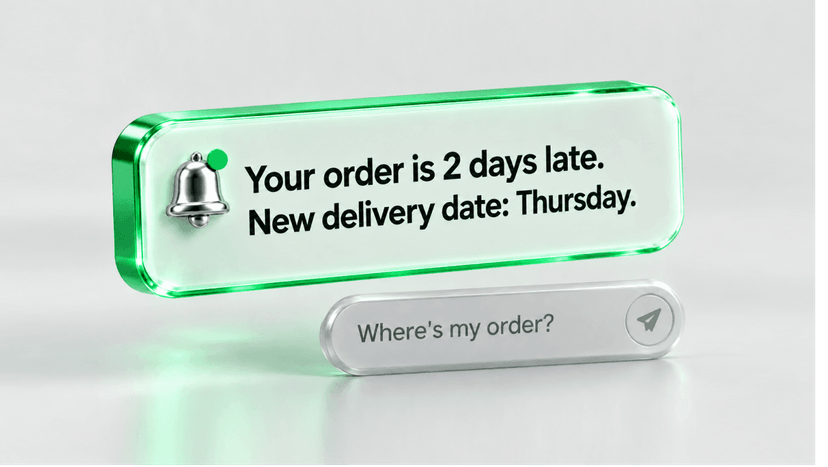
- E-commerce inquiries: Questions about order tracking, delivery changes, or return policies.
- Technical troubleshooting: Basic problems like app crashes, connectivity issues, or minor feature glitches.
Recognizing and addressing these recurring issues quickly is crucial because delays in solving them can directly lower customer satisfaction.
Why Slow Responses Damage CSAT and Loyalty
Slow responses aren’t just annoying - they actively harm the customer experience. They frustrate users, make them question your service’s reliability, and can even reduce their loyalty over time. For support teams, these delays also lower agent productivity, as repeated explanations waste valuable time and resources.
How AI Delivers Fast and Accurate Solutions
AI is a game-changer when it comes to handling repetitive questions. It provides instant, consistent, and accurate answers, eliminating the variability that can come with human responses. Unlike human agents, who might phrase things differently or miss a detail, AI ensures uniformity every time.
To make this work, train your AI using help docs, FAQs, past tickets, and product details. This ensures responses not only match your company’s tone but also meet your service standards.
AI also excels at multitasking, handling multiple conversations at once without compromising quality. This means shorter wait times for customers and more efficient support overall.
When a question goes beyond the AI’s scope, advanced systems can seamlessly hand off the conversation to a human agent. The best part? The agent gets full context, so they can jump in without making the customer repeat themselves. This balance allows AI to tackle simple inquiries while leaving complex cases to human expertise.
On top of that, AI can track recurring issues and spot new trends. This insight helps support teams refine their processes and update their knowledge base proactively, preventing small problems from turning into bigger headaches.
sbb-itb-97114f1
How to Resolve Common Requests Fast Using AI
Using AI to manage frequent customer requests doesn’t have to be complicated. By leveraging your existing support data and processes, you can set up AI to handle common tickets efficiently. Here’s a step-by-step guide to get started.
Step 1: Identify and Organize Frequent Requests
Start by digging into your support data to pinpoint recurring inquiries. Look through recent helpdesk reports to find questions that pop up often and have simple solutions.
Many support platforms include analytics tools that can highlight your most common ticket categories. Export this data and group similar requests together - you might be surprised to find that a large chunk of your tickets falls into just a few categories.
Don’t stop there. Check your FAQ page views and search queries to see what customers are looking for before they contact support. These insights can help you spot additional opportunities for automation.
Create a spreadsheet to log each request type, its frequency, and the typical steps for resolving it. This document will serve as your blueprint for training the AI.
Step 2: Train AI with Your Own Support Content
Pre-built AI models might not fully align with your company’s needs. To provide better support, train your AI using your business’s specific policies, resources, and tone.
Upload your existing support materials - like guides, FAQs, and internal documents - into no-code platforms that can process this data and build a knowledge base. The AI will use this information to deliver responses that match your brand’s style.
Test the AI by running sample questions from each common request category. If the answers don’t hit the mark, refine the training data by adding more detailed content. This process is ongoing and ensures the AI gets smarter over time.
Step 3: Establish Handoff Rules for Complex Cases
AI isn’t perfect, and it’s important to define when a human agent should step in. Set clear rules for transferring conversations to avoid frustrating customers with incomplete or irrelevant responses.
Triggers can include specific keywords (like “legal” or “emergency”), negative sentiment, or direct requests for human help. When a handoff occurs, make sure the agent gets the full conversation history and details of the AI’s attempts. This way, customers won’t have to repeat themselves, and agents can resolve issues faster.
Step 4: Monitor and Refine AI Performance
Keep tabs on how well your AI is handling requests by tracking key metrics like resolution rates, customer satisfaction, and escalation frequency. These indicators will show you where the AI is succeeding and where it needs improvement.
Pay close attention to questions the AI struggles with - these highlight areas where your training data might need updating. Regularly review metrics like first-contact resolution and response times, adjusting the AI’s training as your products, policies, or customer needs evolve.
Step 5: Leverage AI Insights to Spot Trends
AI isn’t just for resolving requests - it can also analyze customer interactions to uncover trends that might otherwise go unnoticed. Use these insights to address issues before they escalate.
For instance, if new types of questions start appearing frequently, it could signal confusion about a recent update or an emerging problem. Monitor conversation topics and shifts in sentiment, and if satisfaction dips, tweak the AI’s responses to get things back on track.
What Most People Get Wrong About AI-Powered Support
Businesses often expect AI-powered support to operate seamlessly, only to encounter challenges. The issue usually isn’t with the AI itself - it’s with how it’s implemented. Missteps in this process can derail automation efforts and lead to disappointing outcomes.
Here are three common mistakes that undermine AI-powered support and how to avoid them.
Mistake 1: Using Generic AI Models Without Customization
One of the biggest errors is deploying AI without tailoring it to your business. Generic models lack the specific knowledge needed to handle your unique processes, often resulting in responses that feel impersonal or outright incorrect.
For example, if a customer asks about your return policy or a specific feature, a generic AI might offer vague or irrelevant answers. This confusion forces customers to contact support again, creating frustration.
The solution? Train your AI using your own support documents. Incorporate your FAQs, product guides, and past successful ticket resolutions. This ensures the AI reflects your brand’s tone and understands your procedures. A well-trained AI feels less like a generic bot and more like a knowledgeable team member.
Without this customization, resolution rates plummet, and customers can easily spot the disconnect between their needs and the AI’s responses.
Mistake 2: Not Planning for Human Handoffs
Another common misstep is treating AI as a complete replacement for human agents. When AI tries to handle every request - especially complex ones like billing disputes or technical issues - it often leaves customers stuck in frustrating loops.
Smooth handoffs to human agents are essential. Your AI should recognize when it’s out of its depth and transfer the conversation seamlessly. Without this, customers might waste time repeating themselves to an AI that can’t offer a solution.
The worst-case scenario? A customer asks to speak with a human, but the AI continues to intervene. This can damage customer satisfaction more than not using AI at all.
From the start, establish clear handoff triggers. These could be based on keywords, complex scenarios, or signs of customer frustration. And make sure human agents receive the full conversation history so customers don’t have to start from scratch.
In addition to planning handoffs, keeping your AI up to date is just as important.
Mistake 3: Not Updating Training Data
AI isn’t a “set it and forget it” tool. Many companies train their AI once and then neglect it, only to see its performance decline over time. As your products evolve, policies change, and new issues arise, outdated AI training can lead to incorrect answers and more support tickets.
For instance, if you launch a new feature but don’t update your AI, it might give customers outdated or inaccurate information about pricing or capabilities. This can quickly erode trust.
To avoid this, schedule regular updates to your AI’s training data - ideally, at least once a month. Monitor which questions the AI struggles with most, as these often highlight gaps in its knowledge base. Keeping the AI informed about new promotions, bug fixes, and troubleshooting steps ensures it remains effective and reliable.
Key Takeaways: Automate Support Without Losing Control
Speeding up resolutions for frequent requests doesn’t have to come at the expense of quality or a personal touch. By combining AI-driven automation with thoughtful oversight, you can meet the needs of both your customers and your support team. Here’s how to strike that balance.
Quick Responses Drive Better Customer Satisfaction
Fast replies make a big difference in how customers perceive your service. When routine questions - like account setups, password resets, billing inquiries, or troubleshooting - are answered in seconds instead of hours, satisfaction levels rise. AI agents excel at this, cutting down wait times and creating smoother, more efficient interactions. This, in turn, helps boost customer satisfaction (CSAT) scores.
No-Code Platforms Simplify AI Integration
No-code platforms make it easy for support managers to set up AI without needing technical expertise. All it takes is uploading your existing support documentation. The platform trains the AI to understand your processes and tone, enabling it to handle routine requests with accuracy in just minutes.
For example, CoSupport eliminates the need for developers or complex setups. It integrates seamlessly with tools like Zendesk or Intercom, allowing the AI to learn directly from your existing support conversations. This means you can get up and running quickly without lengthy implementation timelines or additional resources.
Customization and Oversight Ensure Success
While quick responses and simple setups are essential, customization and regular oversight are what make AI truly effective. A one-size-fits-all AI often misses the mark when it comes to unique business needs. Tailoring the AI to reflect your brand’s voice and processes is a critical step.
To keep the AI effective, monitor its performance regularly. Review cases where it hands off to human agents, check for accuracy in responses, and update its training data whenever your products or policies change. This ensures your AI stays current and avoids providing outdated or incorrect information.
Think of AI as a valuable team member, not a replacement. It can handle repetitive tasks, giving your team more time to focus on building stronger customer relationships and tackling complex challenges. With the right balance of automation and human oversight, you can deliver both efficiency and a personal touch.
FAQs
How can businesses make sure their AI delivers accurate and on-brand responses to customer questions?
To make sure AI provides responses that align with your brand and resonate with your audience, start by clearly defining your brand voice. Outline key elements like tone, preferred language, and content style. Then, train the AI using your own resources - think FAQs, help documents, or even transcripts of past customer interactions. This helps the AI mirror your brand's distinct personality and values.
Consistency is key, so it’s important to regularly review and adjust the AI’s outputs. As your business grows and changes, fine-tuning ensures the AI stays accurate and aligned with your evolving goals. Clear guidelines paired with ongoing monitoring will keep your AI dependable and in sync with customer expectations.
When should an AI hand off a customer query to a human agent?
When dealing with complex issues, sensitive topics like privacy concerns or high-value transactions, or when the customer’s tone suggests frustration or confusion, AI should know when to step aside and let a human agent take over. To handle these situations effectively, clear escalation guidelines must be in place.
For a seamless handoff, the AI should supply the human agent with a concise summary of the conversation and any relevant customer details. This way, the customer won’t need to re-explain their issue, creating a smoother and more positive experience.
How can businesses keep their AI support systems accurate and effective to ensure customer satisfaction?
To ensure AI support systems remain precise and effective, businesses need to prioritize ongoing updates and monitoring. Retraining the AI with up-to-date data is essential for keeping it relevant and accurate over time. It's also important to monitor key metrics like response quality and customer satisfaction, as these can highlight areas that need adjustment. User feedback plays a crucial role too, offering insights that can help refine the system further. By staying ahead of changes and actively improving, businesses can ensure their AI continues to meet evolving customer expectations and deliver dependable support.
.png)