.png&w=96&q=75)

Businesses use generative AI models in six main areas: customer support, sales, marketing, content creation, data analysis, and internal workflows. Support usually pays off first, because AI can answer repetitive questions from your own knowledge base around the clock. The safest path is to start with one well-defined use case, measure it, and expand once it works.
Generative AI models learn patterns from large amounts of data and use them to write, summarize, classify, and answer. Here's how businesses put them to work:
- Customer support: answer common questions instantly, sort tickets by urgency, and route each issue to the right team.
- Sales: rank leads, draft personalized outreach, and talk to website visitors before they buy.
- Marketing: personalize emails and offers for each segment and react to what a customer just did.
- Content creation: draft product descriptions, marketing emails, and reports for a person to edit.
- Data analysis: process tickets, chats, and surveys to find recurring issues and trends.
- Workflow automation: write meeting summaries, status updates, and internal reports.
| Business area | What generative AI does | Example | What to measure |
|---|---|---|---|
| Customer support | Answers repetitive questions, sorts and routes tickets | "Where is my order?" answered in seconds, at 2 a.m. | AI resolution rate, repeat contacts, CSAT |
| Sales | Scores leads, drafts outreach, answers pre-sale questions | Reps call the highest-scored leads first | Conversion by lead score, reply rate, time to first touch |
| Marketing | Personalizes messages and offers by behavior | A cart reminder with an offer matched to the items left behind | Click-through rate, conversion, unsubscribes |
| Content creation | Drafts product descriptions, emails, and reports | Descriptions for a new product line, edited by a person | Time per piece, share of drafts used |
| Data analysis | Finds patterns in tickets, chats, and surveys | Spotting that one product feature confuses customers | Time to insight, issues fixed at the source |
| Internal workflows | Drafts summaries, updates, and reports | Weekly support report written from ticket data | Hours saved per week |
What are generative AI models and why use them?
Generative AI models learn from large datasets and create new content, such as emails, reports, or images, by recognizing patterns in the data they were trained on.
Rule-based software follows fixed scripts. Generative models understand context, so their responses read naturally. They can write product descriptions, draft marketing emails, or explain a complex idea with little human input.
How generative AI models work
Generative AI models use natural language processing (NLP) to learn how words, phrases, and ideas connect. Given a prompt, the model interprets it and generates a response that fits the context.
These models also work beyond text:
- Text models write articles, create documentation, and summarize information.
- Image generators design graphics, mockups, and product visuals.
- Code generators write software, debug issues, and automate repetitive tasks.
Conversational models also keep track of context across a conversation. They remember what the customer said earlier, so later answers stay relevant.
Training exposes a model to many examples, such as books, websites, and documents, so it learns grammar, facts, and writing styles. For business use, the model then needs your own data: your policies, products, and past conversations.
Main business benefits
Generative AI handles routine work quickly, so a business can take on more volume without hiring at the same rate.
Consistency is the second gain. People vary in tone and detail, while a well-configured model sticks to your brand guidelines far more reliably.
Because AI works around the clock, it takes pressure off your team during peak periods and outside office hours.
Volume swings matter less. A handful of requests or thousands, the same setup keeps answering without extra hires.
Generative AI also reads fast. It can go through thousands of tickets or survey responses and summarize what they say far faster than a person reading them one by one.
sbb-itb-97114f1
How to use generative AI models in your business
Here's how each use case works in practice, starting with the one that usually pays off first.
Automate customer support
Customer support is one of the easiest places to start. Generative AI can answer common questions instantly, sort tickets by urgency and topic, and send each one to the right person.
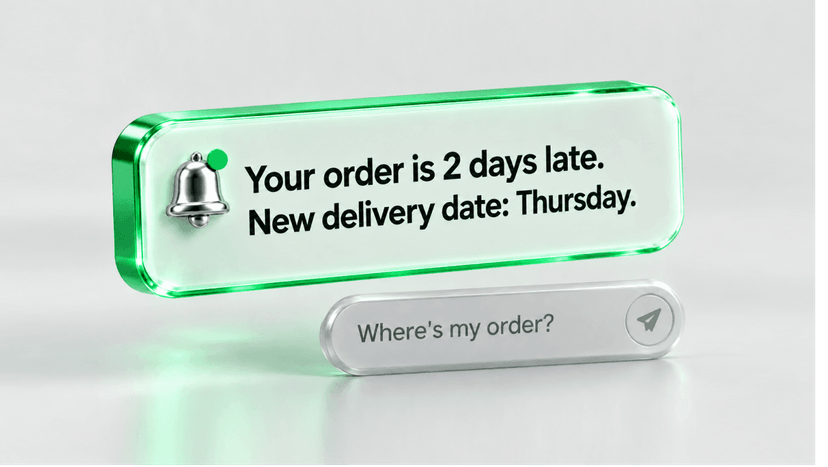
Think about how many repetitive questions your team answers every day: password resets, billing questions, delivery updates. An AI agent can take on a large share of them. Teams using CoSupport AI Agent typically reach 60–70% AI resolution in the first 60 days.
Good support AI understands customer intent and responds using your knowledge base and business systems, such as order status or account details. Modern AI can also answer in the customer's language, and some tools handle voice as well as chat.
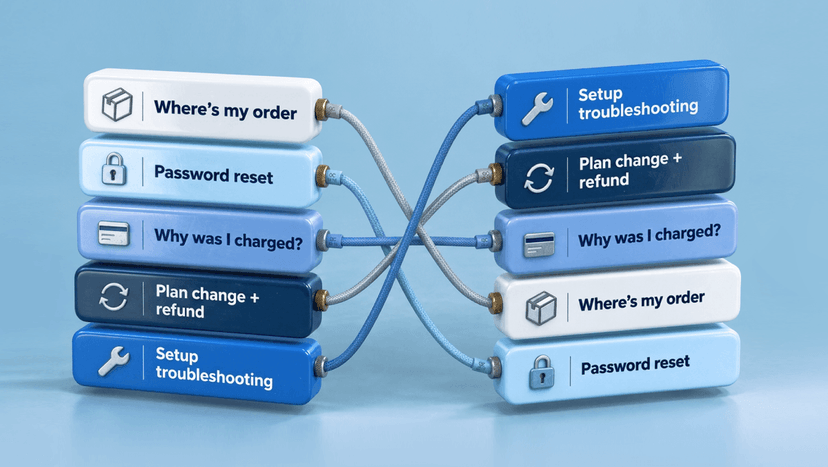
Ticket routing is the second big win. AI reads each incoming request and sends it where it belongs: billing questions to the accounts team, complex issues to senior staff. It can also flag customers who are clearly frustrated or need a person quickly, so those tickets don't wait in the queue.
As a result, a small team keeps response times short during peaks, and agents spend the day on tickets that need a person.
Find sales opportunities
In sales, generative AI turns lead lists into priorities. Lead scoring looks at past deals, how a prospect engages with your site, company data, and other signals, then ranks leads by how likely they are to buy. Reps call the best-fit leads first. The scoring itself is usually classic machine learning; generative AI comes in when it explains the score and writes the outreach.
AI also drafts outreach. It writes first-touch emails that reference what the prospect actually did, such as a pricing page visit or a downloaded guide. Reps start from that draft, then edit and send it.
On your website, an AI agent can answer pre-sale questions at any hour and suggest products. In online retail, an AI agent for e-commerce can answer order questions and offer personalized recommendations in the same conversation, and it handles many visitors at once.
Personalize marketing
Generative AI lets a small team write a separate message for each segment. It drafts message and call-to-action variants, and you test the strongest.
It also reacts to behavior. AI can track clicks, scrolls, and purchases and suggest what a customer is likely to want next. Add a recommendation engine, and your site shows each visitor products that fit what they've browsed.
A few practical examples:
- Abandoned cart: the customer gets a reminder within minutes, with an offer matched to what they left behind.
- Quiet subscriber: someone who stops opening emails gets a re-engagement message based on what they used to click.
- Segmented campaigns: each segment gets copy written for its needs instead of one generic blast.
Relevant messages tend to earn more clicks and conversions, so track both per segment.
Create content
Generative AI drafts product descriptions, marketing emails, help articles, and reports in seconds. A person still edits for accuracy and brand voice, but starts from a draft instead of a blank page.
Analyze data and find patterns
Generative AI is good at going through large amounts of data to find trends. Instead of reading hundreds of customer interactions by hand, you can have it process chat logs, support tickets, and survey responses to find recurring issues and measure customer sentiment.
For example, AI might show that one product feature confuses customers or that your return process causes most of the frustration. Your team can then fix the problem at the source.
It also makes reporting easier. With natural language queries, a manager can ask "What are the top customer complaints this month?" and get a clear answer.
Automate daily tasks and workflows
Generative AI also handles behind-the-scenes work. Meeting summaries, status updates, and internal reports can be drafted from your existing sources in minutes.
You can connect AI to your CRM, project management, and communication tools so updates happen automatically. Start with small, repetitive tasks, then expand as you see results.
Example: CoSupport AI
CoSupport AI is an example of generative AI trained on a company's own data. It has two products:
- CoSupport AI Agent resolves repetitive tickets on its own. It understands customer intent and responds using your knowledge base and business systems. If it can't resolve a ticket, it hands it to a person.
- CoSupport AI Assistant drafts replies for your support team. A person on your team edits and sends every draft.
Both learn from your helpdesk content, FAQs, and past conversations, and both work in 60+ supported languages (120+ compatible). CoSupport AI's patented architecture (US11823031B1) is designed to reduce hallucinations, the made-up answers that generic models sometimes give.
CoSupport AI connects to helpdesks such as Zendesk, Freshdesk, Intercom, and others. Pricing is $0.50 per AI-resolved ticket, unresolved tickets are free, and the first 1,000 AI responses are free.
On security, CoSupport AI is ISO 27001 certified and GDPR and CCPA compliant (security overview). In May 2024, it won the AI World Series Award in the text-generation category.
The lesson from this example applies to any generative AI project: models give better answers when they're trained on your data and limited to verified sources. That's also how you keep hallucinations out of customer conversations.
Key points to remember
- Start with routine work. Generative AI takes repetitive tasks off your team so people can focus on work that needs judgment.
- Train it on your data. Models trained on company-specific content give more accurate answers that match how your business works.
- Support pays off fast. AI agents answer common questions in seconds, which cuts wait times and the cost per ticket.
- Scale without matching headcount. Once you count salaries, benefits, and training, AI can cost less than adding staff for repetitive volume.
- Check security and accuracy. For customer conversations, pick tools with real security certifications and safeguards against made-up answers.
- Measure, then expand. Pick one use case, set the metric, and grow to other areas once the numbers hold.
- Keep people in the loop. AI handles volume. People handle complex decisions and relationships.
.png)