.png&w=96&q=75)

Let’s be honest and admit that AI agents are reshaping e-commerce by automating tasks, personalizing shopping, and simplifying purchases. Unlike basic chatbots, they handle complex processes like price tracking, product recommendations, and order management - all without human intervention.
Key stats:
- 4,700% growth in AI-driven retail traffic (July 2025 vs. 2024).
- Shoppers using AI agents spend 32% more time on sites and are 10% more likely to complete purchases.
- Businesses save up to 90% on customer service costs by automating repetitive tasks.
Top platforms like Perplexity, ChatGPT, and Google Gemini integrate features like "Instant Checkout" and price monitoring, making shopping faster and easier. For businesses, AI agents enhance efficiency, improve customer engagement, and manage demand spikes without requiring additional staff. However, they require careful implementation to balance automation and human support.
AI agents are not just tools - they're transforming how we shop, interact, and manage e-commerce.
How to Build AI Agents for E-Commerce | Free Masterclass for Beginners (2025)
What Are AI Agents in E-commerce and Why Use Them?
AI agents in e-commerce are self-sufficient digital assistants designed to manage customer interactions and business operations without constant human oversight. Unlike basic automated systems, these agents can grasp context, make decisions, and perform tasks across multiple platforms seamlessly.
Their strength lies in their ability to handle complex, multi-step tasks, often involving different systems and workflows. They don’t just respond - they act.
These agents rely on a mix of machine learning, natural language processing, and reinforcement learning. This combination allows them to learn from interactions, adapt their behavior, and improve their performance over time.
AI Agents vs. Chatbots? How Do They Differ?
Chatbots and AI agents might seem similar, but their capabilities are worlds apart.
Traditional chatbots stick to pre-programmed scripts. When faced with unexpected questions or scenarios, they often fall short, requiring human intervention. AI agents, on the other hand, take a smarter approach.
AI agents can understand the intent and context behind a customer’s request. For example, while a chatbot might direct you to check your email for order updates, an AI agent can access real-time data, locate your specific order, and provide a detailed status update.
Their decision-making abilities are what truly set them apart. AI agents can autonomously decide the best course of action - whether that’s offering a discount to calm a frustrated customer, escalating a technical issue to the right team, or proactively addressing potential order problems.
| Feature | Traditional Chatbots | AI Agents |
|---|---|---|
| Response Type | Scripted, rule-based | Context-aware, autonomous |
| Task Complexity | Simple, single-step | Multi-step, cross-system |
| Personalization | Limited | Deep, real-time |
| Decision-Making | Human-guided | Autonomous, adaptive |
These distinctions make AI agents a powerful tool for transforming e-commerce operations.
Key Benefits of AI Agents in E-commerce
Cutting costs is one of the biggest advantages. By automating up to 90% of repetitive customer service tasks, businesses can manage a higher volume of inquiries without needing to expand their team. In fact, some companies report that AI agents resolve 70-80% of incoming requests on their own.
Round-the-clock availability ensures customers get assistance whenever they need it. Unlike human agents, AI agents don’t take breaks or call in sick. For global e-commerce businesses, this 24/7 functionality is particularly valuable for serving customers across different time zones.
Faster resolutions lead to happier customers. AI agents can cut resolution times by over 50%, turning hours-long waits into solutions delivered in minutes. They achieve this by instantly pulling relevant data and taking action without delays.
Accuracy is another standout feature. Modern AI agents can deliver up to 99% response accuracy, with resolution rates climbing to 60-82% within just a few months of deployment. For repetitive tasks, this often outperforms human agents.
Integration capabilities add even more value. AI agents seamlessly connect with tools like Shopify, Stripe, Zendesk, and Salesforce, creating a unified system that supports customers from browsing to post-purchase assistance.
These benefits not only streamline operations but also enhance the overall customer experience. Up next, we’ll dive into how these advanced features directly improve e-commerce interactions.
How AI Agents Improve E-commerce Customer Experience
AI agents are transforming e-commerce by handling once manual tasks, making shopping quicker, smoother, and more tailored to individual customers.
Handling Repetitive Tasks Automatically
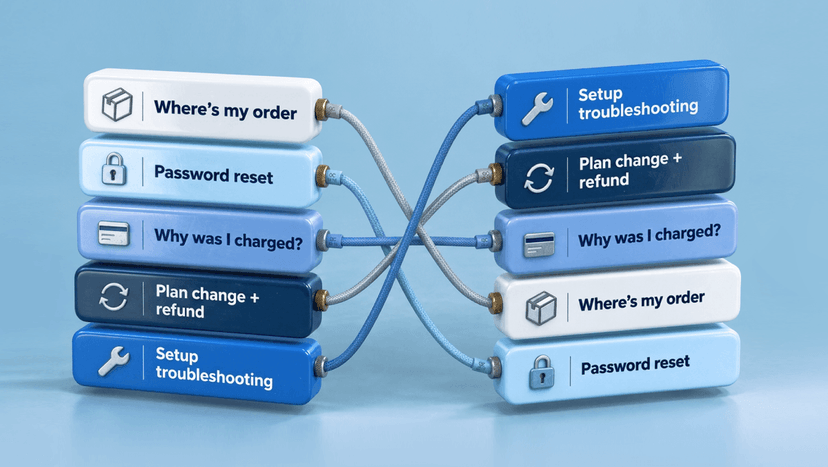
AI suppport agents for ecommerce are particularly skilled at taking over repetitive customer service tasks like tracking orders, managing returns, and answering FAQs.
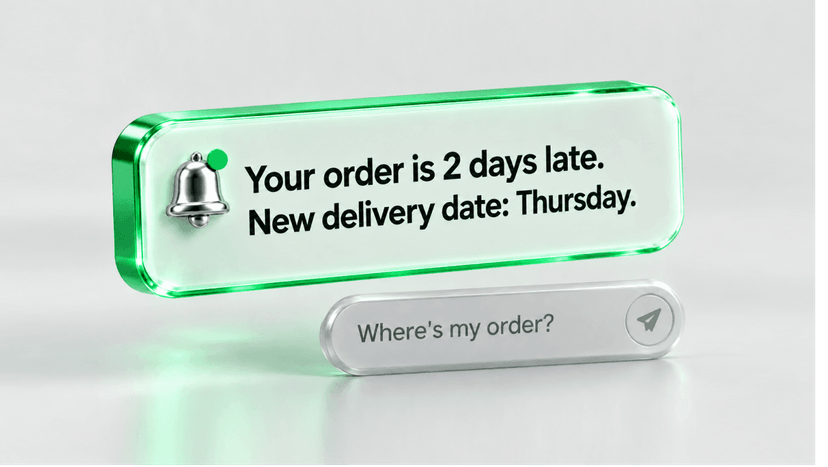
For example, if a customer wants to know their order status, an AI agent can instantly pull information from shipping systems and provide an update. Similarly, when someone initiates a return, the agent can kickstart the process, generate a return label, and update the inventory - all in just seconds.
This level of automation not only keeps customers engaged but also boosts conversion rates. It also frees up human support teams to focus on more intricate issues that require empathy or creative solutions instead of spending hours answering routine questions like, "Where's my order?"
But that’s not all - AI agents also bring a personal touch to customer interactions.
Creating Personal Customer Interactions
Modern AI agents use data like browsing habits, purchase history, and customer preferences to craft highly personalized experiences. They analyze this information to suggest relevant products or provide tailored assistance.
For instance, returning customers might receive recommendations for items that complement their previous purchases, while first-time visitors could be offered special deals or guided through their shopping journey. By moving away from generic responses, AI agents create interactions that feel more meaningful and engaging, which often translates to higher satisfaction and more sales.
This personalized approach ties seamlessly into how AI agents integrate with existing tools.
Connecting with Your Current Tools
AI agents don’t work in isolation - they integrate with CRMs, payment gateways, shipping systems, and inventory tools to create a unified customer experience. By tapping into these systems, they can access real-time data and automate complex workflows.
For example, AI agents can check inventory levels, process payments through platforms like PayPal, and update shipping statuses - all within a single conversation. A notable example is Google's AI Mode shopping interface, updated in 2025, which allows customers to track prices, confirm purchases, and complete transactions via Google Pay, making the buying process incredibly streamlined.
These integrations have proven to be effective in the real world. For instance, businesses have seen resolution rates rise from 69% to over 80% within just a few months after implementing AI systems.
Passing Hard Cases to Human Teams
While AI agents excel at automating routine tasks, they’re also designed to recognize when a human touch is needed. Using natural language understanding and predefined rules, they can identify complex or sensitive issues that require empathy and expertise.
When such cases arise, AI agents ensure a smooth handoff to human agents, complete with all relevant customer history. This hybrid approach not only reduces the need for customers to repeat themselves but also speeds up problem resolution.
Transparency is a crucial part of this process. Customers are always given the option to connect with human support when needed. Plus, AI systems can match the issue to the most suitable agent or department, cutting down on transfer times and ensuring faster resolutions.
sbb-itb-97114f1
Pros and Cons of AI Agents in E-commerce
AI agents bring both advantages and challenges to e-commerce, much like any other business technology. By understanding both sides, businesses can better navigate their implementation and maximize their potential.
AI agents have demonstrated success across various metrics, including increased engagement and improved customer retention. However, achieving these outcomes requires thoughtful setup and execution.
Benefits vs. Challenges
| Pros | Cons |
|---|---|
| 24/7 availability – Customers can access help anytime | Limited handling of edge cases – Complex or unusual queries may exceed AI capabilities |
| Cost efficiency – Manage high volumes without increasing payroll | Initial setup effort – Requires significant time and resources for training |
| Scalability without hiring – Handle growth without expanding staff | Potential trust concerns – Some customers may distrust automated decisions |
| Faster issue resolution – Quick access to information and automated solutions | Rare misinterpretations – AI might misunderstand context, leading to errors |
These points highlight the importance of a balanced approach when incorporating AI agents into e-commerce operations.
For example, one company reported saving $14,000 monthly by automating 80% of customer requests. However, the setup phase can be tricky. Common pitfalls include inadequate training data and failing to establish a clear process for escalating complex issues to human agents. Customers need an easy way to reach a person when AI falls short.
Trust also plays a big role. While 60% of shoppers already interact with AI during their shopping experience, some still prefer human support for sensitive concerns. Businesses can build trust by being transparent about AI use and providing clear escalation paths to human assistance.
AI agents excel at routine tasks like order tracking and handling returns. But they often struggle with unique scenarios or emotionally charged interactions. Generative AI, for instance, may misread sarcasm or emotional tones, potentially leading to awkward or incorrect responses.
Additionally, businesses must prioritize data protection, avoid biased responses, and establish accountability for AI-driven decisions.
The key is setting realistic expectations. Use AI agents for repetitive, straightforward tasks while reserving human teams for more complex or nuanced issues. With these considerations in mind, the next section will explore practical strategies for successful AI deployment.
Key Points. Why AI Agents Matter for E-commerce?
AI agents are changing the game for e-commerce businesses, redefining how companies interact with customers and manage operations. Recent trends reveal a sharp increase in AI-driven retail traffic, reflecting a shift in how people shop.
These agents can slash support costs by up to 90% while significantly improving customer engagement. Shoppers spend more time on websites and are 10% more likely to complete their purchases, highlighting the dual benefits of efficiency and enhanced user experience.
The adoption of AI agents is accelerating at a fast pace. By 2026, experts estimate that 40% of enterprises will rely on AI agents. Businesses that hesitate to adapt risk falling behind as consumer expectations continue to evolve.
Big players are already embedding AI into shopping experiences. Platforms like Perplexity offer features such as "Buy with Pro", and ChatGPT has introduced "Instant Checkout." These tools bring purchasing into conversational interfaces, ensuring brands stay connected with customers while meeting them where they prefer to shop.
AI agents do more than just save costs - they’re reshaping the competitive landscape. They handle tasks like inventory management, pricing optimization, fraud detection, and supply chain logistics. Because they operate 24/7, businesses can scale customer support without adding staff, leading to faster responses and consistent service quality that boosts customer satisfaction.
To remain competitive, many companies are integrating with existing AI platforms or creating their own branded agents. These custom agents help businesses maintain direct relationships with their customers, even as shopping habits shift toward AI-driven interactions.
For example, CoSupport AI offers tailored agents that let businesses stay in control of their customer experience while embracing this new era of "agentic commerce." By adopting AI agents, companies can stay ahead of the curve and thrive in an evolving marketplace.
The future of e-commerce is already here, and businesses that embrace AI agents today are setting the standard for tomorrow. Get a personalized demo for your AI Agent.
.png)