.png&w=96&q=75)

AI and human agents each bring unique strengths to customer support. AI excels in speed, consistency, and scalability, handling repetitive tasks and offering 24/7 multilingual support. Human agents, on the other hand, provide emotional intelligence, nuanced judgment, and the ability to build trust and long-term relationships. The best approach combines both, leveraging AI for efficiency and human agents for complex, emotional, or high-stakes interactions.
Key Takeaways:
- AI Strengths: Instant responses, cost efficiency, and handling high query volumes.
- Human Agent Strengths: Empathy, contextual understanding, and personalized problem-solving.
- Hybrid Model: AI manages routine tasks while human agents focus on complex issues, ensuring efficiency and a personal touch.
Quick Comparison:
| Criteria | AI | Human Agents |
|---|---|---|
| Response Time | Instant (e.g., 23 seconds) | Slower, limited by hours |
| Scalability | Effortless, handles thousands | Resource-intensive |
| Consistency | High, data-driven | Varies, prone to errors |
| Emotional Support | Limited | Strong |
| Complex Problem Solving | Limited | Excellent |
Balancing AI’s efficiency with human empathy creates a support system that meets customer demands while driving satisfaction.
AI vs Humans: Who Wins at Customer Service?
Performance Comparison: AI vs Human Agents
As customer support continues to evolve, comparing the strengths of AI and human agents across key performance metrics can guide businesses in shaping their support strategies.
Response Time
When speed is the priority, AI takes the lead. Unlike human agents who are bound by work hours and manual processes, AI operates 24/7, delivering instant responses. For example, AI-powered platforms can cut first response times from 15 minutes to just 23 seconds. Businesses using AI have reported a 37% reduction in first response times, with omnichannel AI platforms slashing response times by as much as 97%.
In B2B SaaS, AI-first support platforms respond 40% faster than traditional help desk tools. This rapid response is crucial since 60% of customers abandon support requests if they have to wait too long. AI ensures immediate acknowledgment and often resolves simple queries instantly, minimizing customer frustration.
Here’s a snapshot of how AI transforms response times across industries:
| Industry | Traditional Response Time | AI-Powered Response Time | Improvement |
|---|---|---|---|
| B2B SaaS | 2–4 hours | 30 seconds – 2 minutes | 85–95% |
| E-commerce | 1–2 hours | 15–45 seconds | 90–97% |
| Financial Services | 4–8 hours | 1–3 minutes | 92–98% |
| Healthcare Tech | 6–12 hours | 2–5 minutes | 88–95% |
While AI excels in speed, human agents bring value with their ability to understand complex scenarios and offer personalized attention. However, they are often limited by factors like hold times, documentation checks, and availability during business hours.
Accuracy and Consistency
AI shines in delivering consistent, data-driven responses. By relying on a structured knowledge base, AI tools resolve tickets 52% faster than traditional methods, ensuring uniformity and reducing the risk of human error.
However, accuracy isn’t just about speed. Human agents excel in interpreting emotional cues, understanding context, and making nuanced decisions that require intuition and experience. AI provides systematic precision, while humans contribute contextual understanding and emotional intelligence. Together, they create a balance that enhances overall support quality.
Scalability and Cost Efficiency
Scaling with human agents involves significant costs and time investments. Hiring, training, and managing additional staff can be resource-intensive. In contrast, AI scales effortlessly, handling thousands of queries at once without added expense.
For instance, CoSupport AI’s pricing model - at $0.59 per resolution - offers 100% improvement in after-hours coverage. This eliminates the need for night shift premiums or additional hires, enabling businesses to support customers across time zones seamlessly.
As businesses grow, AI adapts instantly. Whether managing 100 or 10,000 queries daily, AI maintains consistent speed and quality. Human teams, on the other hand, require extensive planning and training periods that can take weeks or months. AI-powered tools also reduce resolution times by up to 50%, allowing support teams to handle more cases while customers benefit from faster assistance.
Customer Satisfaction
Customer preferences depend on the nature of their issue. For quick and straightforward questions, AI’s efficiency is a clear favorite. For technical troubleshooting or account changes, AI’s speed and precision are appreciated. However, for complaints, refunds, or sensitive matters, customers often prefer the empathy and understanding that only human agents can provide.
The most effective customer support strategies combine both. AI handles initial contact and resolves simple issues quickly, while seamlessly transitioning complex problems to human agents. This approach ensures customers receive fast, efficient service as well as the personal touch when it’s needed most.
Where AI Agents Work Best
AI agents have found their stride in specific areas, significantly improving both efficiency and customer satisfaction.
Handling Repetitive Tasks
AI agents thrive when managing routine inquiries. Studies show that 60-80% of customer questions fall into this category, and AI can handle nearly all of them without needing human involvement.
"AI-powered chatbots relieve agents from routine questions, allowing focus on more complex tasks." - Roman Viliavin, Chief Business Development Officer, MetaDialog
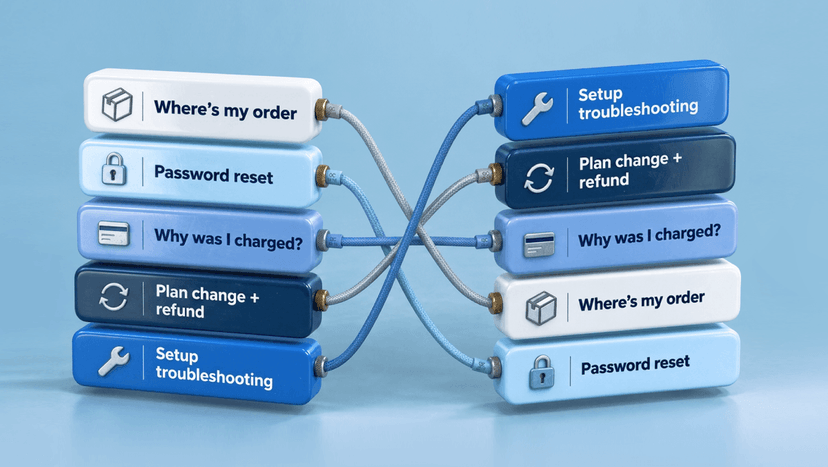
Common examples include password resets, where AI can verify a user's identity and send secure reset links instantly, or tracking orders by pulling real-time shipping updates from integrated systems.
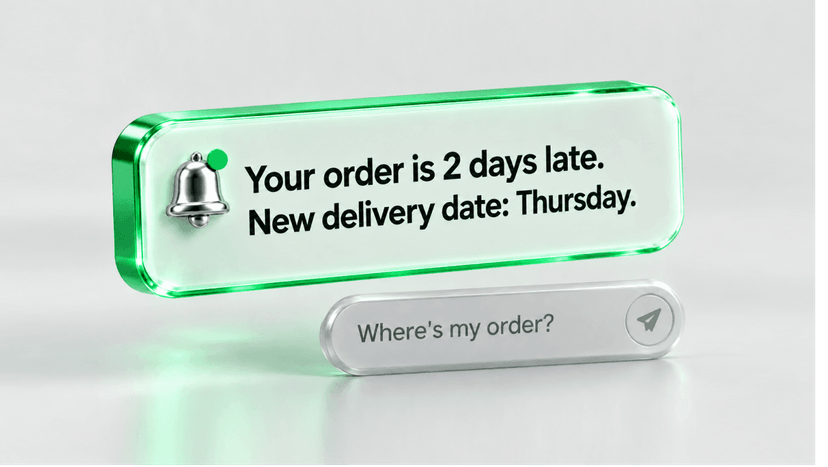
For software companies, AI can guide users through basic setup processes, while e-commerce businesses benefit from its ability to answer "where is my order" questions instantly, using shipping databases to provide accurate delivery timelines.
Billing inquiries are another area where AI excels. AI systems can review customer accounts, identify billing errors, make corrections, and notify customers - all without human input. This not only speeds up response times but also ensures consistent, error-free handling of routine billing issues.
AI also contributes to self-service improvement by updating FAQs and resources with personalized responses based on customer histories. Over time, this reduces ticket volume while enhancing the overall customer experience. On top of that, AI’s 24/7 availability and multilingual capabilities make it a game-changer for global support.
24/7 Multilingual and Omnichannel Support
AI removes the limitations of business hours and language barriers. Unlike human teams, which require shift rotations and multilingual staff, AI operates around the clock and supports customers in over 40 languages. This is especially valuable for U.S. companies expanding globally or catering to linguistically diverse audiences.
For example, CoSupport AI enables businesses to communicate seamlessly with customers worldwide without the need for additional multilingual hires. AI also offers an omnichannel experience by integrating with platforms like Zendesk, Salesforce, and Slack. Customers can start a conversation on one platform and continue it on another without losing context, as AI preserves the conversation history and user preferences across all channels.
Additionally, AI ensures reliable after-hours support, providing businesses with a consistent presence regardless of time zone.
Data Analysis and Security
In addition to its support capabilities, AI stands out in data analysis and security. Its ability to process vast amounts of support data helps uncover trends and recurring issues that human agents might overlook. By analyzing conversations, AI can identify product flaws, improve documentation, and enhance customer experiences proactively.
Security is another critical strength. CoSupport AI adheres to ISO 27001 standards and complies with GDPR, making it well-suited for handling sensitive data like financial records or healthcare information. AI consistently enforces data protection measures and access controls, minimizing compliance risks. Furthermore, it provides detailed audit trails for all customer interactions, simplifying regulatory reviews and ensuring transparency.
While AI boosts efficiency and ensures compliance, combining these capabilities with human insight is essential for creating a balanced and effective support strategy.
sbb-itb-97114f1
Where Human Agents Are Still Needed
AI might bring speed and efficiency to the table, but there are certain areas where human agents remain irreplaceable. When it comes to handling situations that require a deeper understanding of emotions or complex judgment, the human touch makes all the difference. By blending AI's strengths with human qualities, companies can offer well-rounded support that meets both routine and more delicate customer needs.
Empathy and Emotional Intelligence
Human agents shine in situations where emotions run high - think frustrated, angry, or distressed customers. While AI can detect certain keywords, it can't truly empathize.
Take, for instance, a customer who has been overcharged multiple times and is ready to cancel their service. An AI might issue a generic apology and process a refund, but a human agent can go further - acknowledging the customer's frustration, validating their feelings, and providing reassurance that the issue will be handled with care and urgency.
In moments of crisis, such as service outages or product recalls, customers often need more than just a factual update. They want reassurance, and a calm, understanding human voice can provide comfort that AI simply can't replicate. By addressing both the emotional and practical aspects of the issue, human agents help reinforce a company's commitment to its customers.
Judgment and Contextual Awareness
Some situations demand more than programmed responses - they require nuanced judgment and contextual understanding, especially in industries like healthcare, finance, or legal services.
Picture a healthcare support scenario where a patient calls about troubling side effects from a medication. A scripted AI response won't cut it. A human agent can ask the right follow-up questions, assess the urgency, and guide the patient toward the appropriate next steps, whether that’s speaking with a doctor or seeking immediate medical care. Similarly, in financial services, when a customer reports suspicious activity on their account, a human can evaluate the context, weigh potential risks, and make decisions that balance compliance with customer trust.
Human agents also excel at navigating cultural differences. They can adapt their communication style to match regional expectations and pick up on subtle cues in customer interactions. This sensitivity ensures that customers feel understood and respected, no matter where they’re from.
In heavily regulated industries, compliance is non-negotiable. Human agents bring the ability to interpret rules within the context of unique situations, making decisions that respect both regulations and the customer's needs. They know when exceptions might be appropriate and how to document these cases properly.
Building Long-Term Trust
Beyond resolving immediate issues, human agents play a key role in fostering trust and loyalty - essential ingredients for long-term customer relationships.
High-value customers, in particular, often prefer speaking with someone who can provide personalized, consultative support. Human agents are equipped to tackle complex problems, coordinate with other departments, and follow up personally to ensure the issue is fully resolved. This level of care strengthens the bond between the customer and the brand.
Human agents are also skilled at recognizing opportunities for upselling and cross-selling during natural conversations. By understanding a customer’s evolving needs, they can suggest products or services that genuinely align with their preferences, adding value in a way that feels organic rather than pushy.
The impact of human interaction goes beyond the individual call or chat. Satisfied customers are more likely to recommend the company to others, share helpful feedback, and contribute to improving products and services. By strategically combining these human strengths with AI-driven tools, businesses can create a support system that’s both efficient and deeply personal. This balance ensures customers feel heard, valued, and loyal to the brand.
Finding the Right Balance: The Hybrid Approach
Combining the best of both worlds, the hybrid approach blends the efficiency of AI with the personal touch of human interaction. This method thrives on real-time feedback, using insights from both automated processes and human responses to refine and improve service quality over time. With every interaction, AI systems gain a deeper understanding of customer needs, adjusting and improving their performance to meet changing expectations.
Choosing the Right Support Strategy
Balancing the efficiency of AI with the empathy of human agents is the key to creating a successful support strategy. While AI excels at speed, consistency, and cost savings, human agents bring emotional understanding, nuanced judgment, and the ability to build meaningful connections.
The most effective strategies today combine these strengths. AI can manage repetitive tasks, provide instant responses, and ensure round-the-clock availability. Meanwhile, human agents step in for more complex issues, offering personalized problem-solving and emotional support. Together, this hybrid approach enhances operational efficiency while maintaining the personal touch customers value.
For U.S. businesses, platforms like CoSupport AI make it easier to implement this model. These tools integrate seamlessly into existing workflows, support over 40 languages, and meet enterprise-grade security standards. They offer the scalability businesses need while upholding the quality and reliability American consumers expect.
The first step is understanding your customer base and the volume of support interactions. Identify tasks that can be automated without sacrificing quality, and gradually expand AI's role while keeping human agents focused on areas where they make the biggest impact. The aim isn’t to replace humans but to equip them to concentrate on what they do best - building relationships and solving the kinds of problems only humans can handle.
As customer expectations shift, the businesses that succeed will be those that thoughtfully combine AI’s speed with the expertise and empathy of human agents, delivering support that is both efficient and truly effective.
.png)